

About this piece
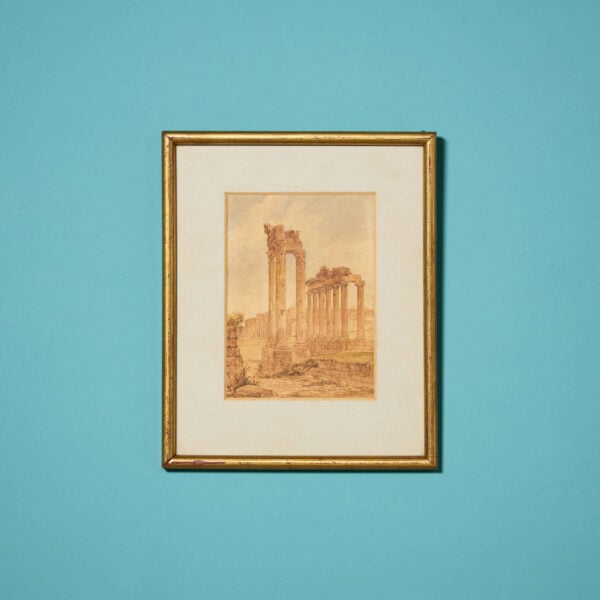
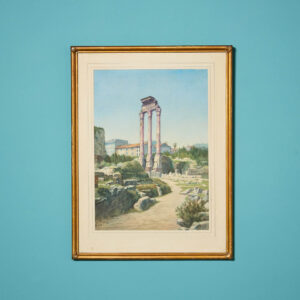
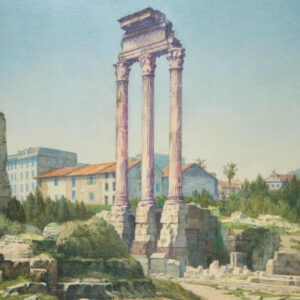
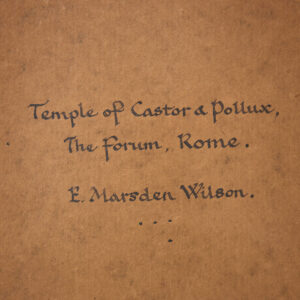
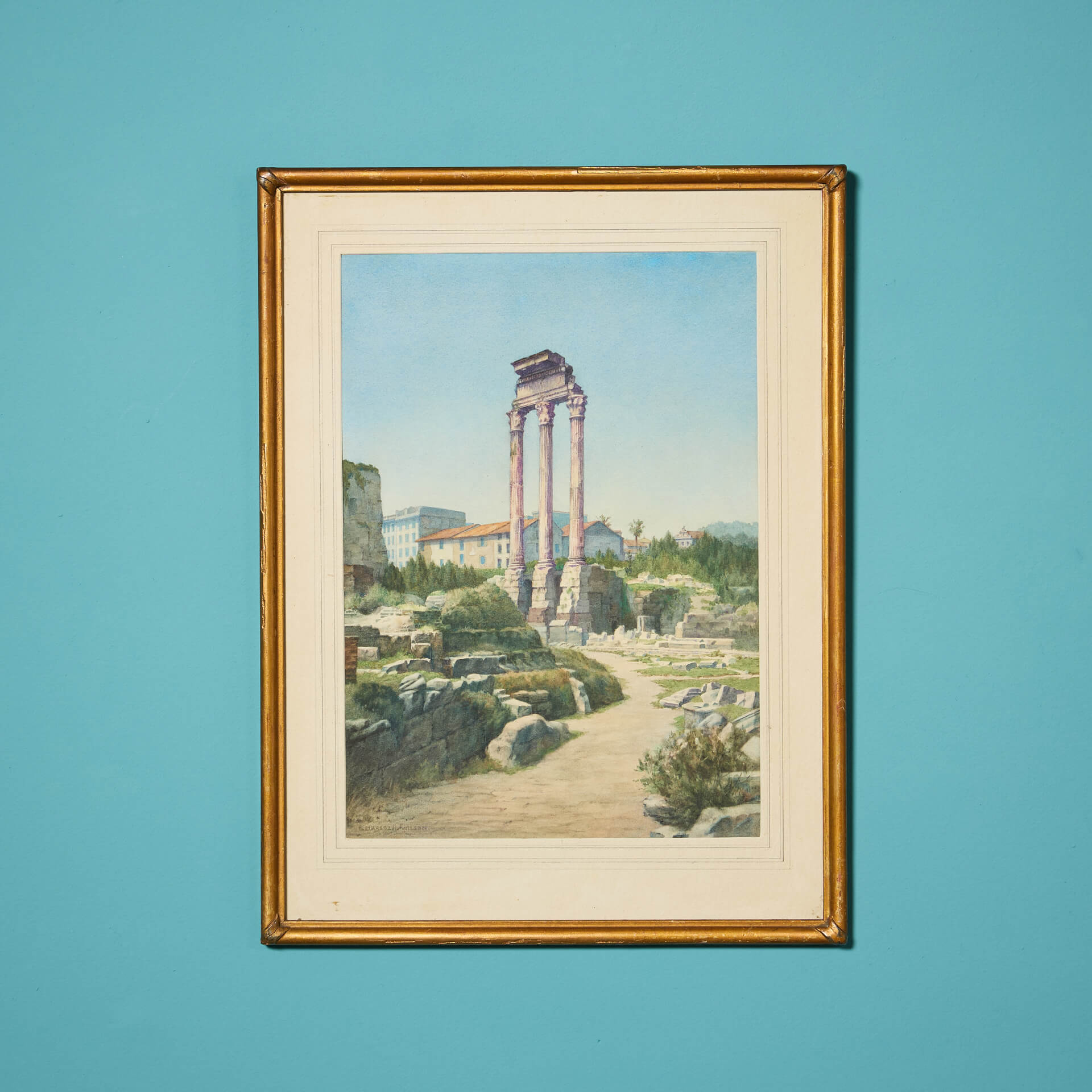
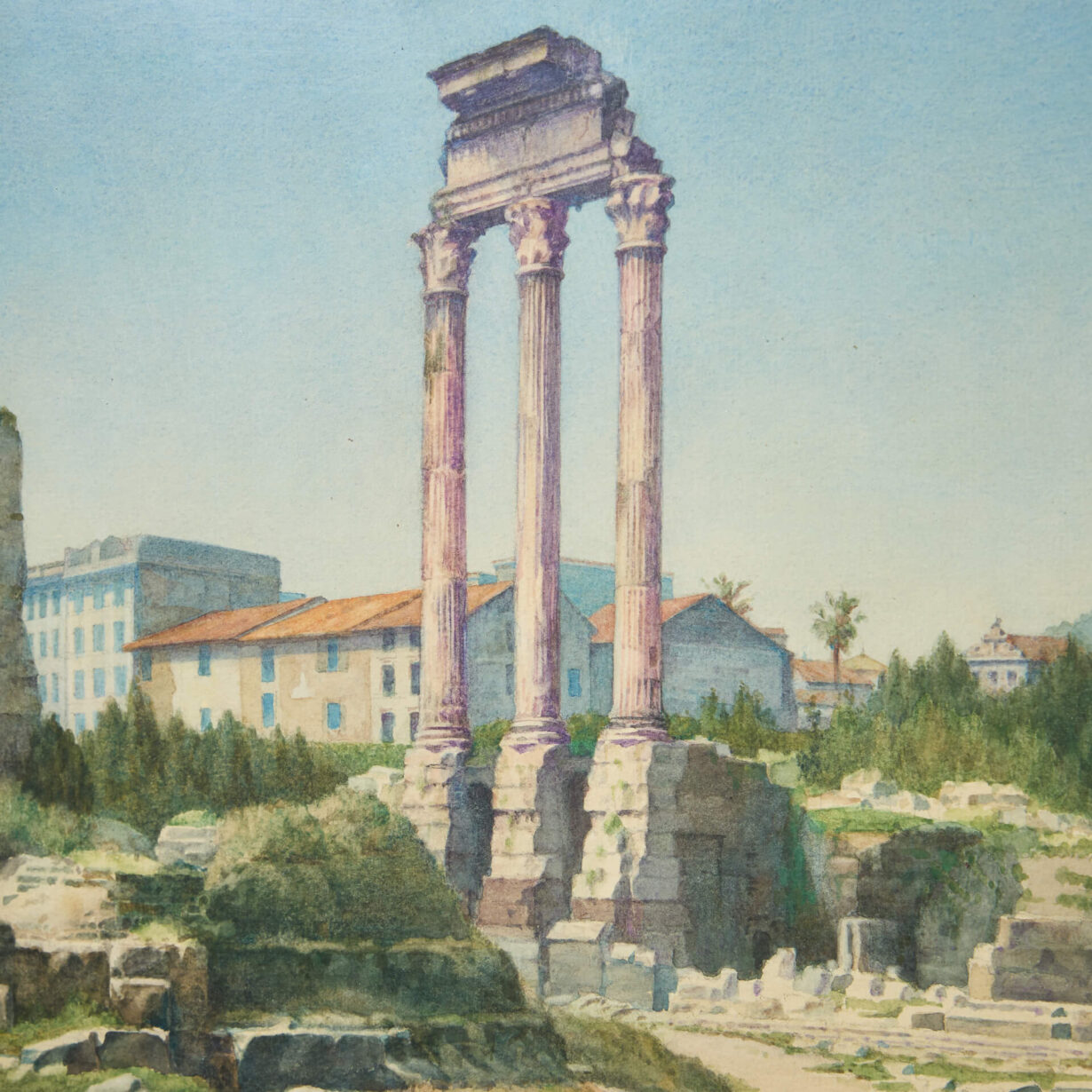
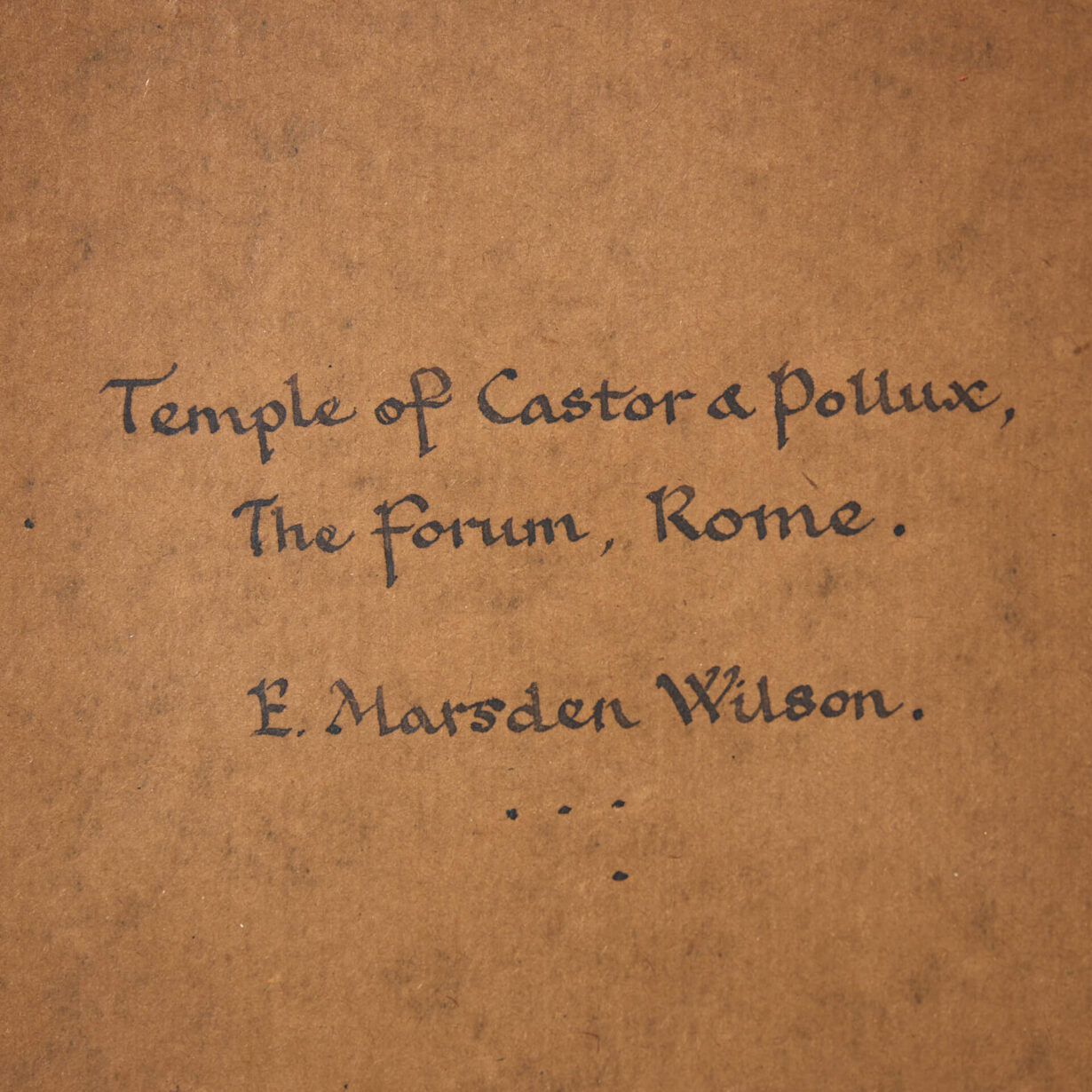
back to topA 19th century watercolour of the Temple of Castor and Pollux inside the Roman Forum in central Rome.
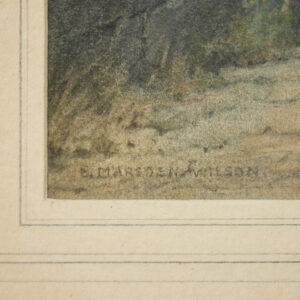
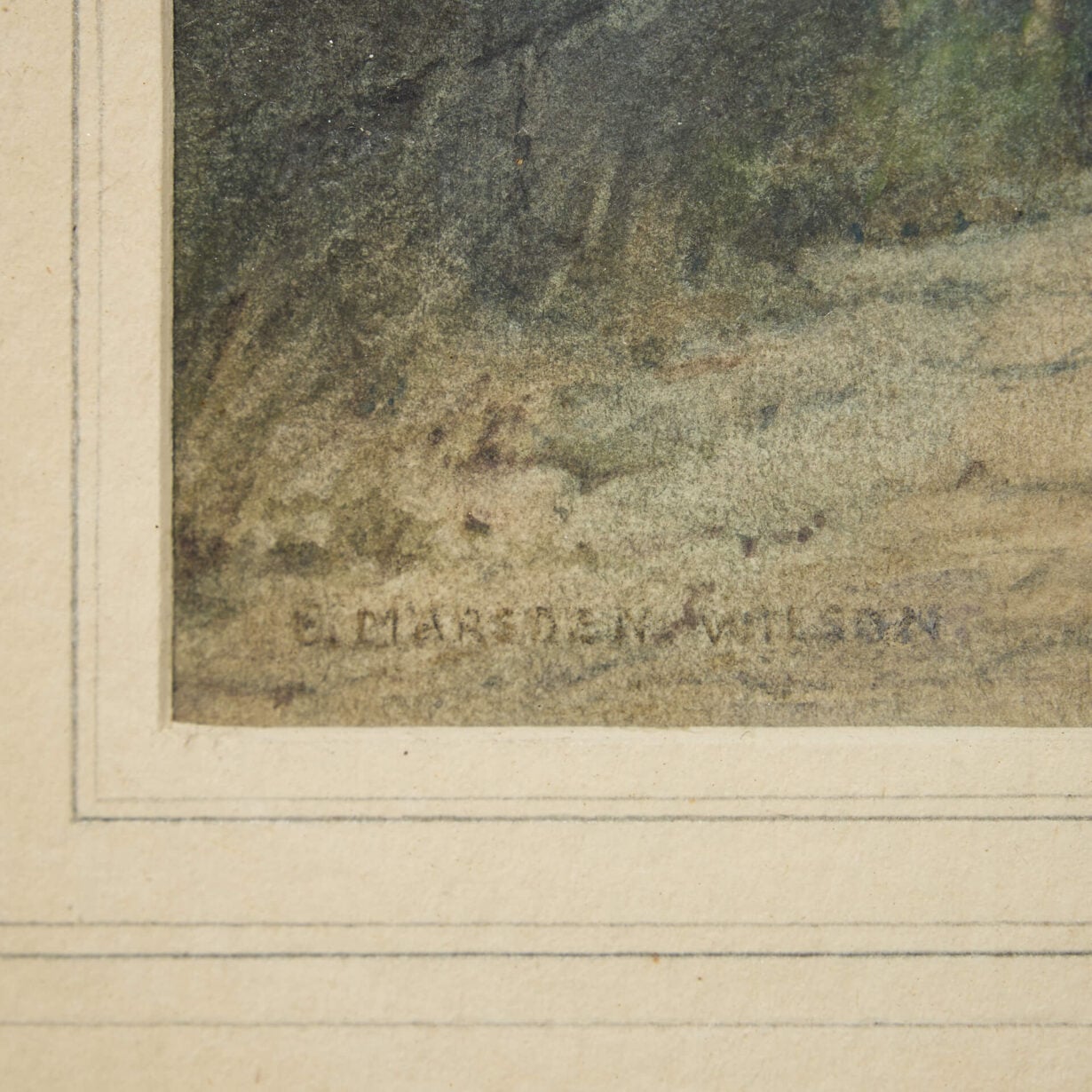
Assumed to be from Eli Marsden Wilson’s later period circa 1935 where he turned to easel painting due to a fall in demand for etchings, a technique for which he was a master.
The areas around the temples can be seen with overgrown foliage and undeveloped pathways, without the modern barriers in place today.
The gilt frame has an unusual construction with raised corners.
Eli Marsden Wilson (1877-1965)
Born in Ossett, Yorkshire, Wilson studied at the Royal College of Art under master etcher Frank Short. From 1905, He began to produce etchings and mezzotints of towns and landscaped which were exhibited at the Royal Academy. A pacifist and vegetarian, Wilson became a Quaker and refused conscription during World War One on religious grounds. Although the army made non-combatant roles for conscientious objectors, Wilson’s pacifism was absolute to the point of refusing uniform. He was arrested and imprisoned from February 1917 to March 1919 where he created highly detailed etchings of his prison cell.
Rebuilding his career after his release, he created miniature etchings for Queen Mary’s Dolls’ House, at Windsor Castle and a four-panel frieze for the Natural History Museum in South Kensington. During the Great Depression the demand for etchings declined and Wilson turned to painting.