


About this piece
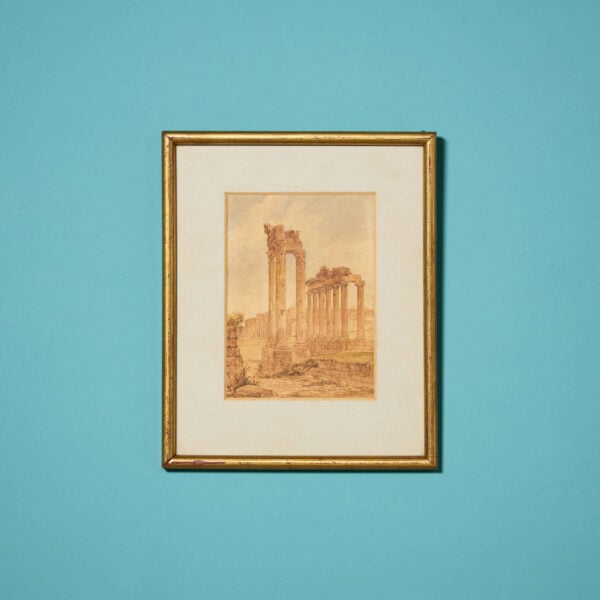
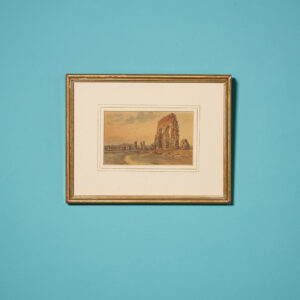
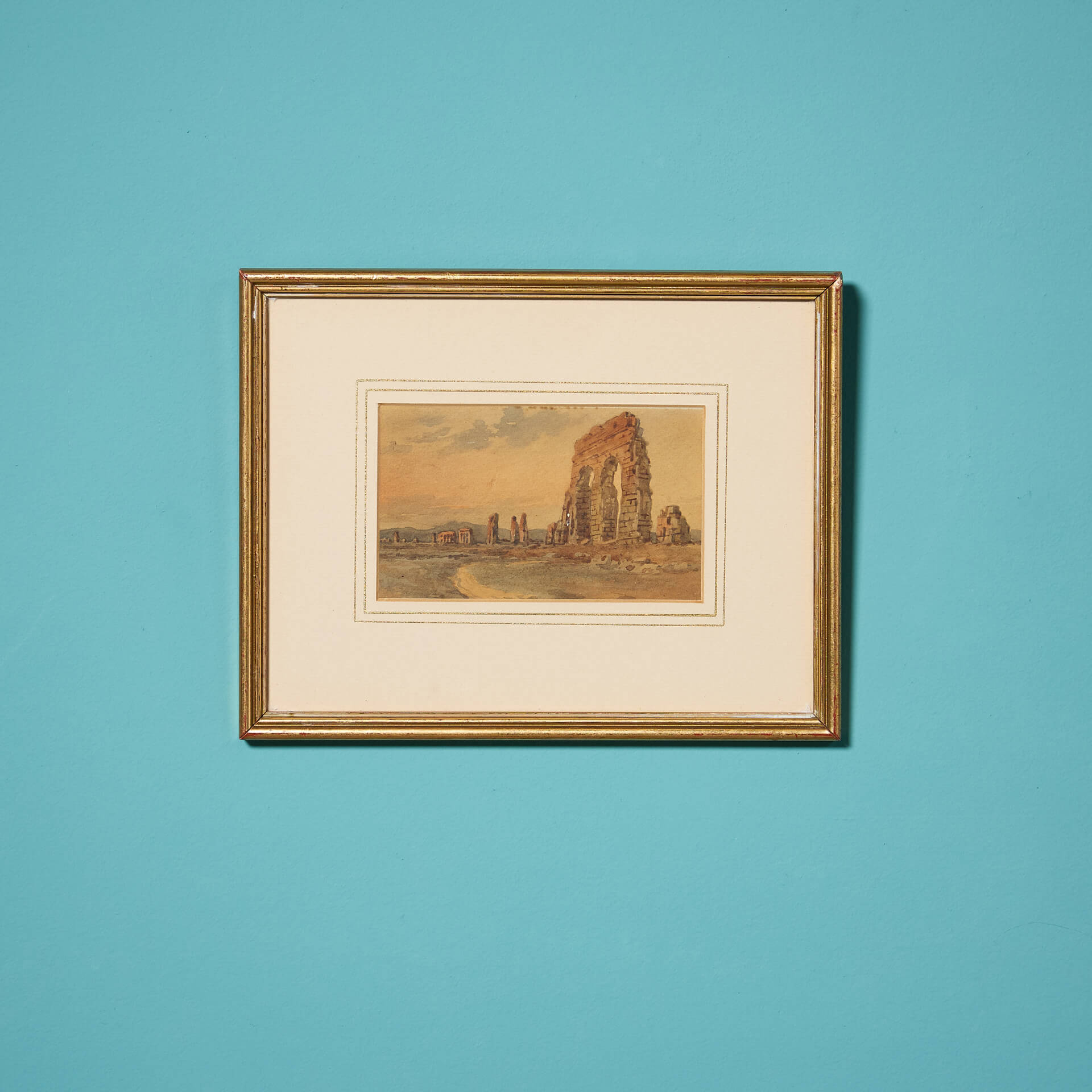
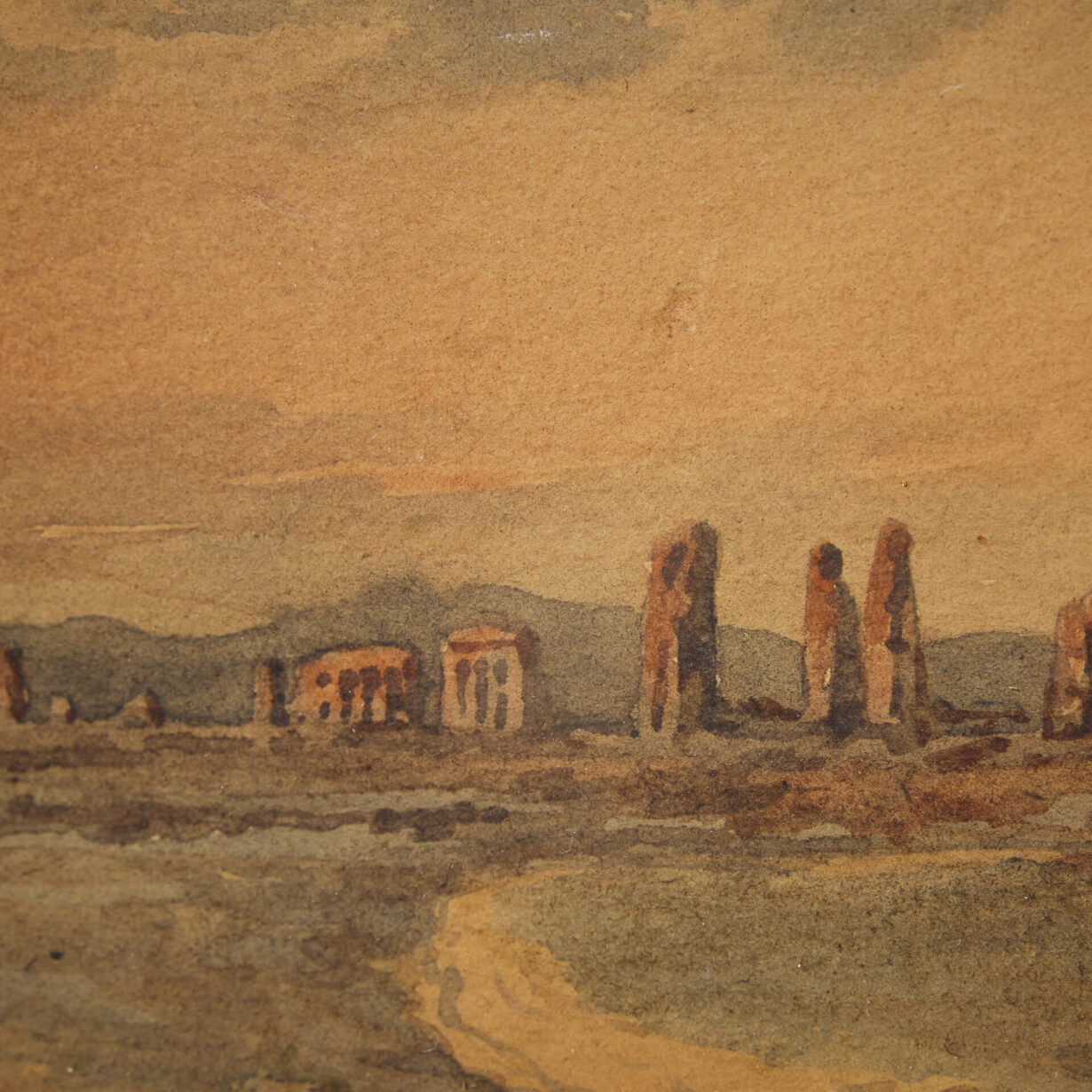
back to topA 19th century watercolour of ruins on the Appian Way.
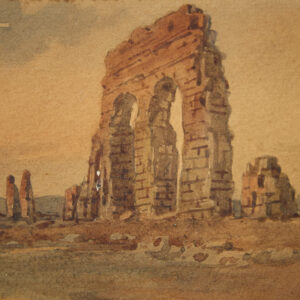
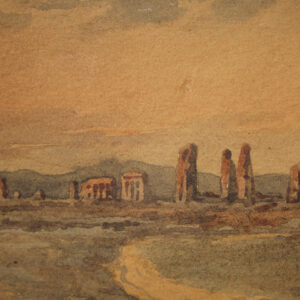
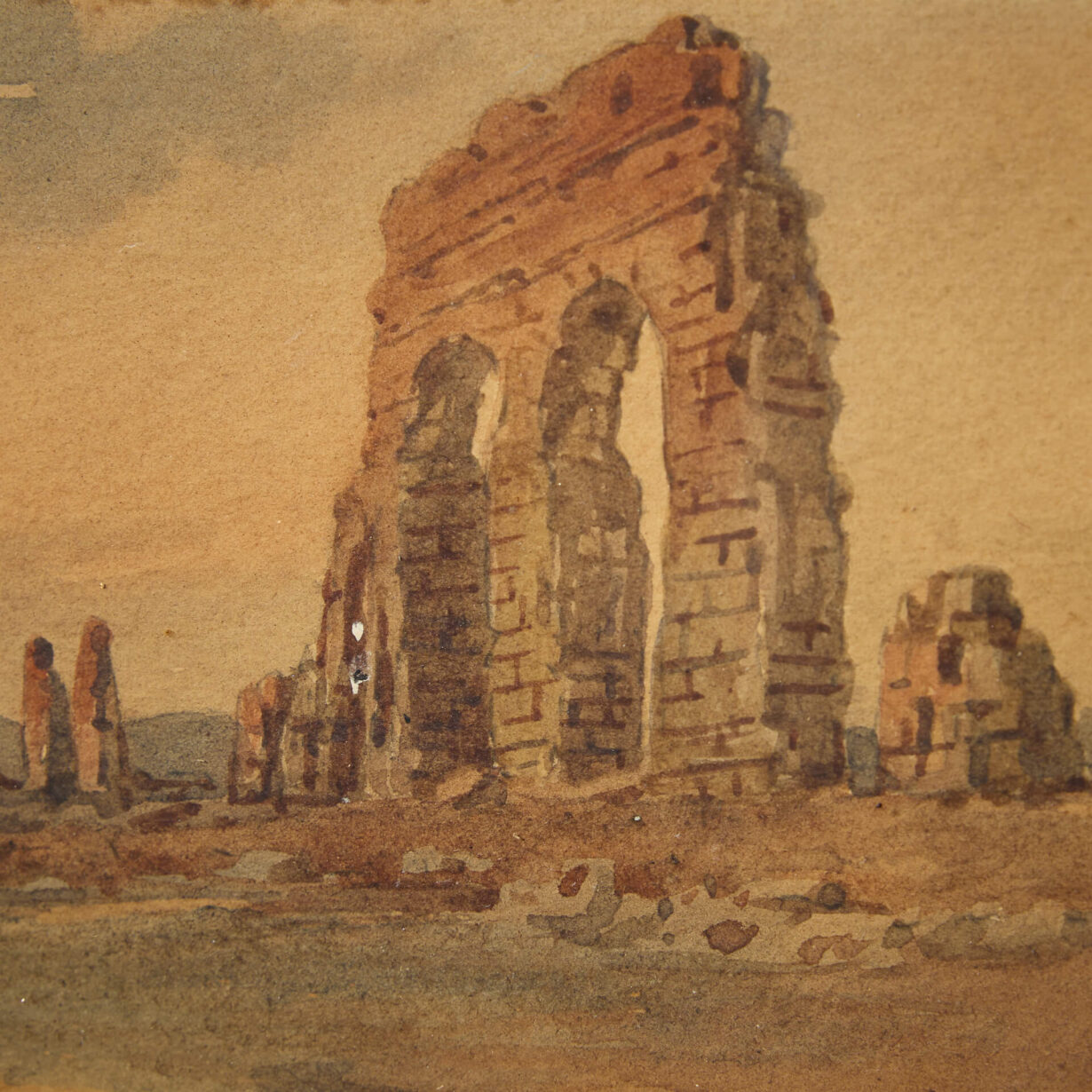
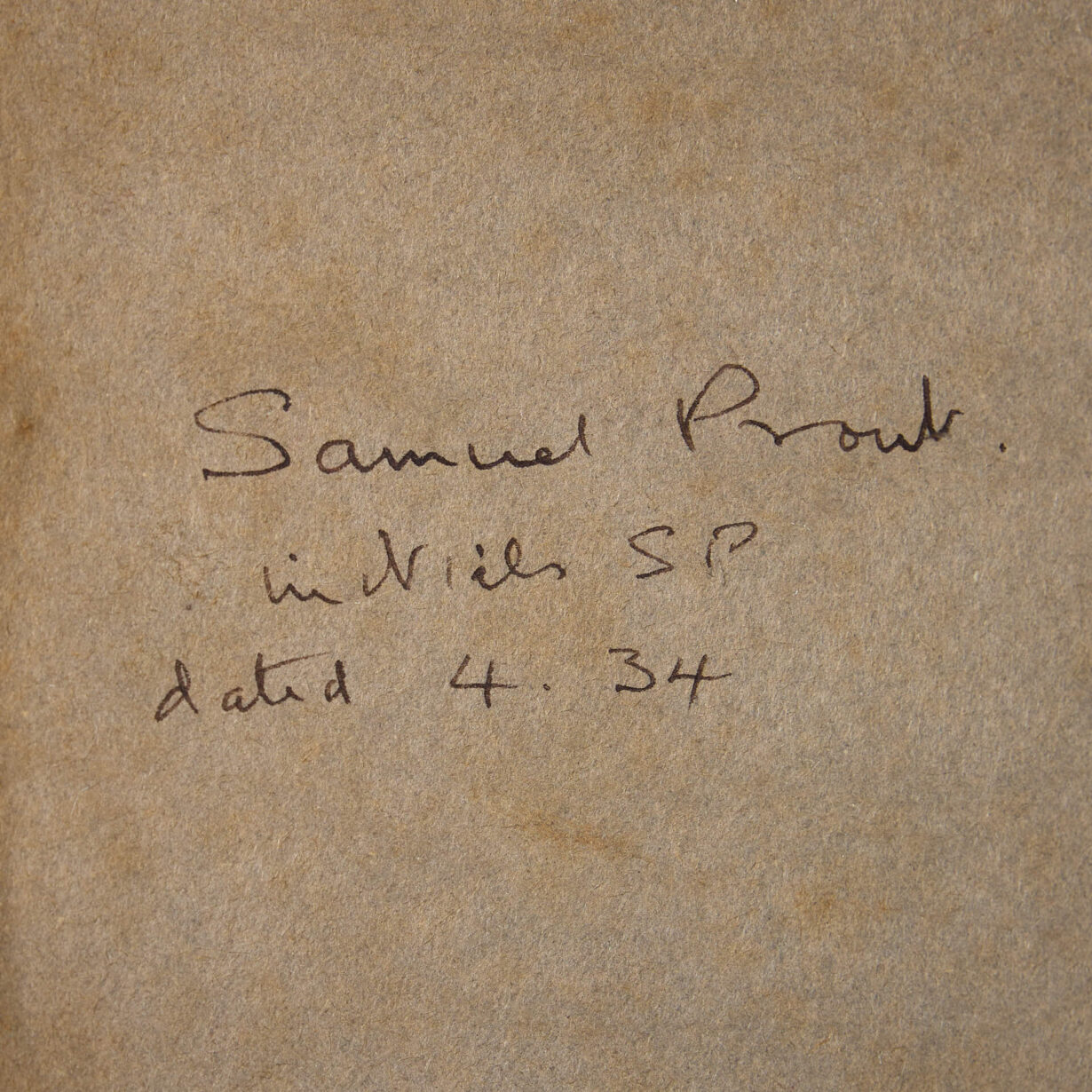
Attributed on the reverse to Samuel Prout (British, 1783-1852) and dated ’34, this painting is of the scattered ruins along the Appian Way in Rome, most likely a section of the Parco degli Acquedotti.
In this unique perspective typical of Prout, the subject is of a tight, almost obscured angle. The warm sepia tones of the setting sun cascade downwards through the painting.
The areas around the temples can be seen with overgrown foliage and undeveloped pathways, without the modern barriers in place today.
Works by Samuel Prout are held in the Tate Gallery London, The Louvre in Paris and many others.
Samuel Prout (1783-1852)
British-born Samuel Prout was an 18/19th Century master of watercolour architectural painting. As an early adopter of Lithography, Prout honed his landscape skills by painting marine scenes for print sellers. Around 1818, Prout began to create sketches and watercolours from the continent, finding his niche skilfully capturing naturally lit architecture and quaint side streets. Samuel Prout’s works are often compared to Turner.
Prout was appointed the coveted title of ‘Painter in Water-Colours in Ordinary’ to King George IV in 1829, and afterwards to Queen Victoria.