About this piece
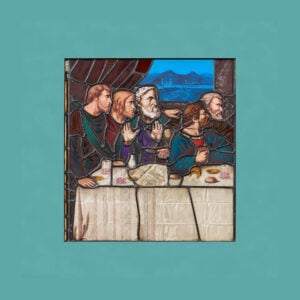
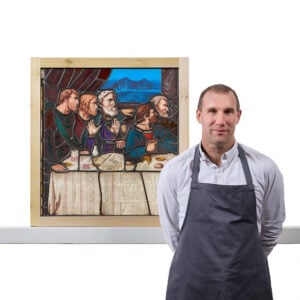
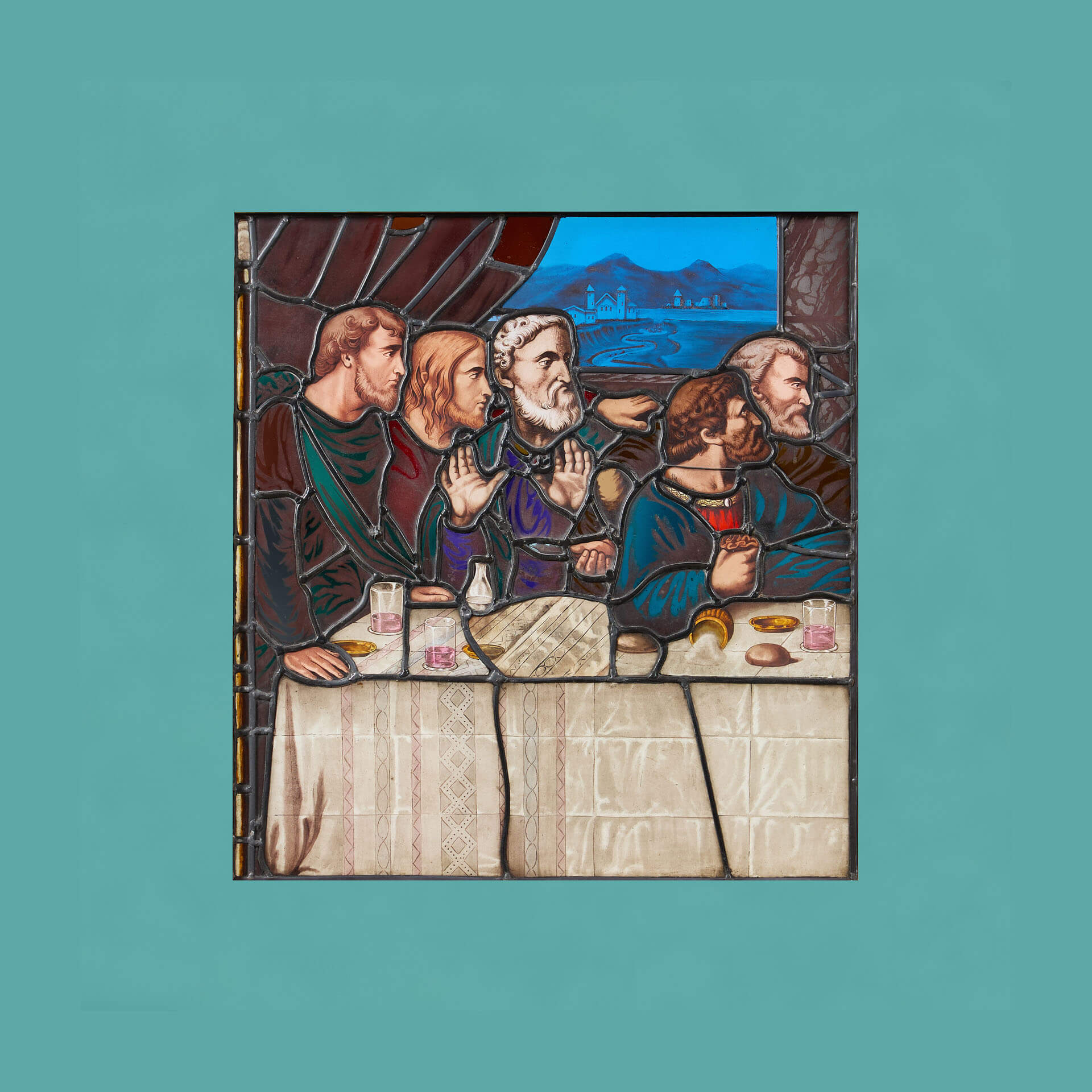
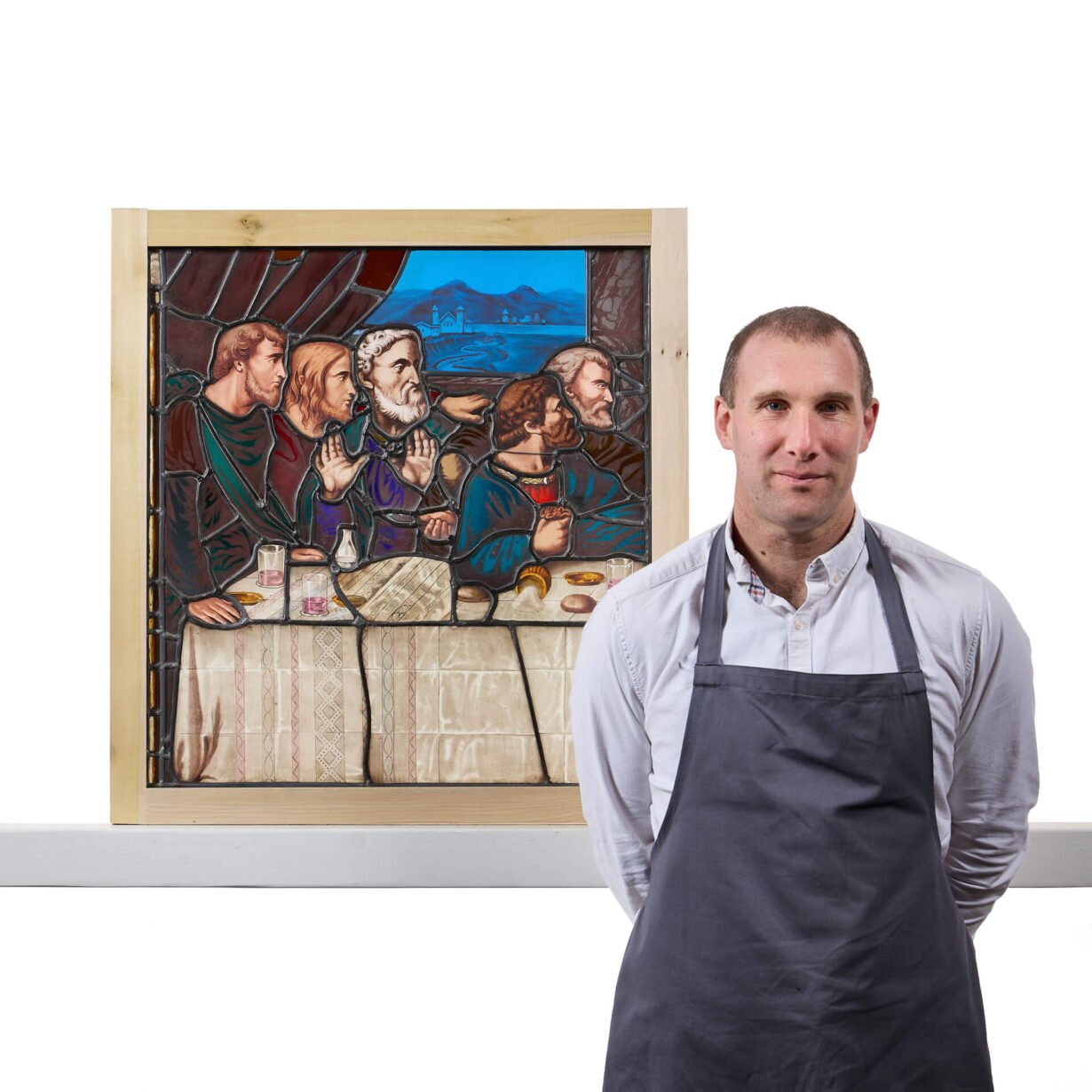
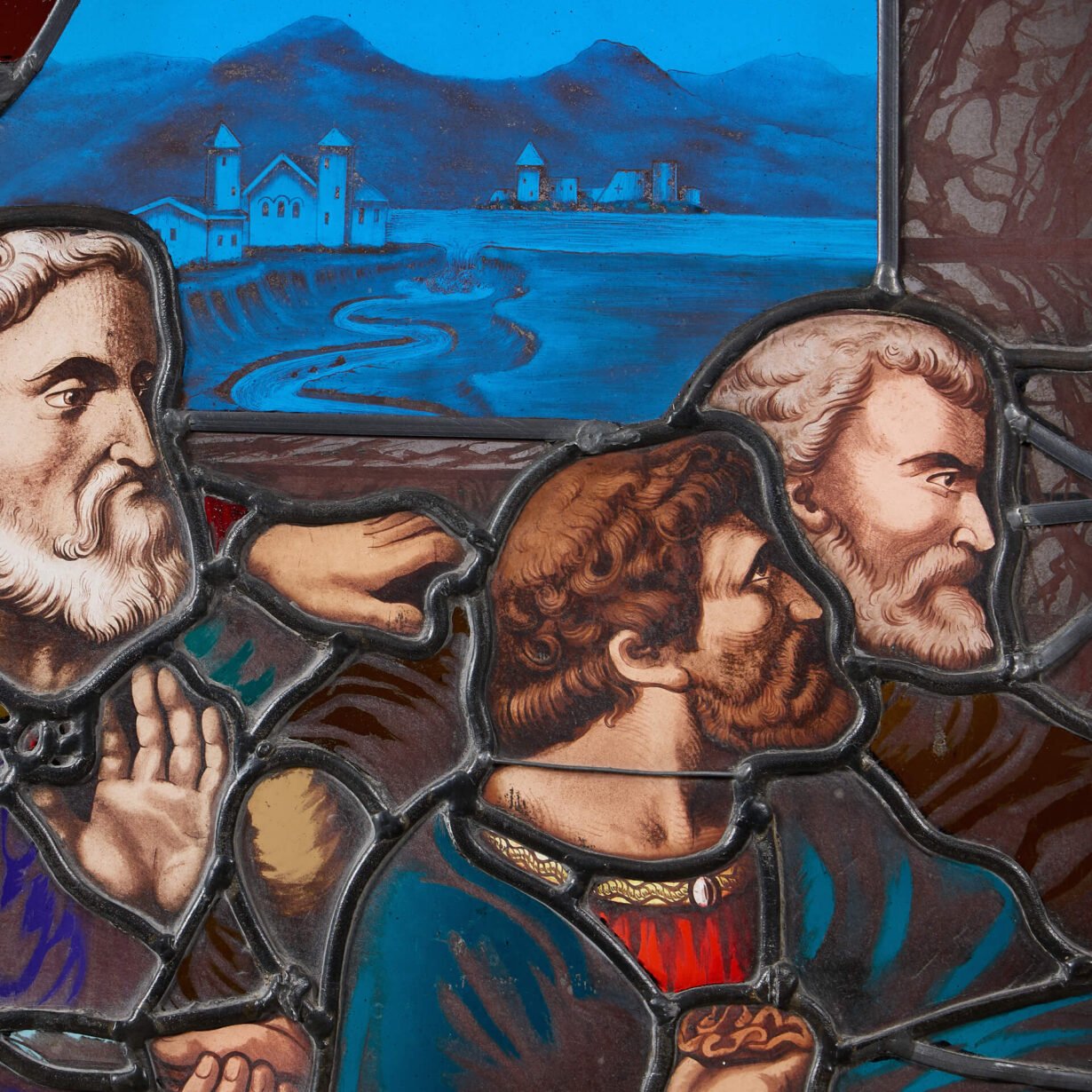
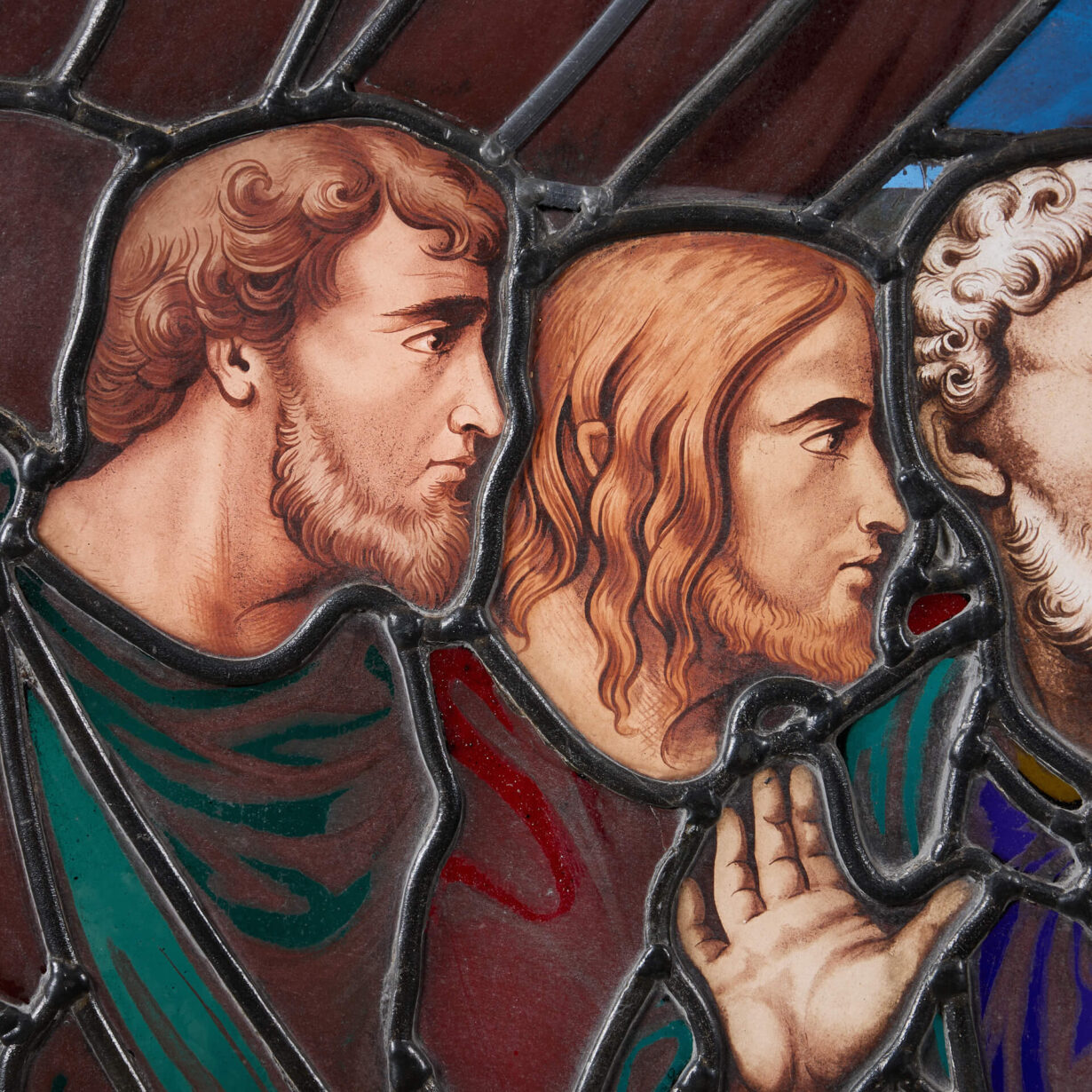
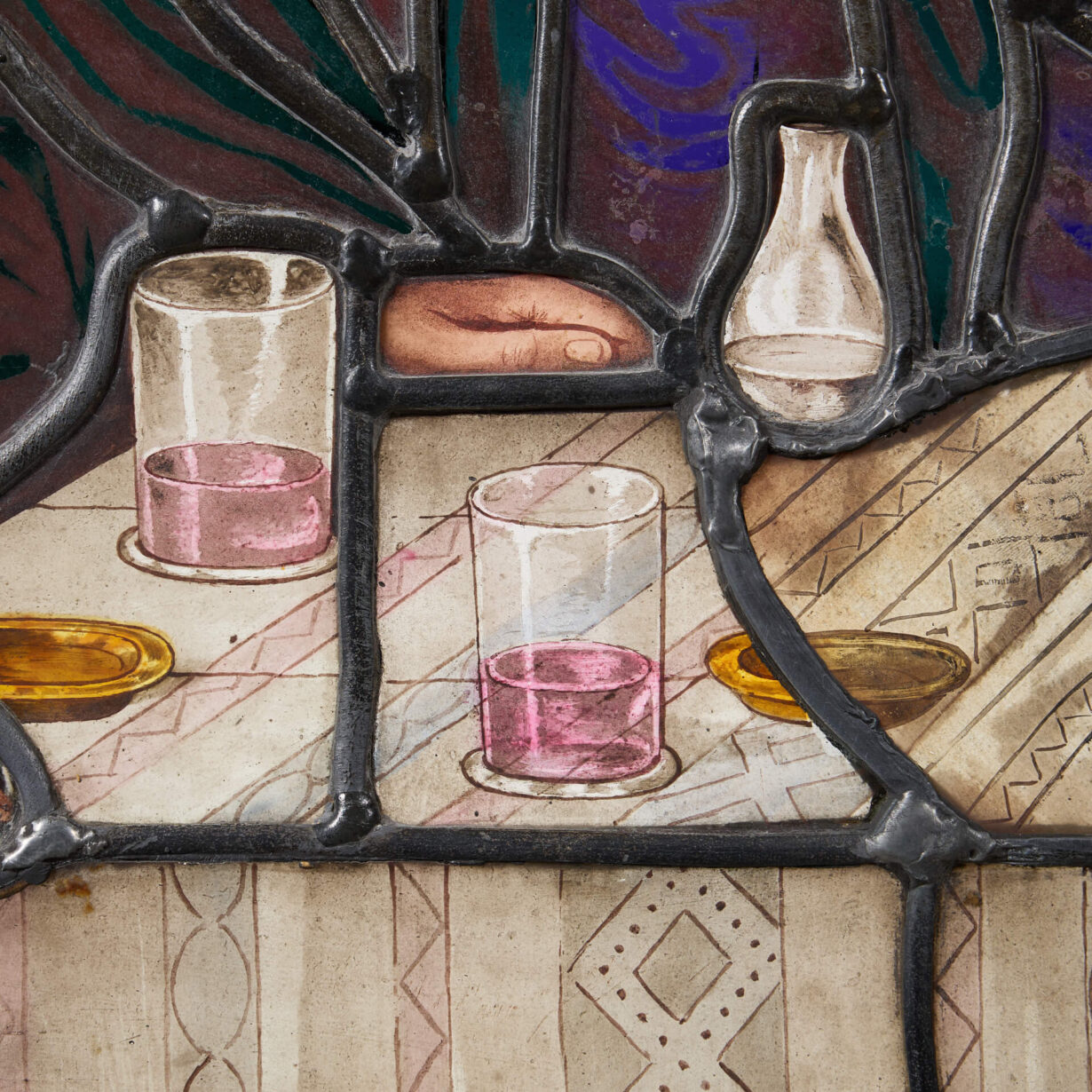
back to topA stained glass window depicting a part of Leonardo da Vinci’s Last Supper scene. A stunning late 19th century, colourful take on the famous religious painting.
This ecclesiastical style window would look beautiful with light shining through into a large room. A piece of art such as this only deserves to be pride of place inside a home or property – perhaps even a new addition to a church.
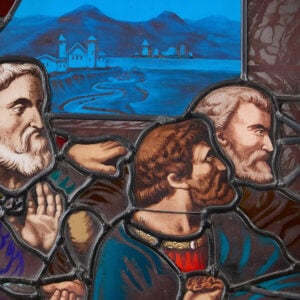
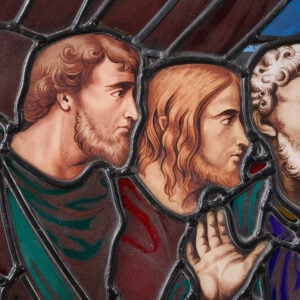
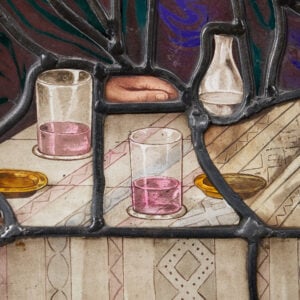
This left-hand section of the last supper shows (from left to right) apostles Bartholomew, James, son of Alphaeus, and Andrew tightly together. Judas Iscariot spills salt with his elbow onto the table, with Saint Peter sat close behind.
This stained glass window was previously in the Holy Trinity Church, in Wordsley, Stourbridge, but has been held in storage since 1831.
The Last Supper
The Last Supper is one of the most famous artworks in the world, painted by Leonardo da Vinci between 1495 and 1498 for the Dominican monastery Santa Maria delle Grazie in Milan. It depicts the dramatic scene described in several closely connected moments in the Gospels, including Matthew 26:21-28, in which Jesus declares that one of the Apostles will betray him and later institutes the Eucharist.
According to Leonardo’s belief that posture, gesture, and expression should manifest the “notions of the mind,” each one of the 12 disciples reacts in a manner that Da Vinci considered fit for that man’s personality.