About this piece
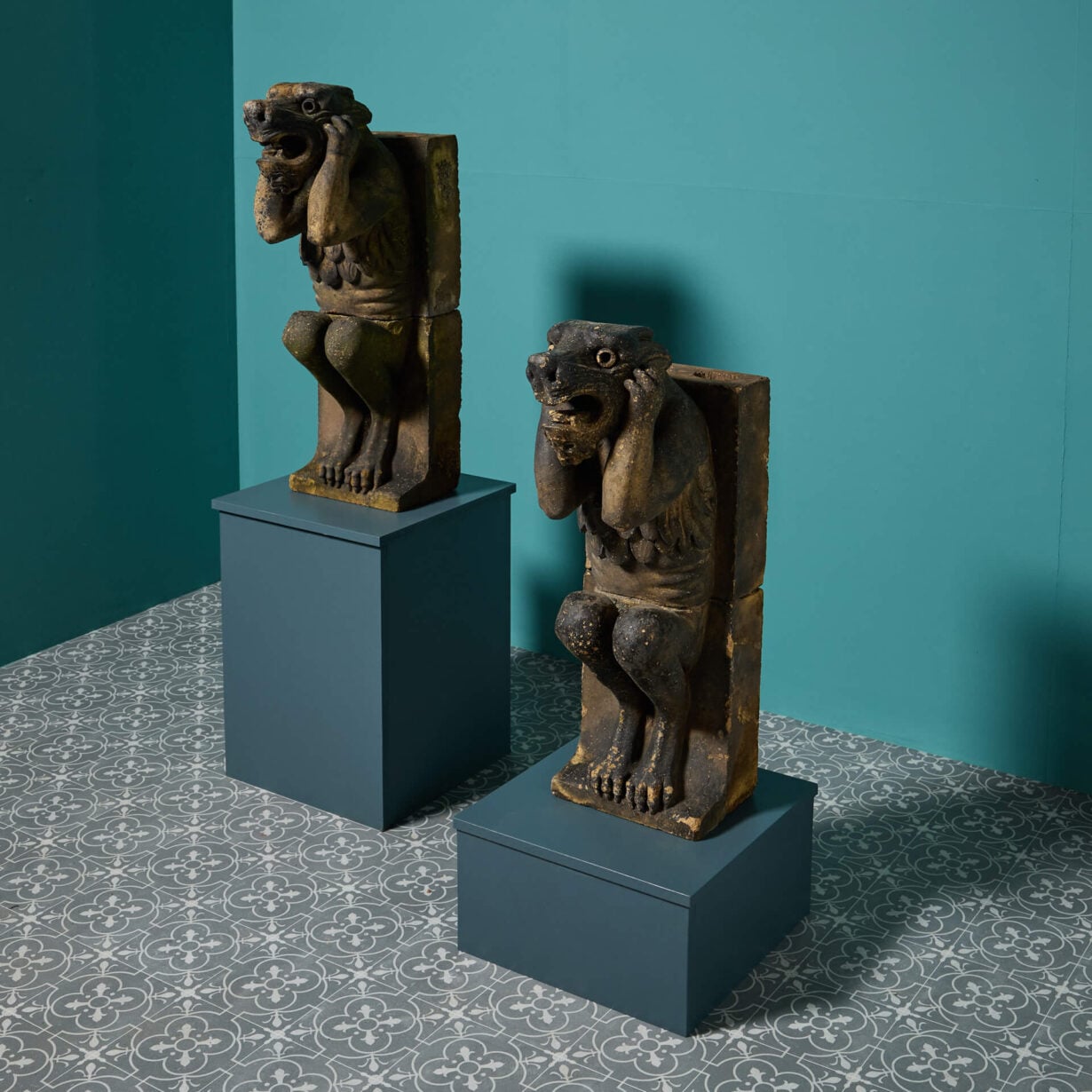
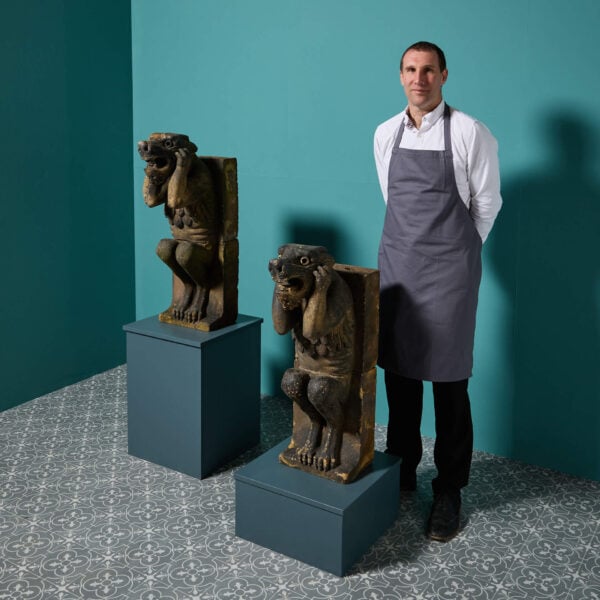
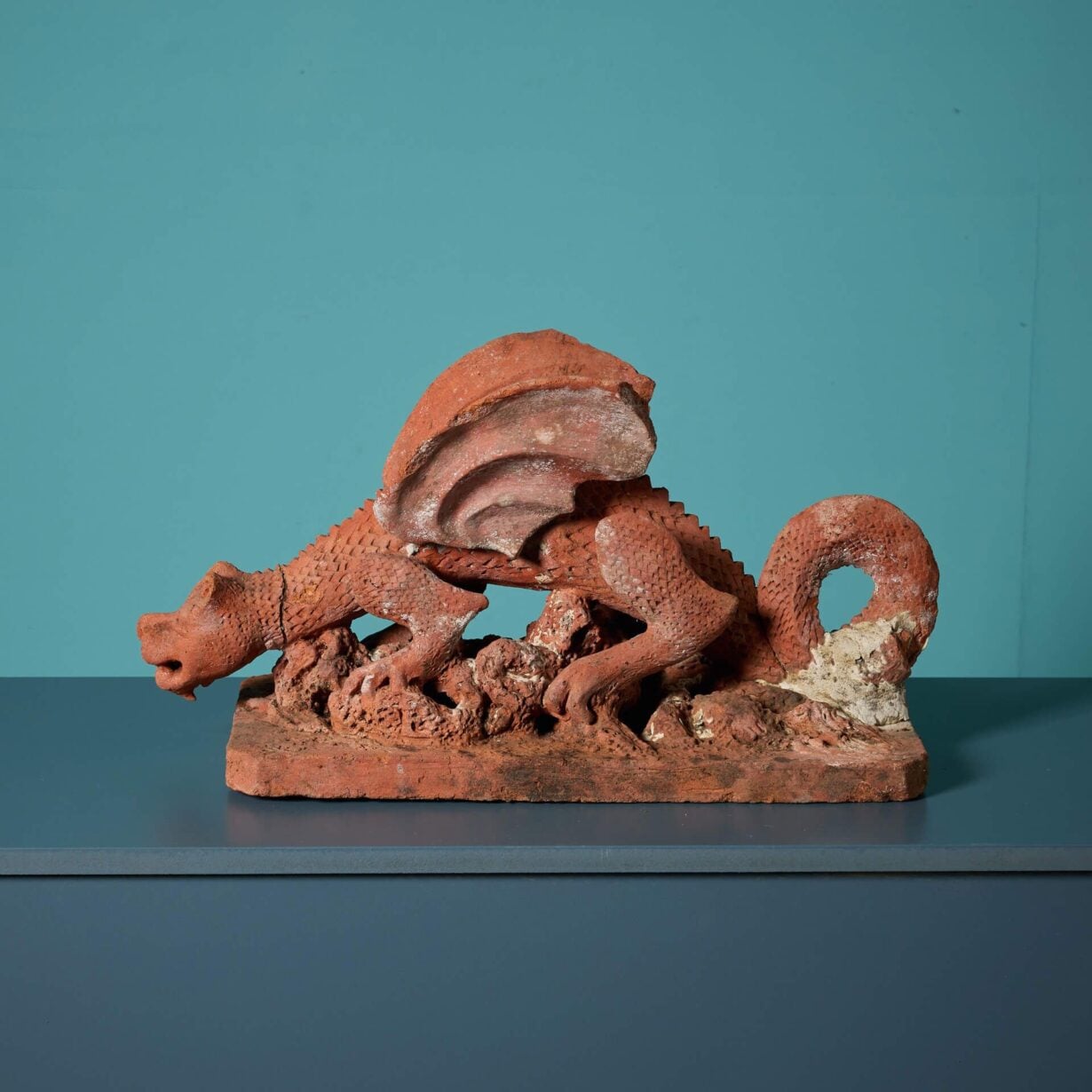
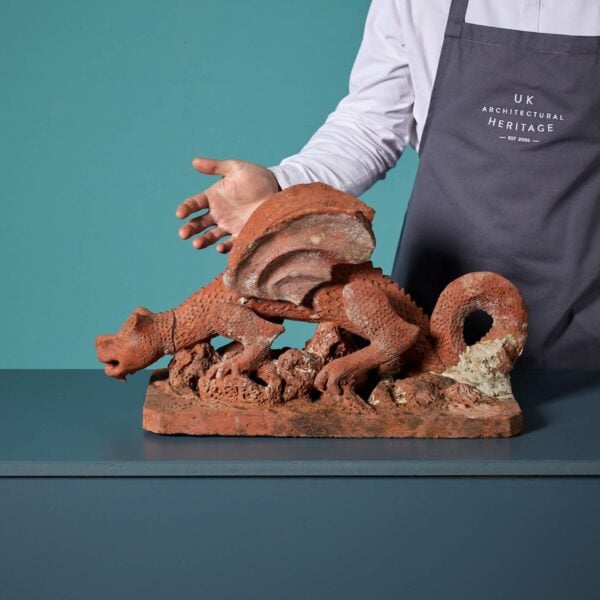
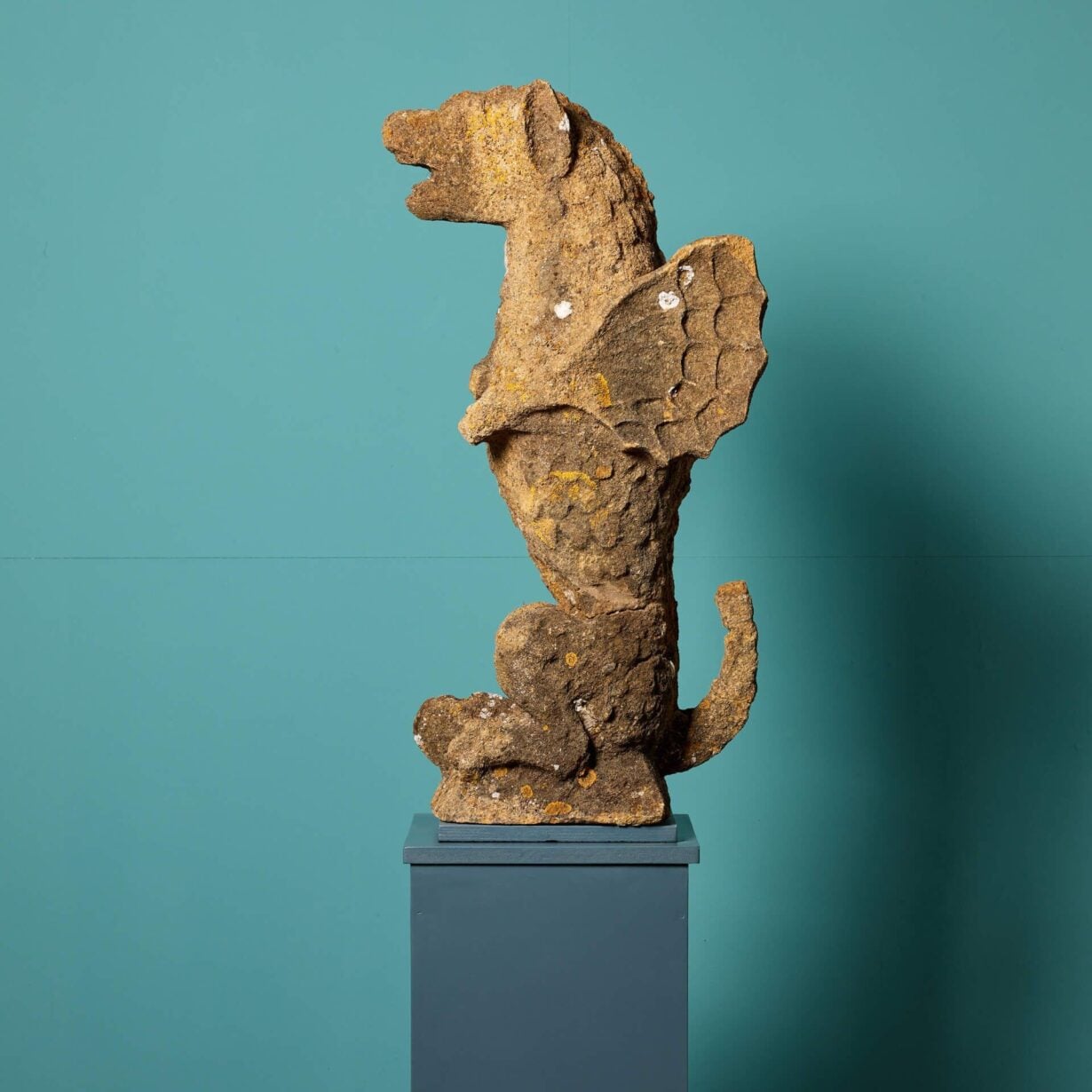
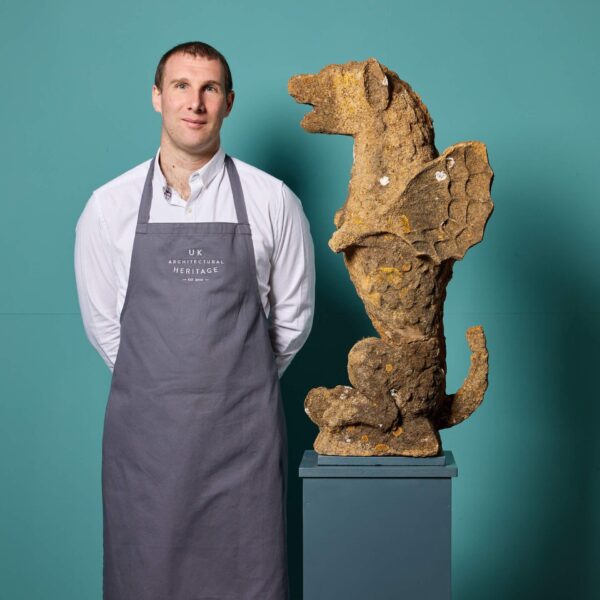
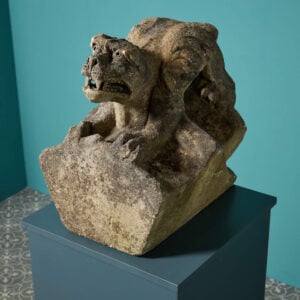
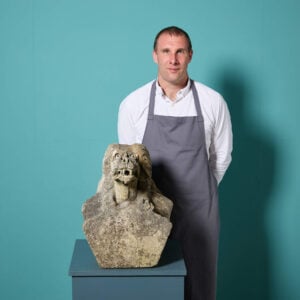
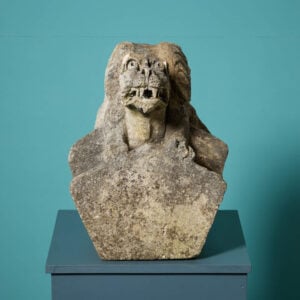
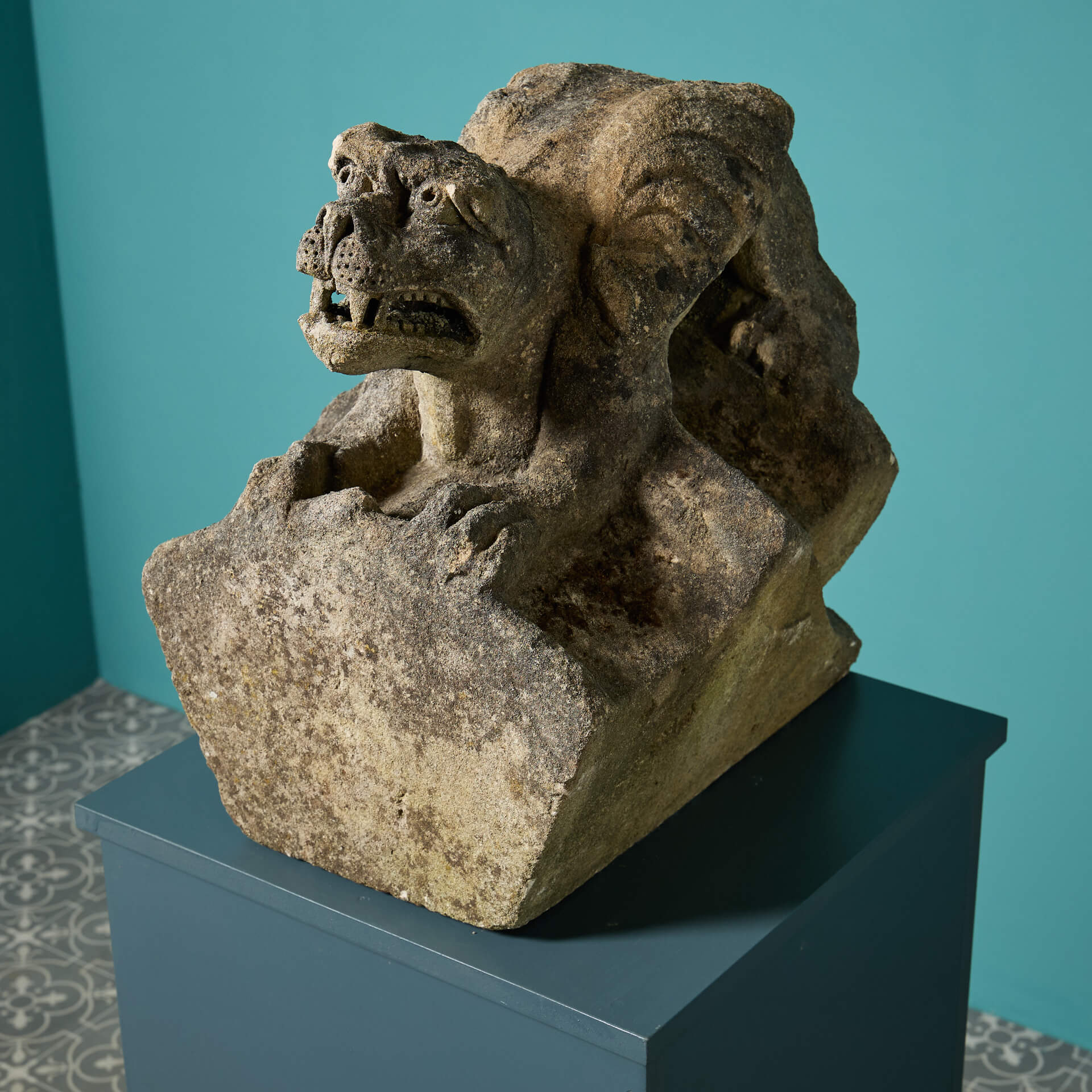
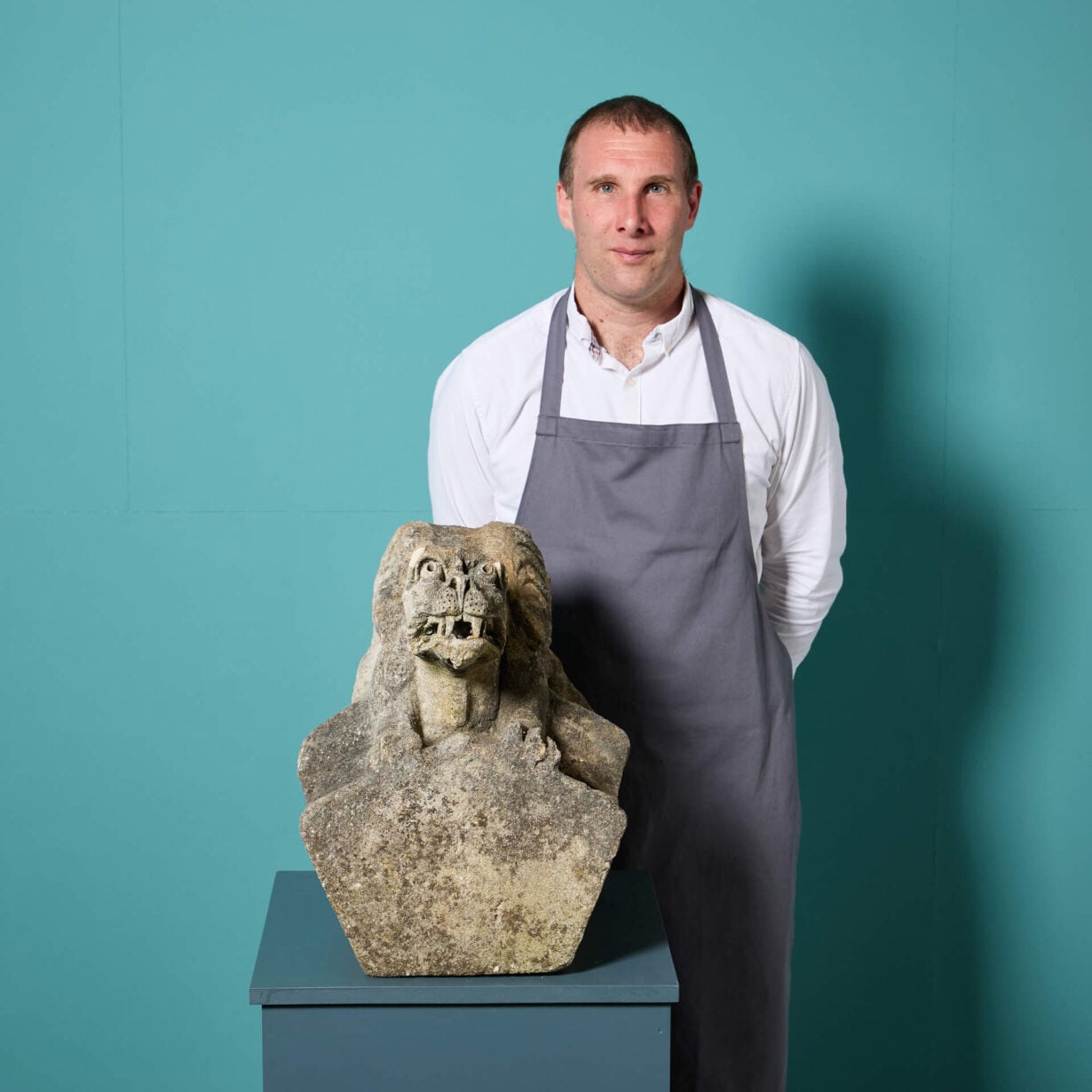
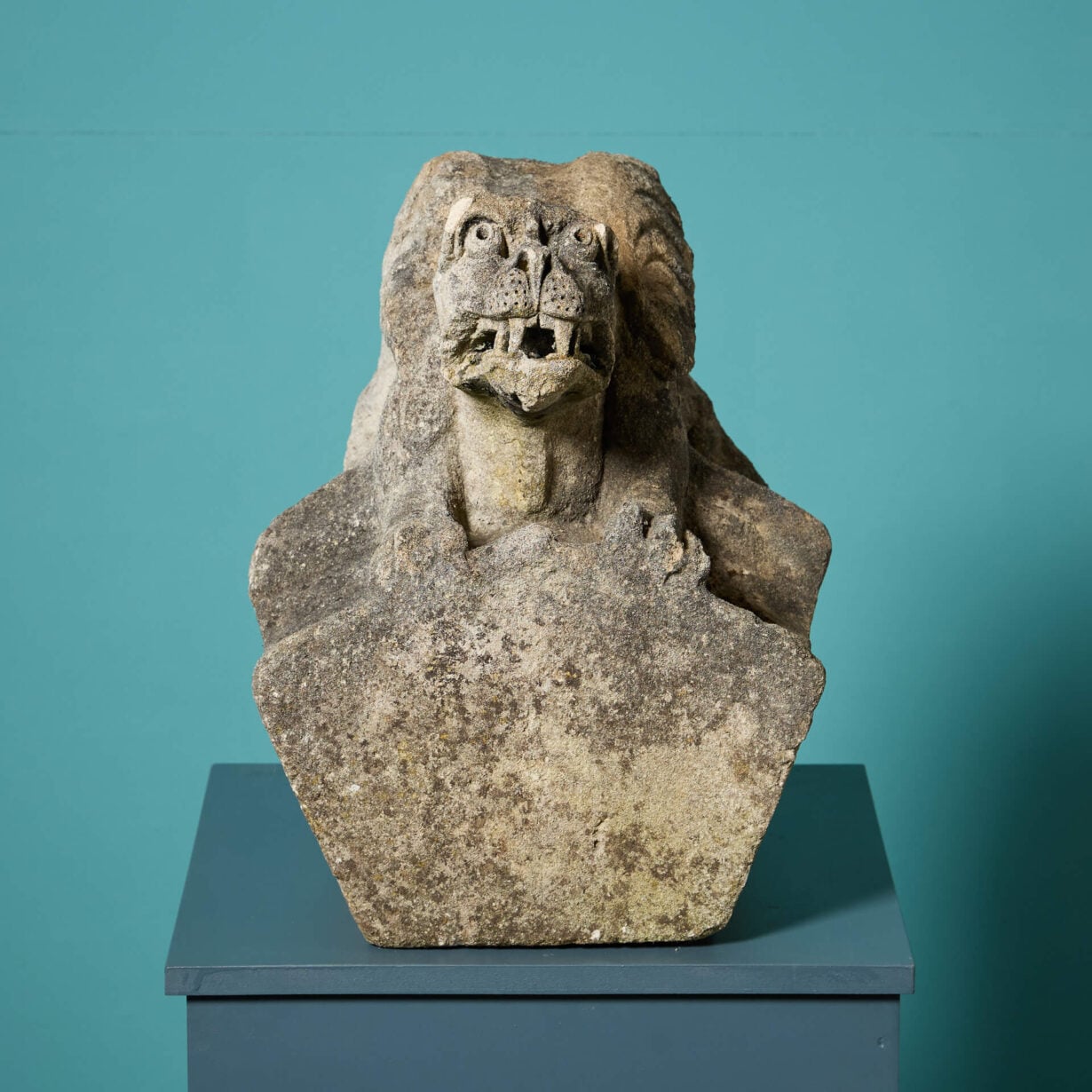
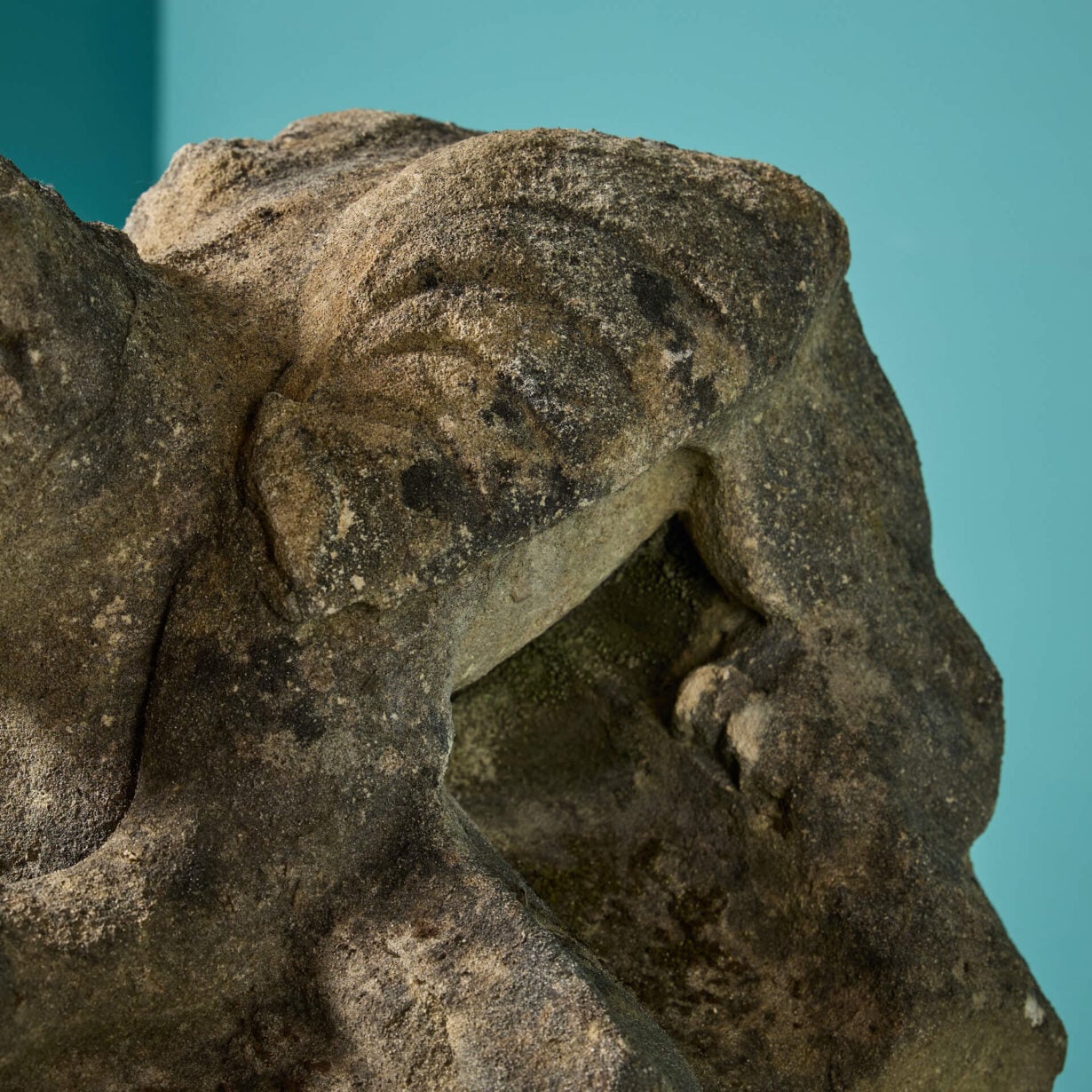
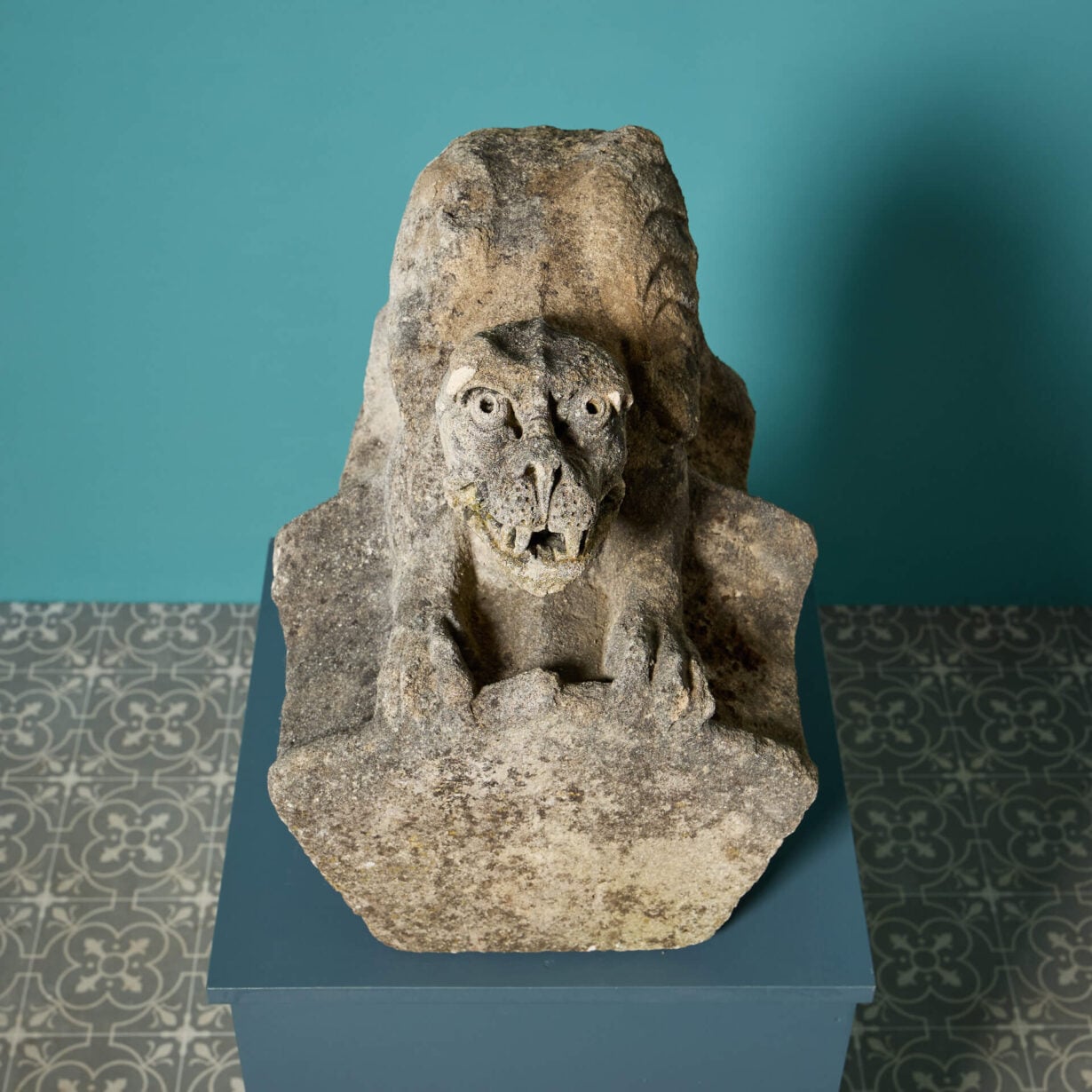
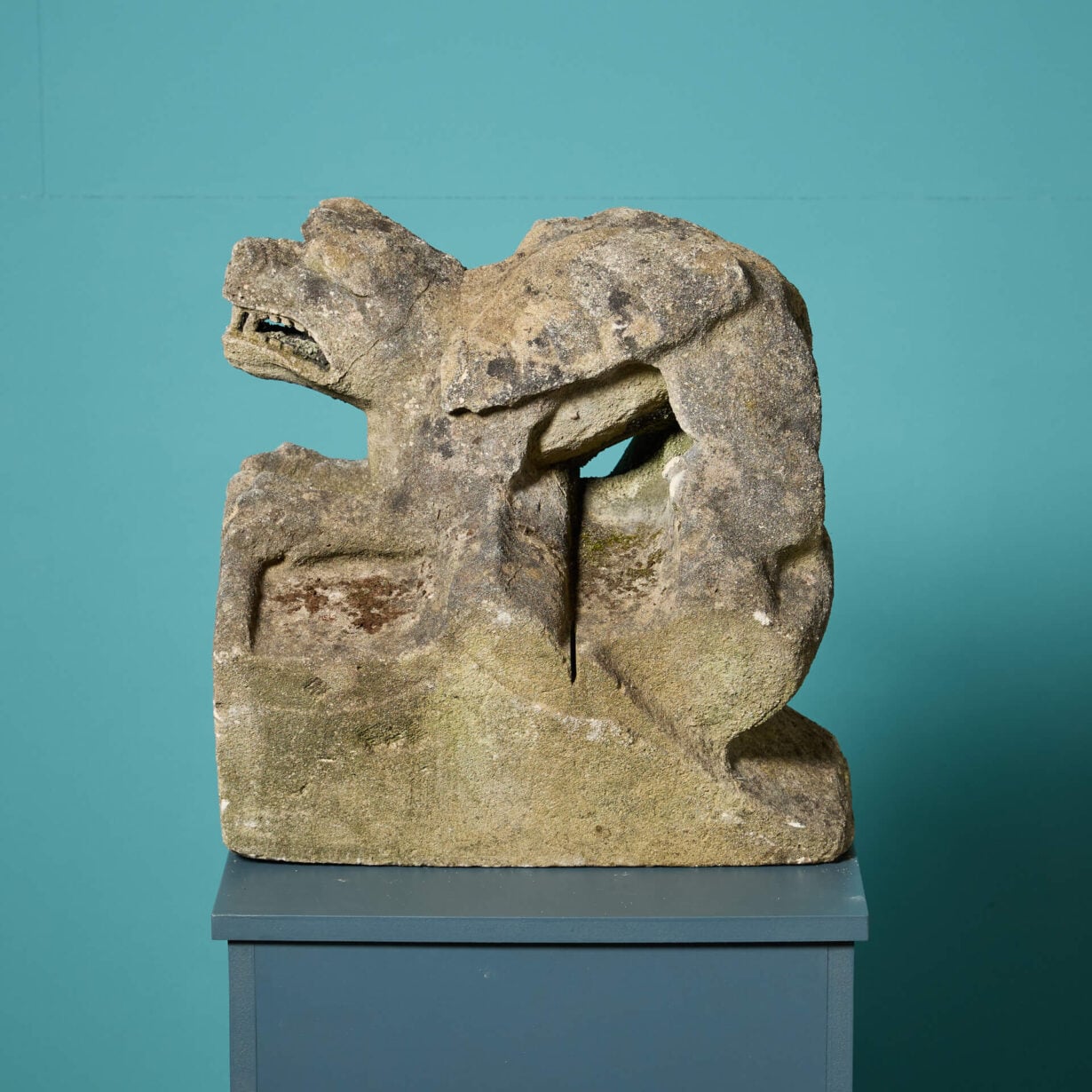
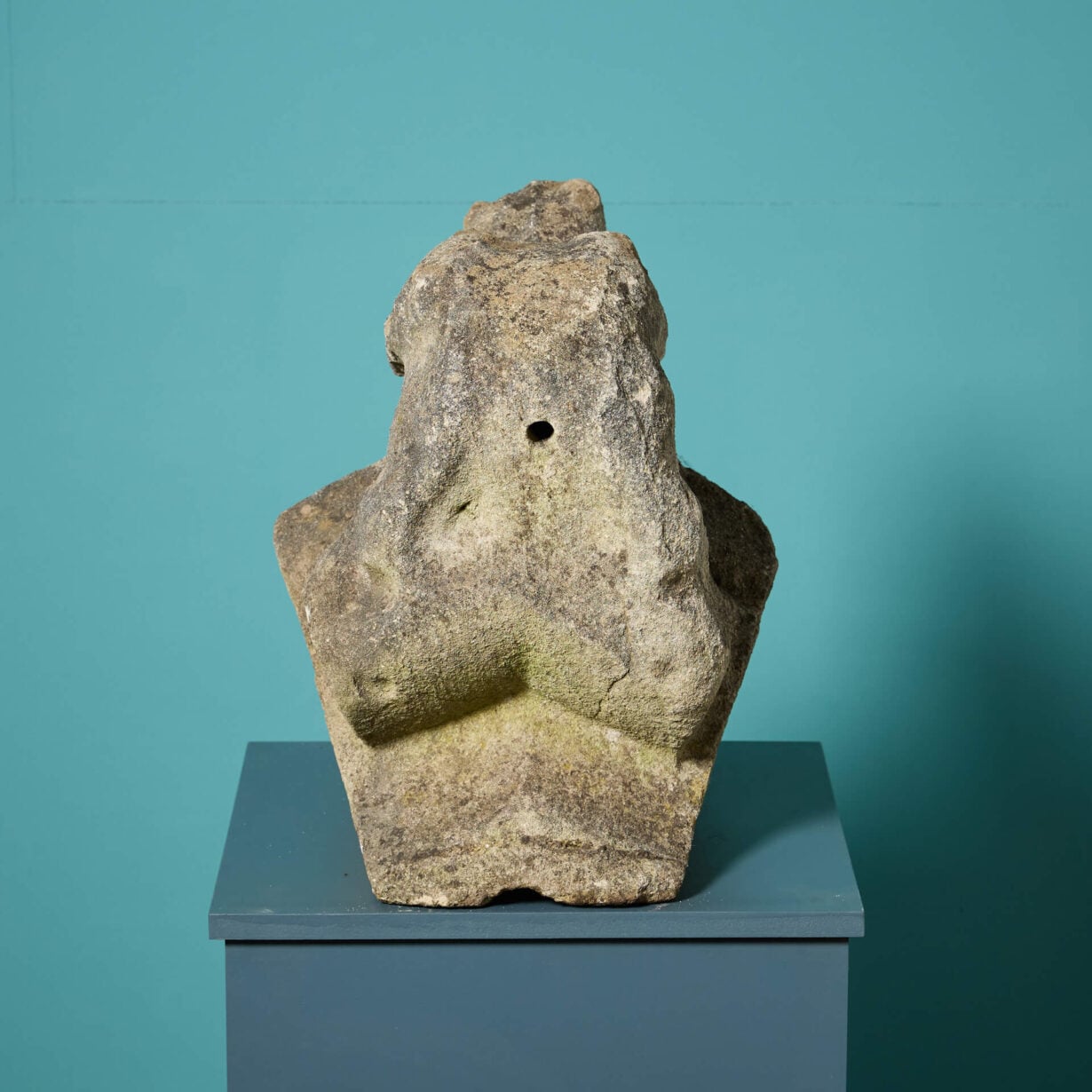
back to topAn interesting 18th/19th century medieval style Cotswold limestone winged beast from Sir Roy Strong’s Laskett Garden, Herefordshire.
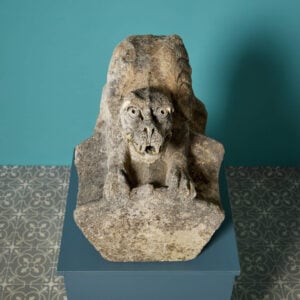
This statue was likely once situated within an old or religious building such as an ancient church, the gargoyle-esque animal peering down from the top of a stone column or building corner.
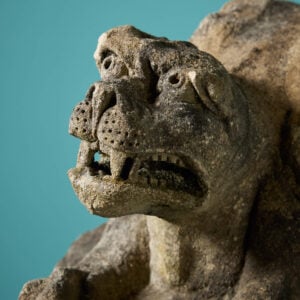
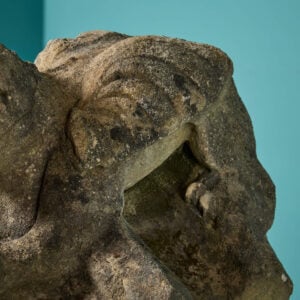
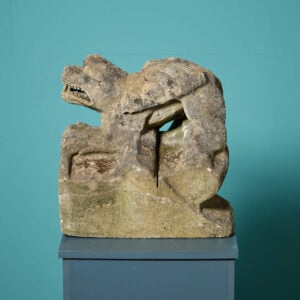
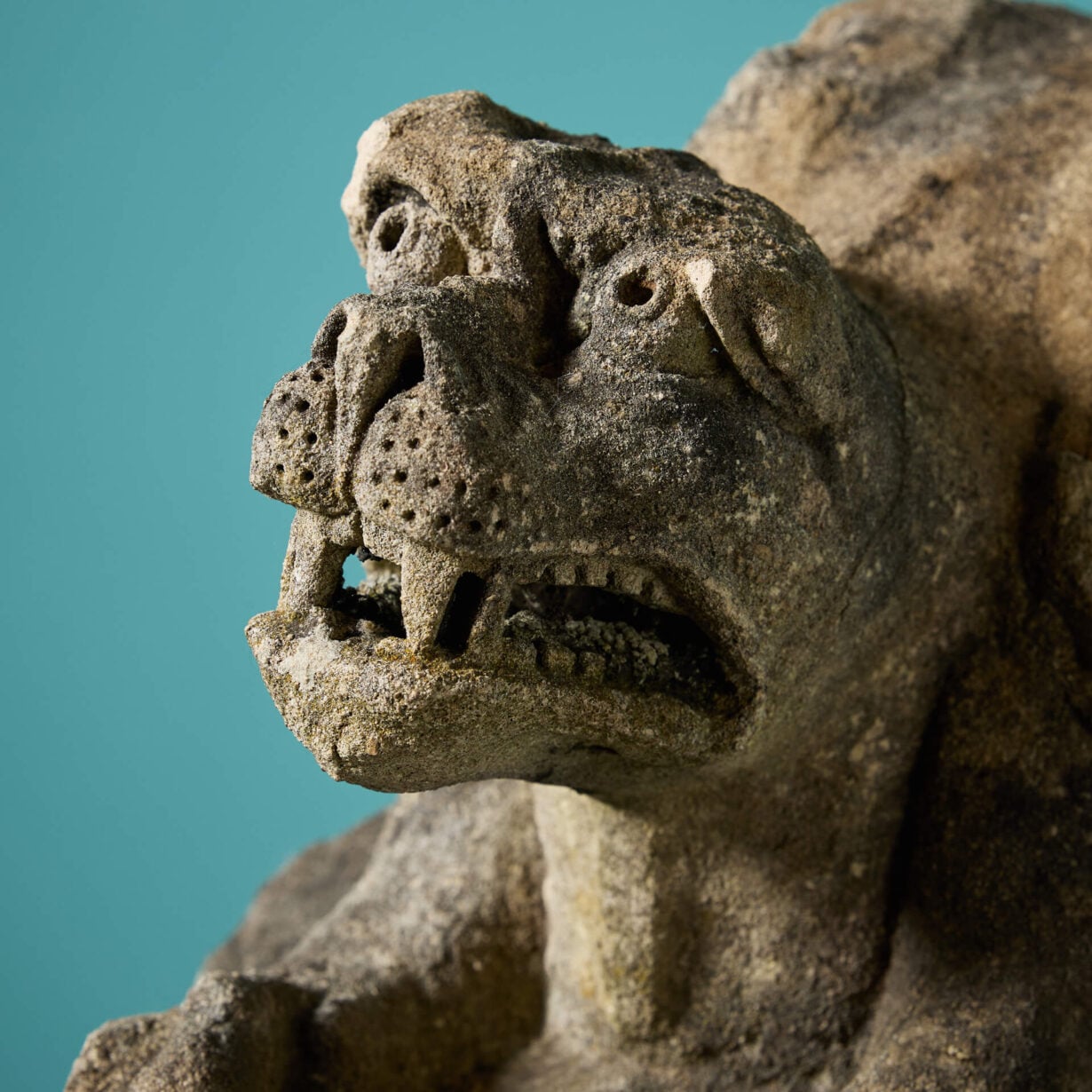
It has a mythological presence, the beast hunched over like a preying wolf with wings on its back. Despite its age, the beast’s face unusually retains a lot of it’s definition, baring great teeth, deep, glaring eyes and a whiskered nose as if to pounce on its occupant or ward off evil spirits.
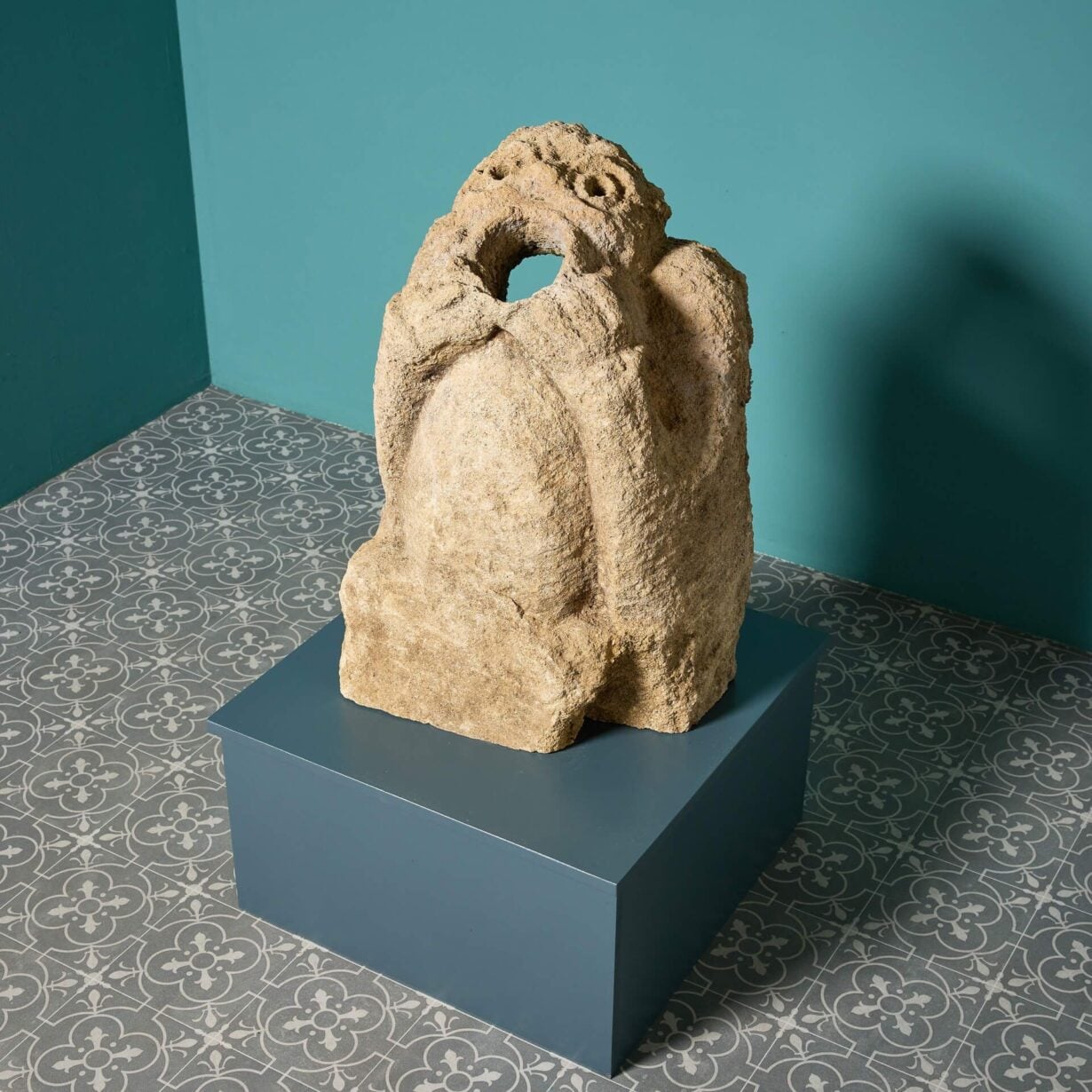
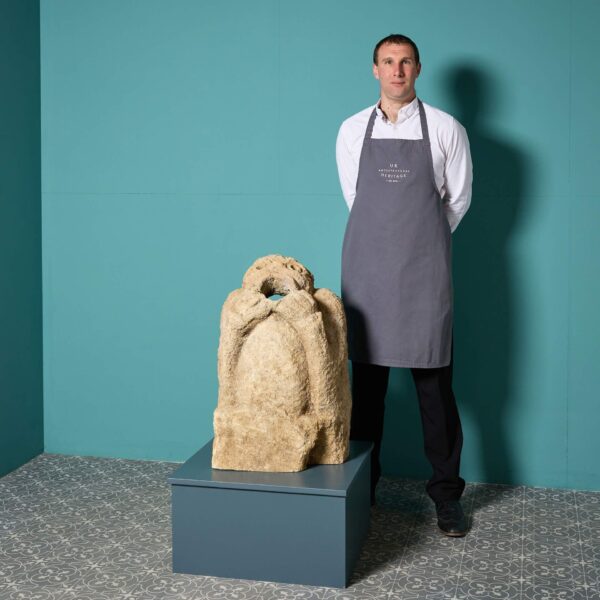
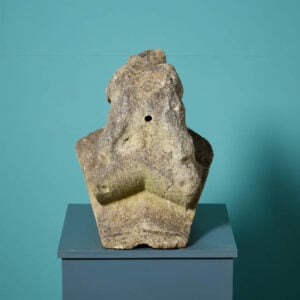
Today, this beastly statue could be incorporated into a garden scheme or serve as an interesting historical interior display piece. Alternatively, there is a hole running from the base to the mouth which could be adapted into a unique garden fountain.
Sir Roy Strong CH, FRSL, FSA (B. 23 August 1935)
Born in Middlesex, England in 1935, Art Historian Sir Roy Strong was able to attend grammar school which led to him earning a first class honours degree in history. This was followed by a PHD from the prestigious Warburg institute, before he became a research fellow at the London Institute of Historical Research.
Strong went on to become the director of the National Portrait Gallery at age 32 before becoming the youngest ever Director at the Victoria & Albert (V&A) Museum at age 38 in 1974. In 1973, Sir Roy Strong and his wife Julia Trevelyan Oman, Lady Strong CBE (11 July 1930 – 10 October 2003) exited London on the tail end of the cultural revolution of the sixties and eloped to a rural property in Much Birch, Herefordshire.
Over the next thirty years the couple built up the four-acre Laskett Garden, the largest created since the second world war. The garden became a tribute to their individual and joint achievements, with sections dedicated to Queen Elizabeth after Strong’s early interests in the portraiture of Queen Elizabeth I, Shakespeare after Roy was awarded the prestigious Shakespeare award, Covent Garden after Julia’s commissions and the Beaton Bridge after the publication of Cecil Beaton’s Royal Portraits by Roy Strong.