About this piece
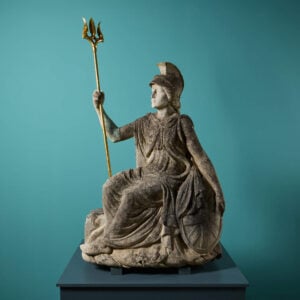
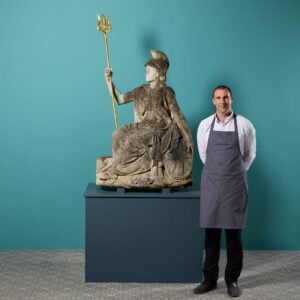
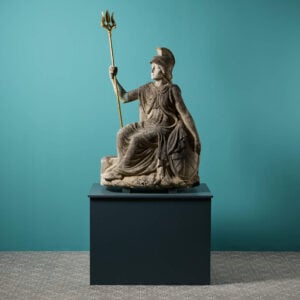
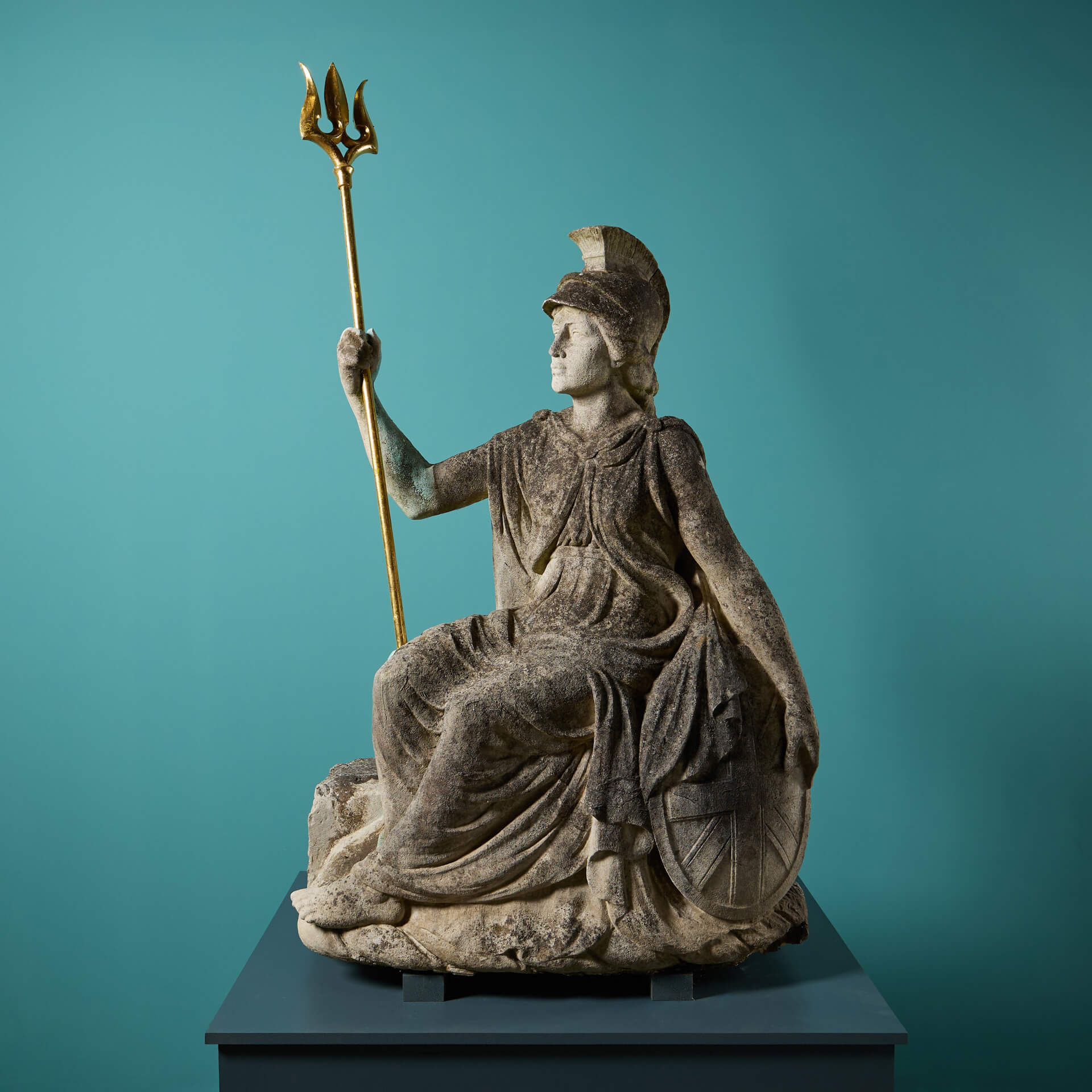
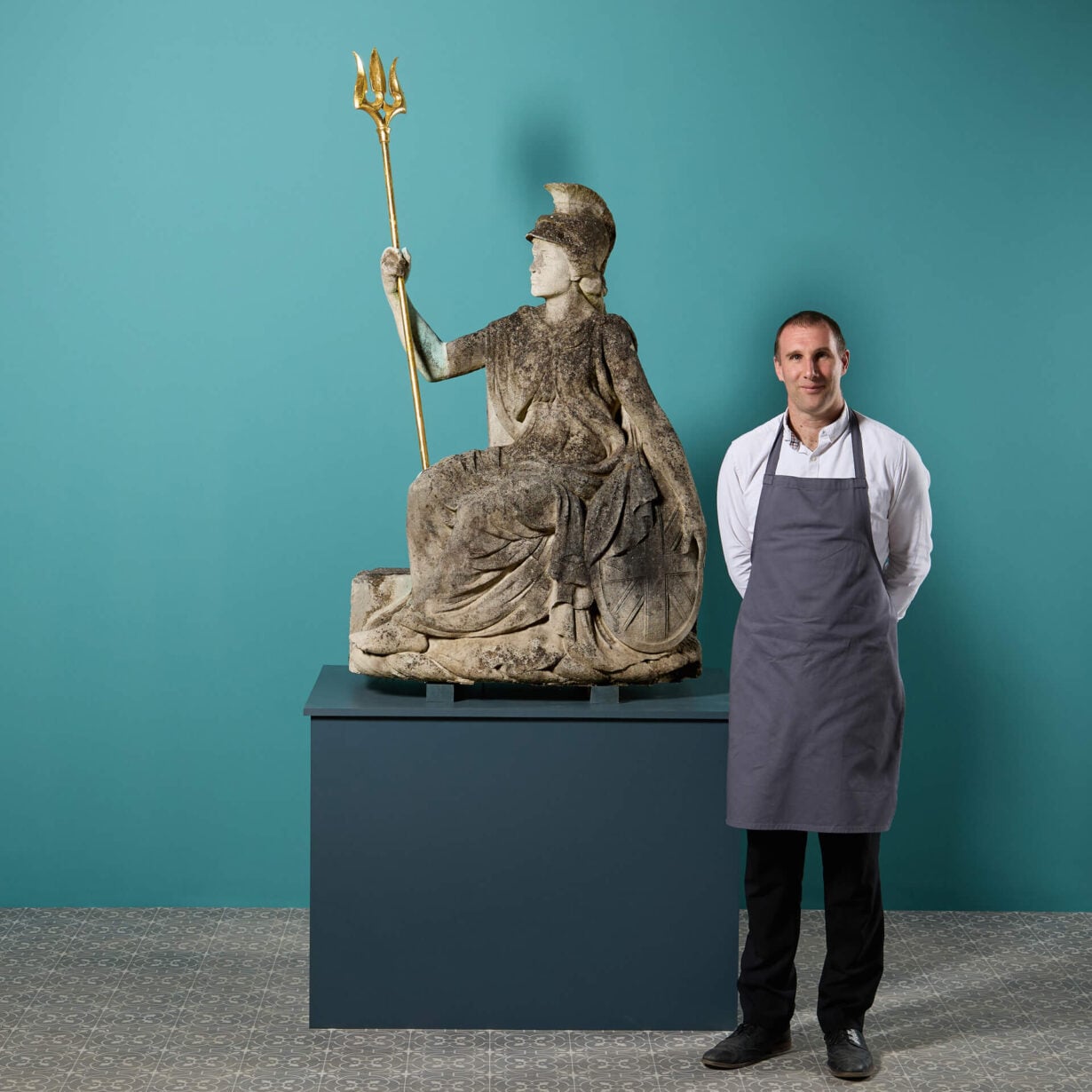
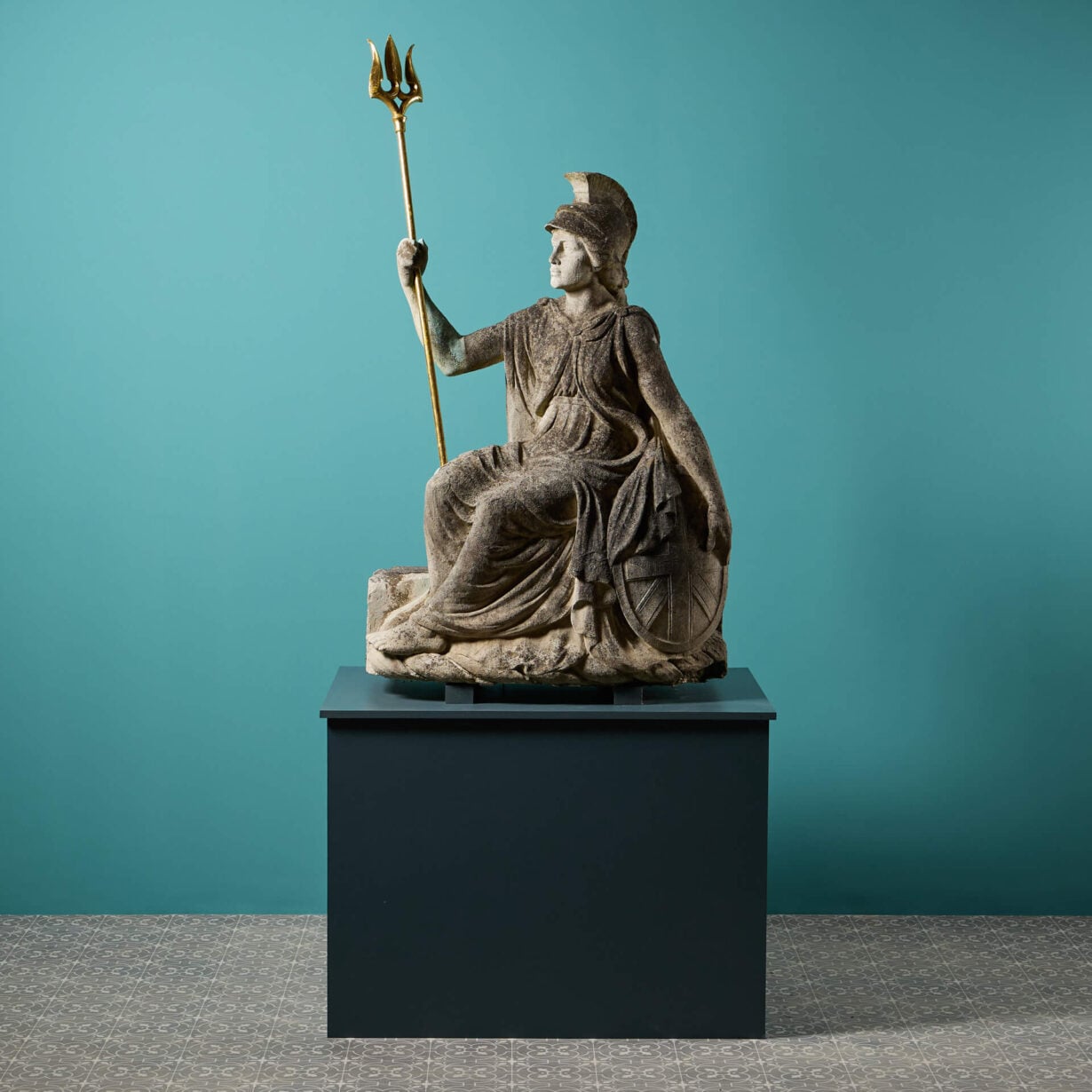
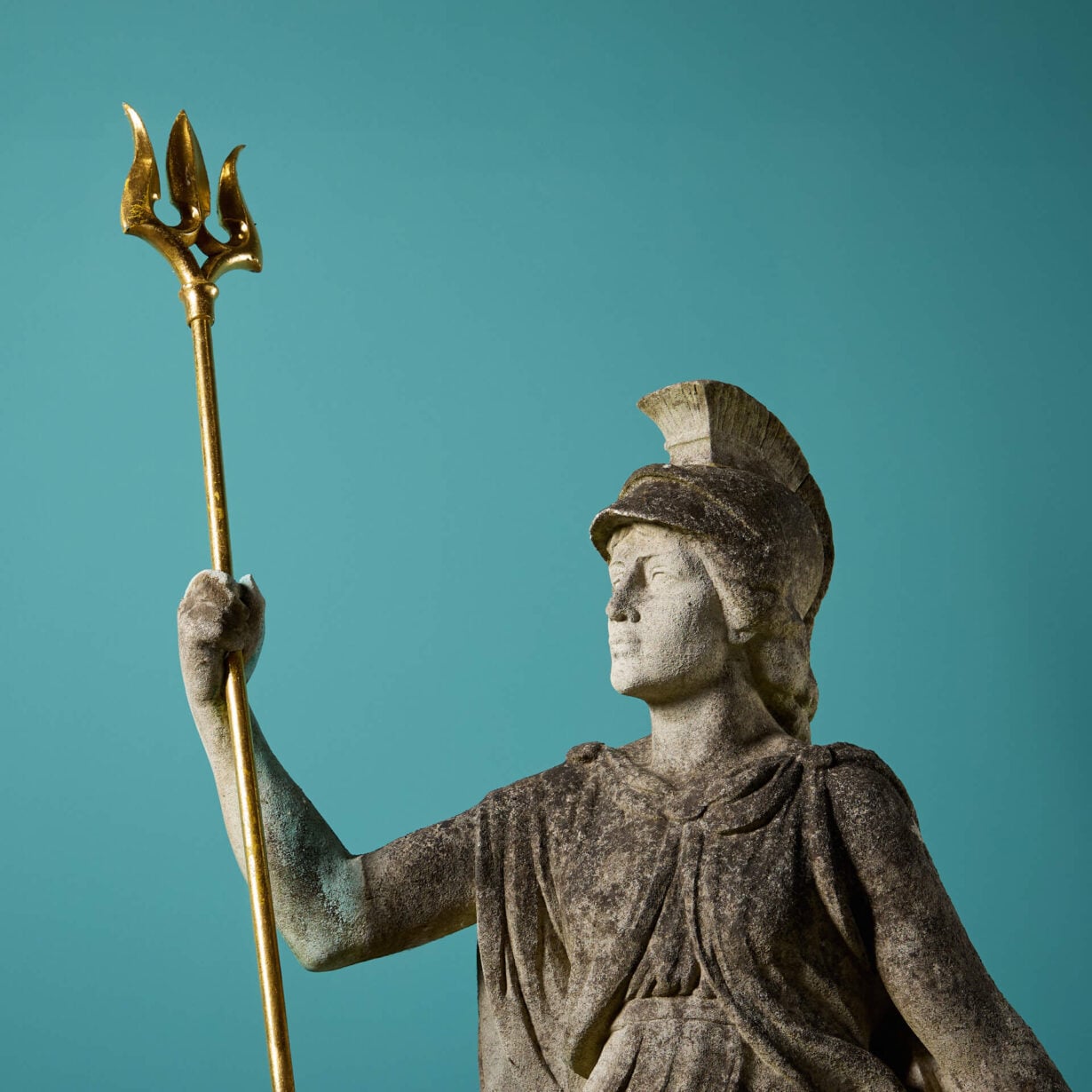
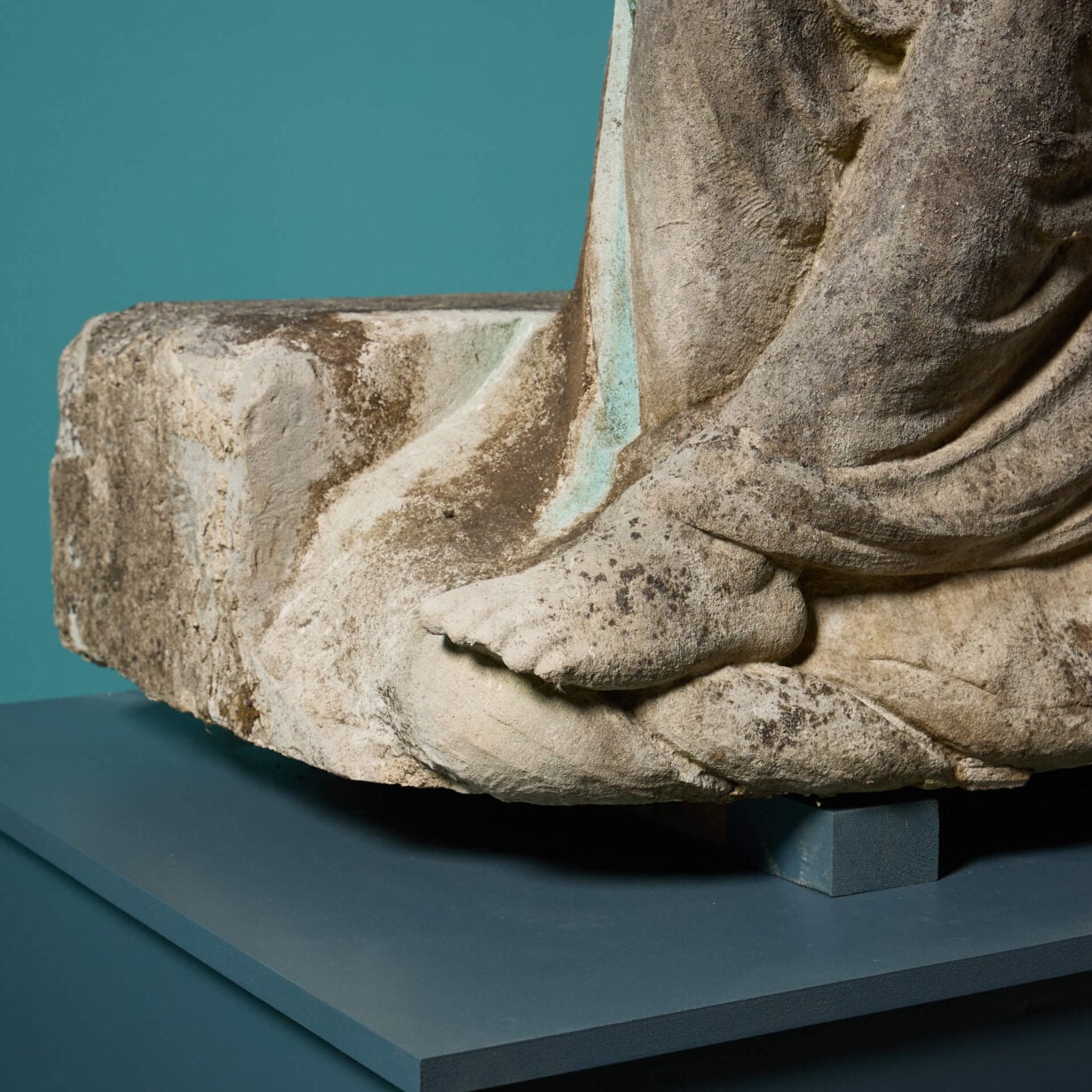
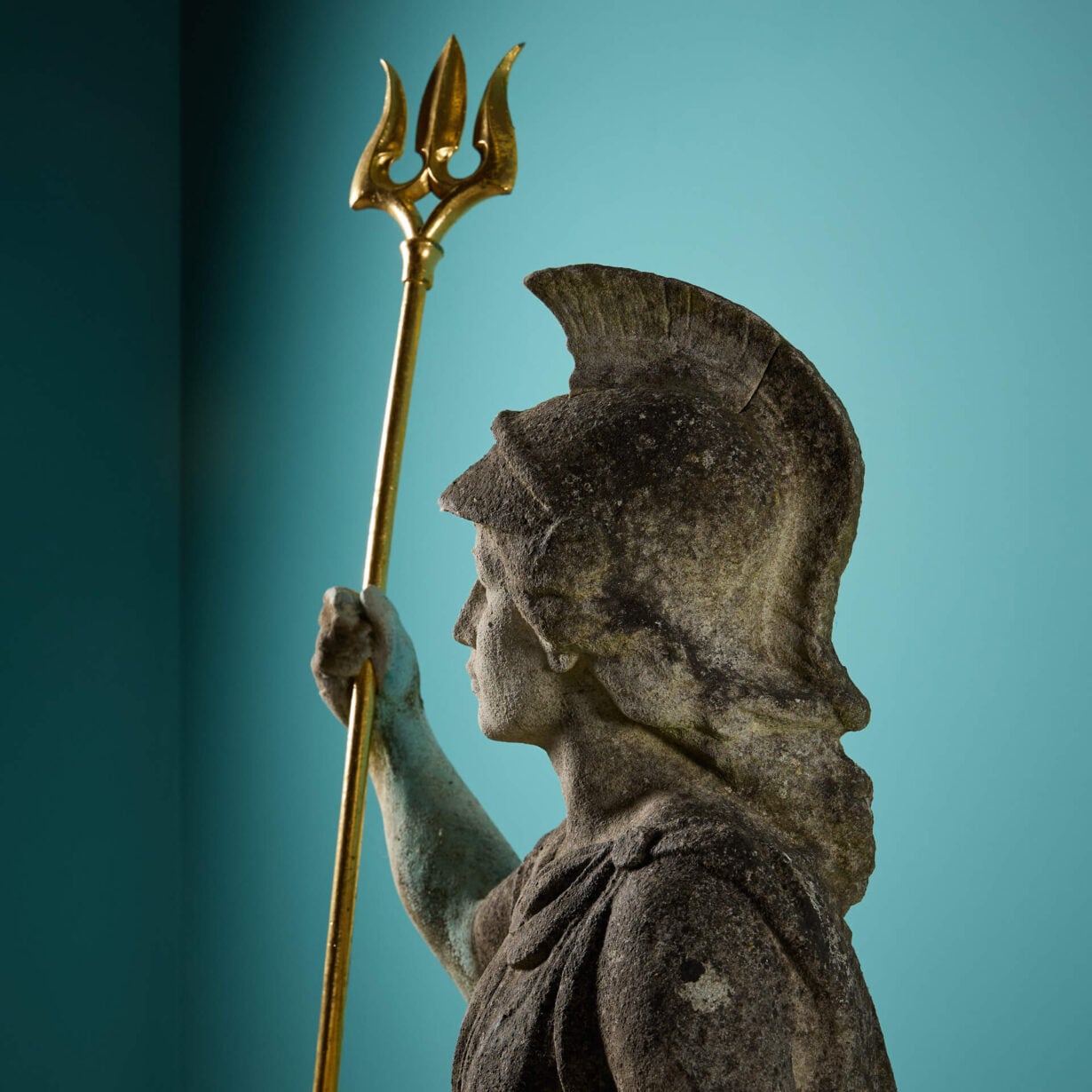
back to topA 19th century Portland limestone Britannia statue with gilded trident from Sir Roy Strong’s Laskett Garden, Herefordshire.
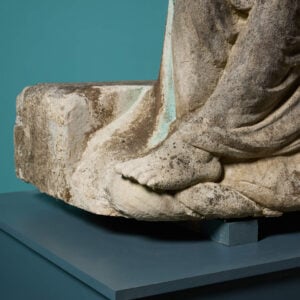
This magnificent statue of Britannia was likely part of a gable pediment, mounted high on a London building.
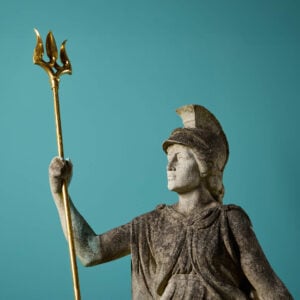
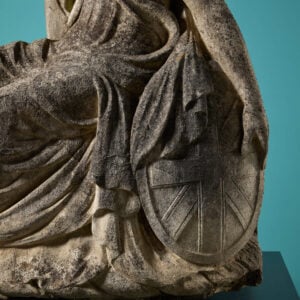
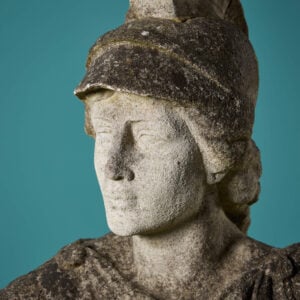
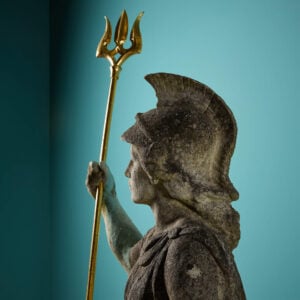
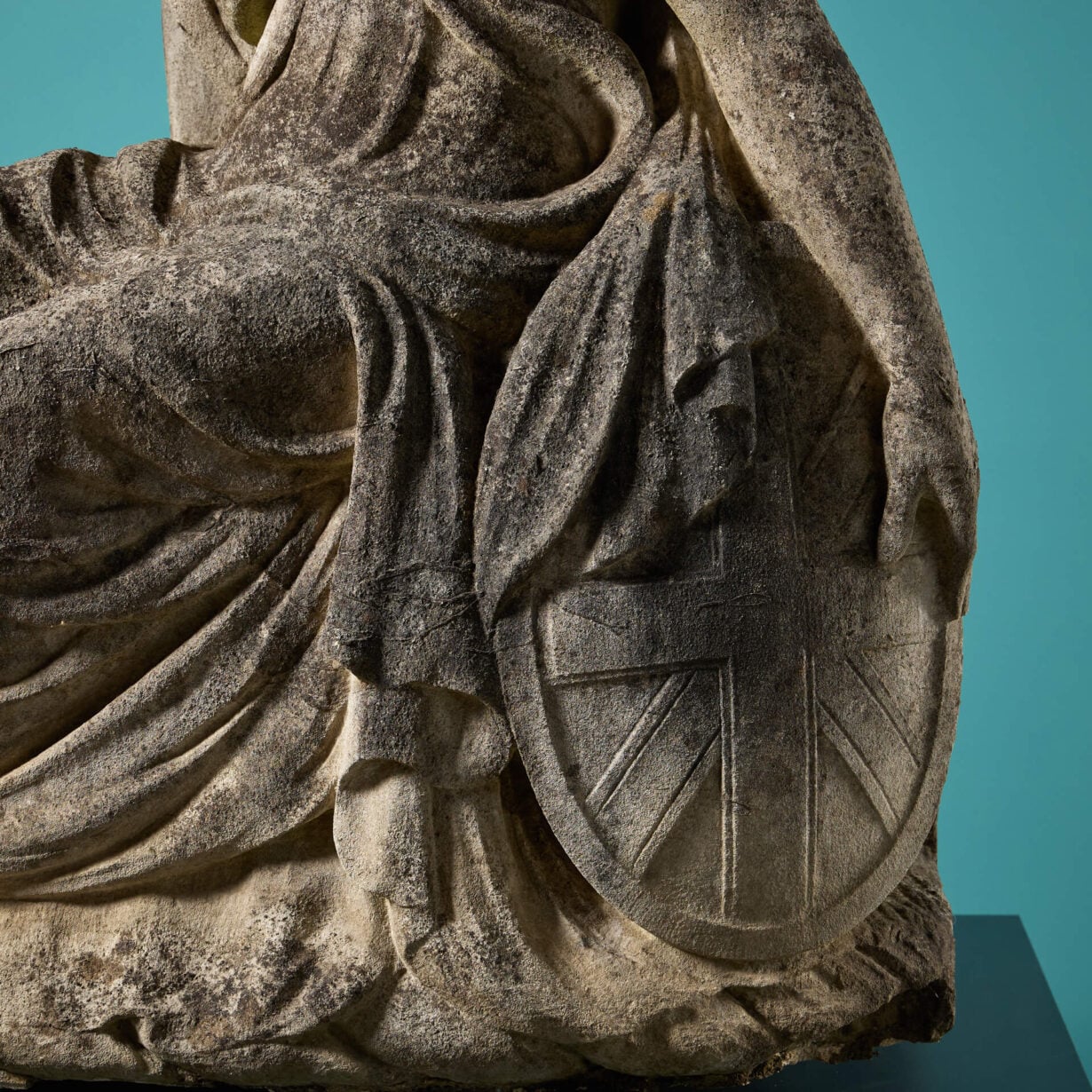
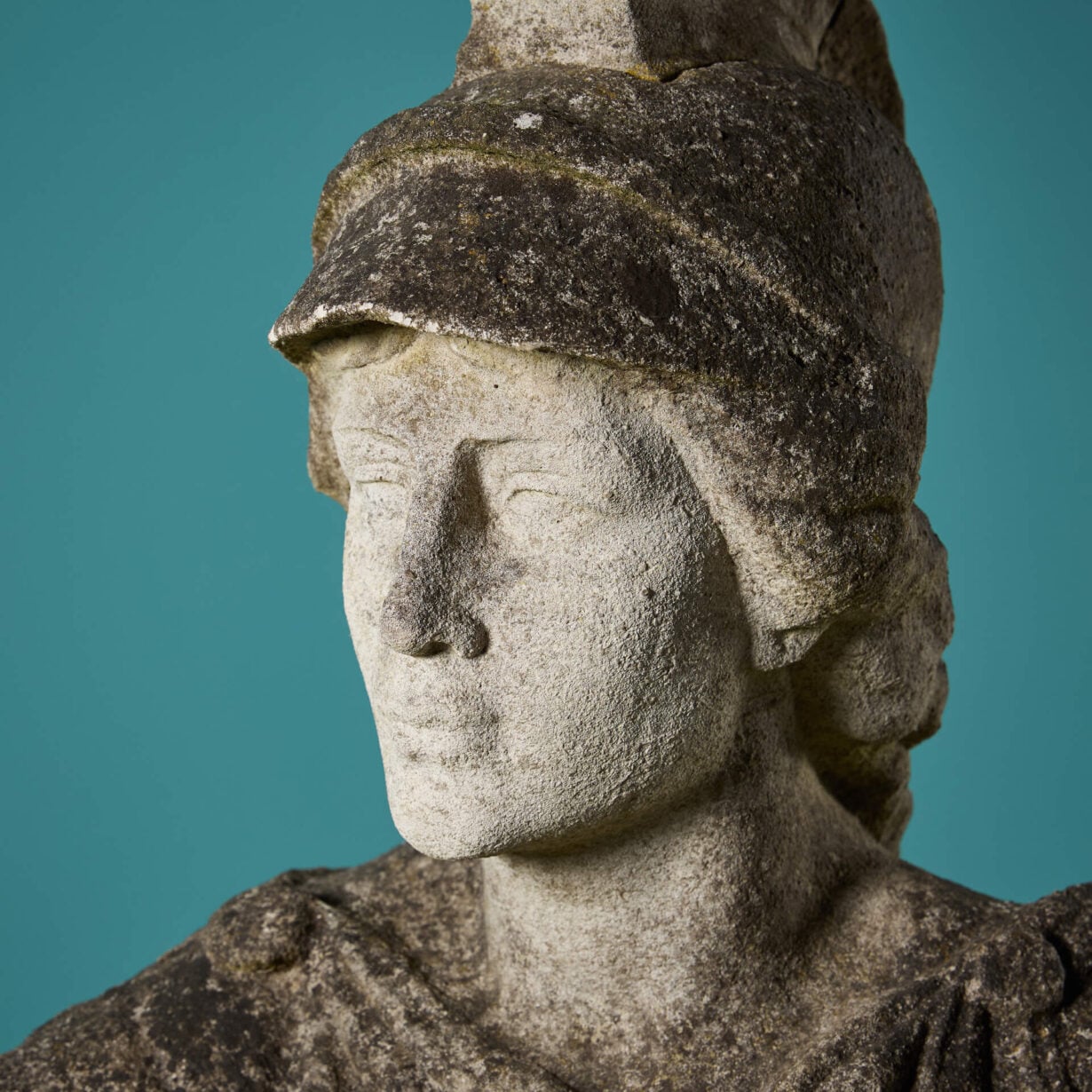
Posed in a Corinthian style helmet, draped in a flowing chiton, Britannia grasps a shield bearing the Union-style cross and a magnificent gilded bronze trident.
Britannia is the personification of Great Britain. In this form with Neptune’s three-pronged trident, the statue is to celebrate the triumphs and dominance of the British Royal Navy during the late 18th century.
Additional Information
Measurement not including trident – 168cm to top of trident.
Sir Roy Strong CH, FRSL, FSA (B. 23 August 1935)
Born in Middlesex, England in 1935, Art Historian Sir Roy Strong was able to attend grammar school which led to him earning a first class honours degree in history. This was followed by a PHD from the prestigious Warburg institute, before he became a research fellow at the London Institute of Historical Research.
Strong went on to become the director of the National Portrait Gallery at age 32 before becoming the youngest ever Director at the Victoria & Albert (V&A) Museum at age 38 in 1974. In 1973, Sir Roy Strong and his wife Julia Trevelyan Oman, Lady Strong CBE (11 July 1930 – 10 October 2003) exited London on the tail end of the cultural revolution of the sixties and eloped to a rural property in Much Birch, Herefordshire.
Over the next thirty years the couple built up the four-acre Laskett Garden, the largest created since the second world war. The garden became a tribute to their individual and joint achievements, with sections dedicated to Queen Elizabeth after Strong’s early interests in the portraiture of Queen Elizabeth I, Shakespeare after Roy was awarded the prestigious Shakespeare award, Covent Garden after Julia’s commissions and the Beaton Bridge after the publication of Cecil Beaton’s Royal Portraits by Roy Strong.