


About this piece
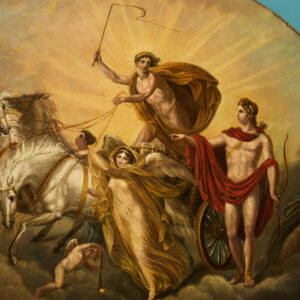
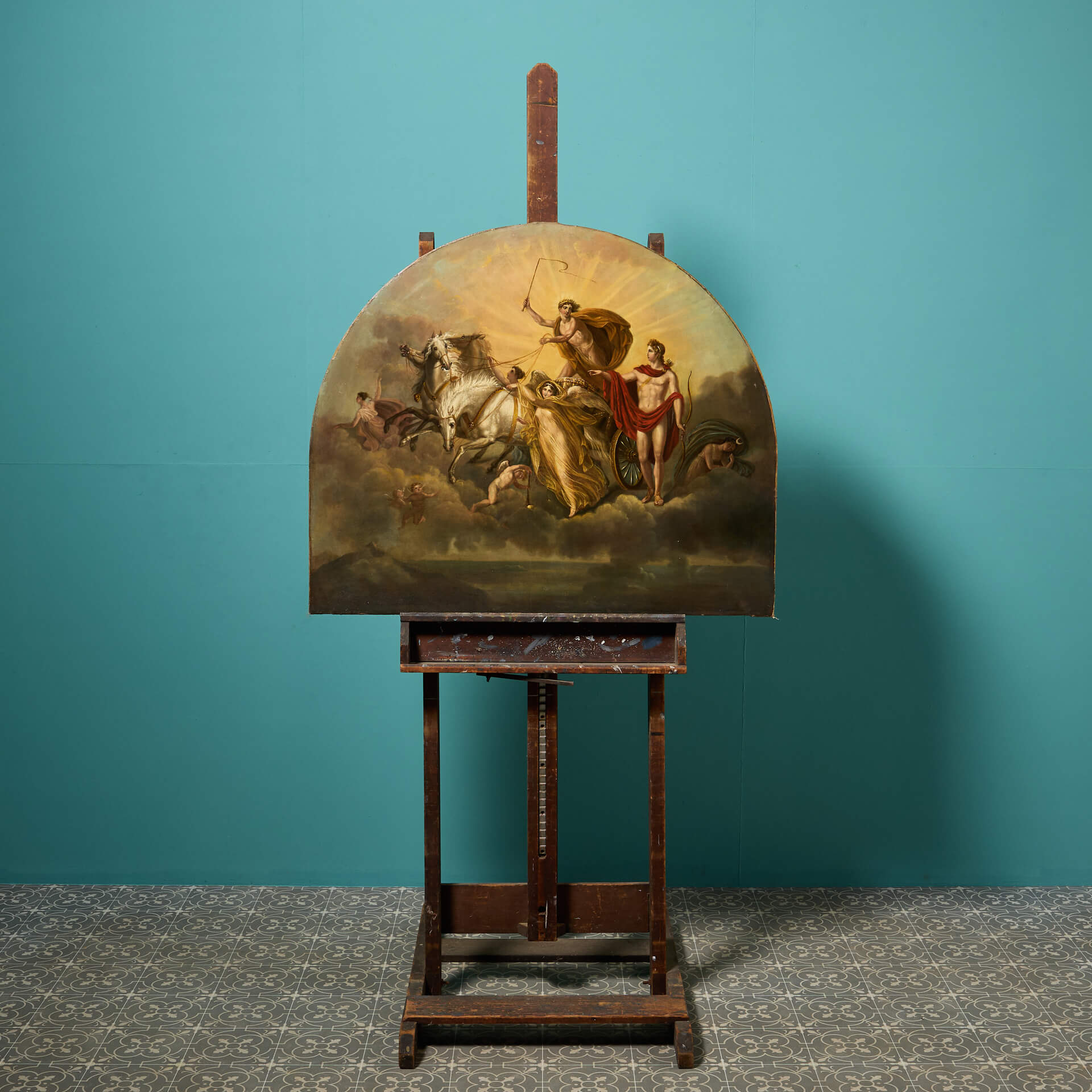
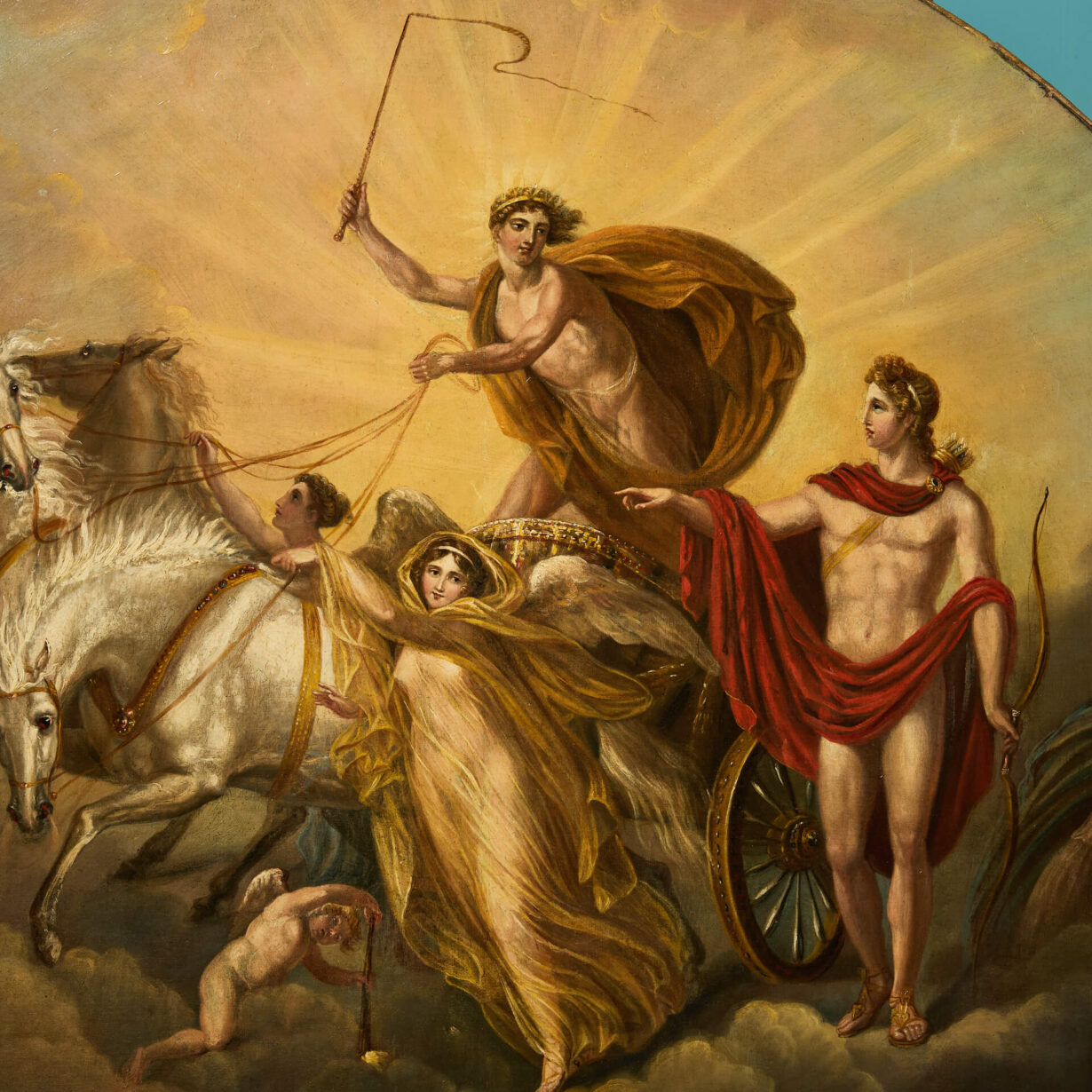
back to top“The Fall of Phaeton” Oil On Arched Canvas After Sir Peter Paul Rubens (1577 – 1640).
This striking arched canvas depicts the Greek legend of the fall of Phaeton told in Ovid’s ‘Metamorphoses.’
The story tells of Phaeton who asks to drive his farther’s solar chariot to prove himself. Reluctantly, Apollo agrees although warns him of the risk and begs him to reconsider. Unable to control the horses said only to be tamed by Apollo, Phaeton scorches the earth, creating deserts and drying rivers. Zeus struck Phaeton down with a thunderbolt to end the senseless destruction, causing him to fall into the river Eridanus.
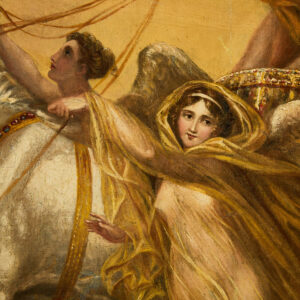
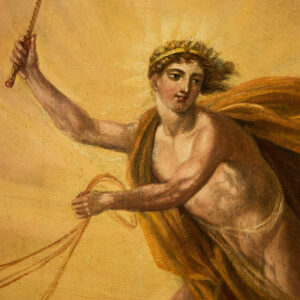
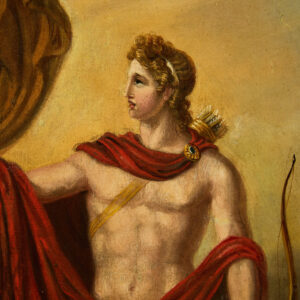
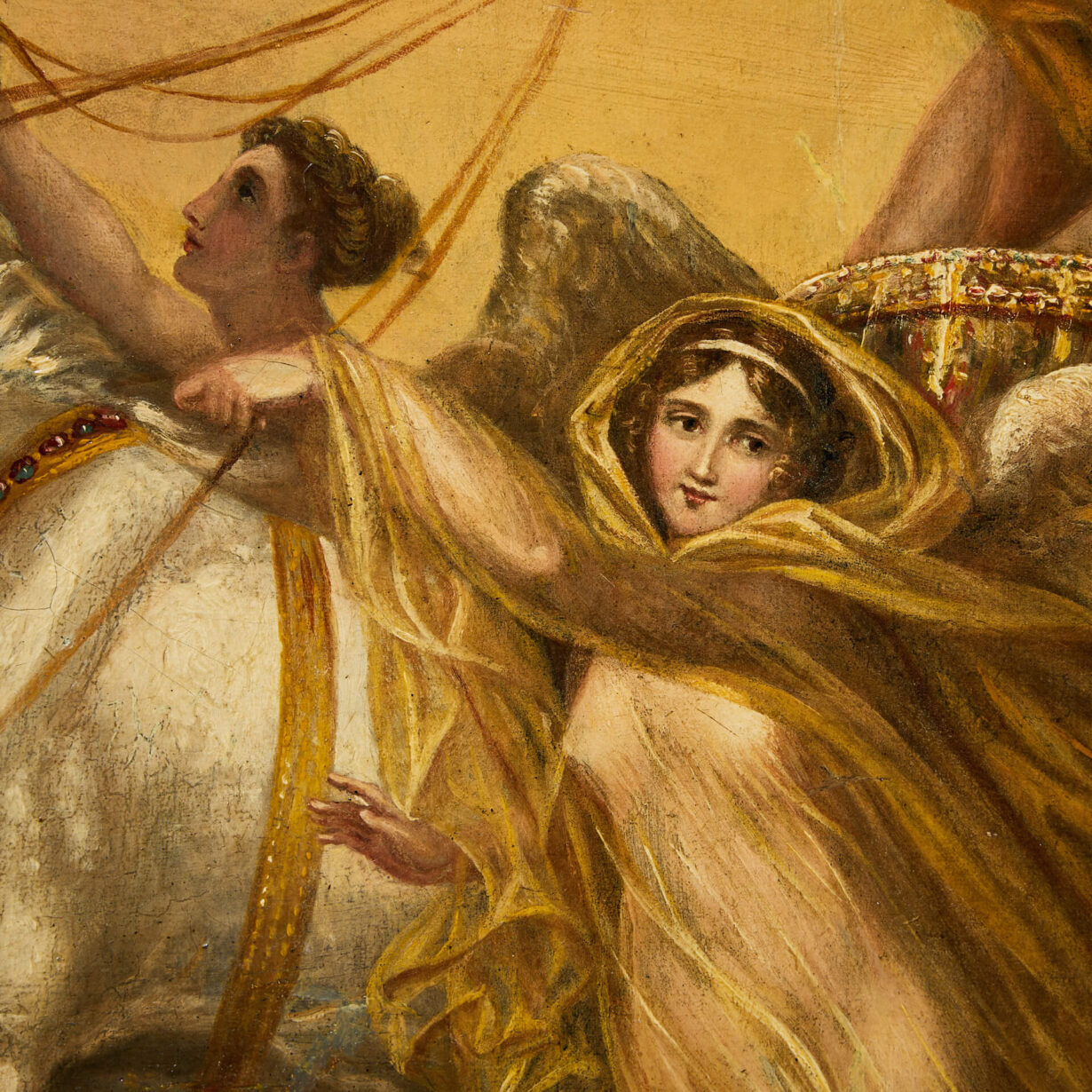
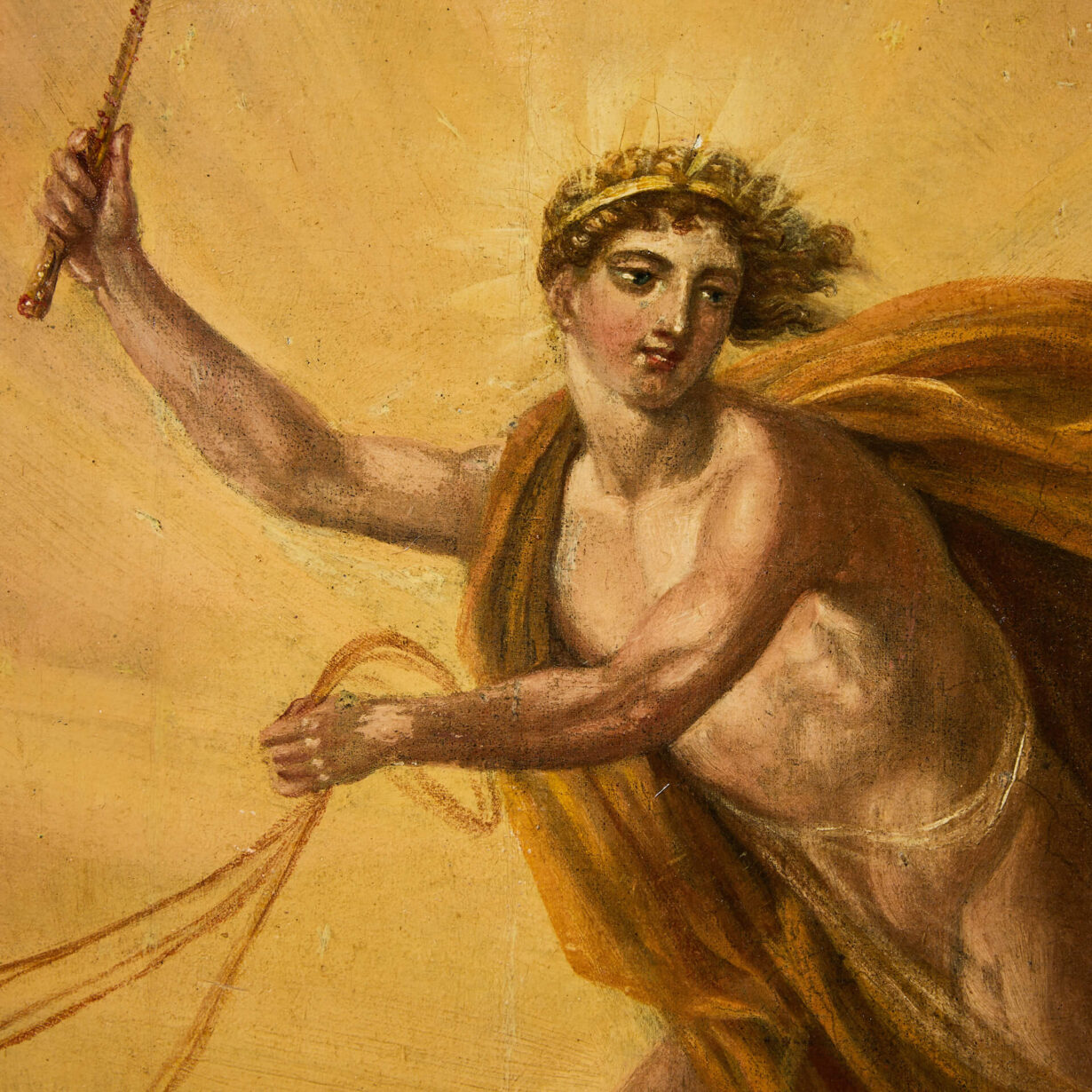
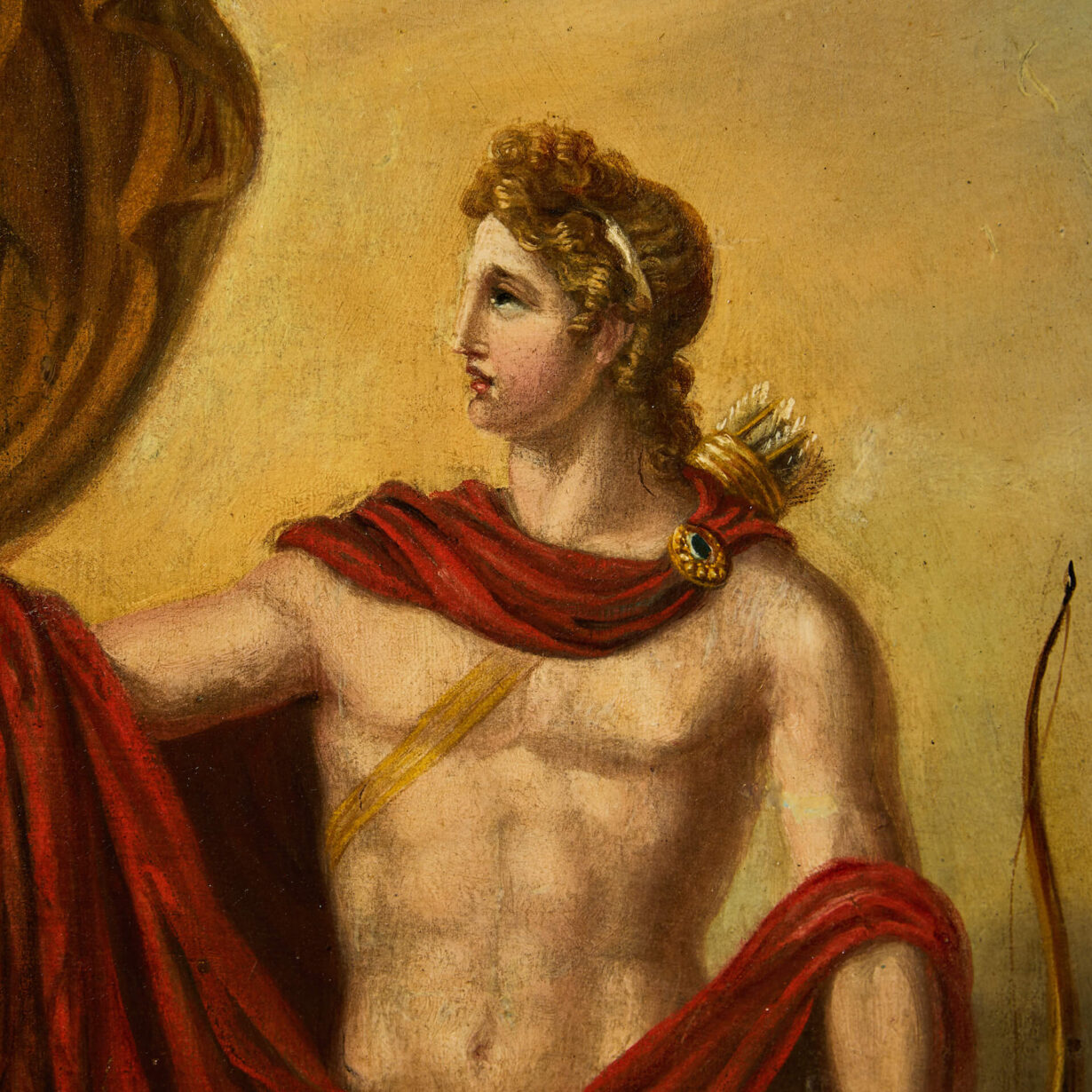
Apollo stands to the right of the frame, equipped with a bow and looking on with an expression of concern, pointing to the horses. Phaeton stands elated in the chariot, whip in motion ready to disembark on his final journey. His sisters known as the Halides prepare the horses for flight, unaware of the impending tragedy.
The painting is in the style of the old Master Sir Peter Paul Rubens, however it is captured before the disaster famously depicted in his 1604 work of the same name.
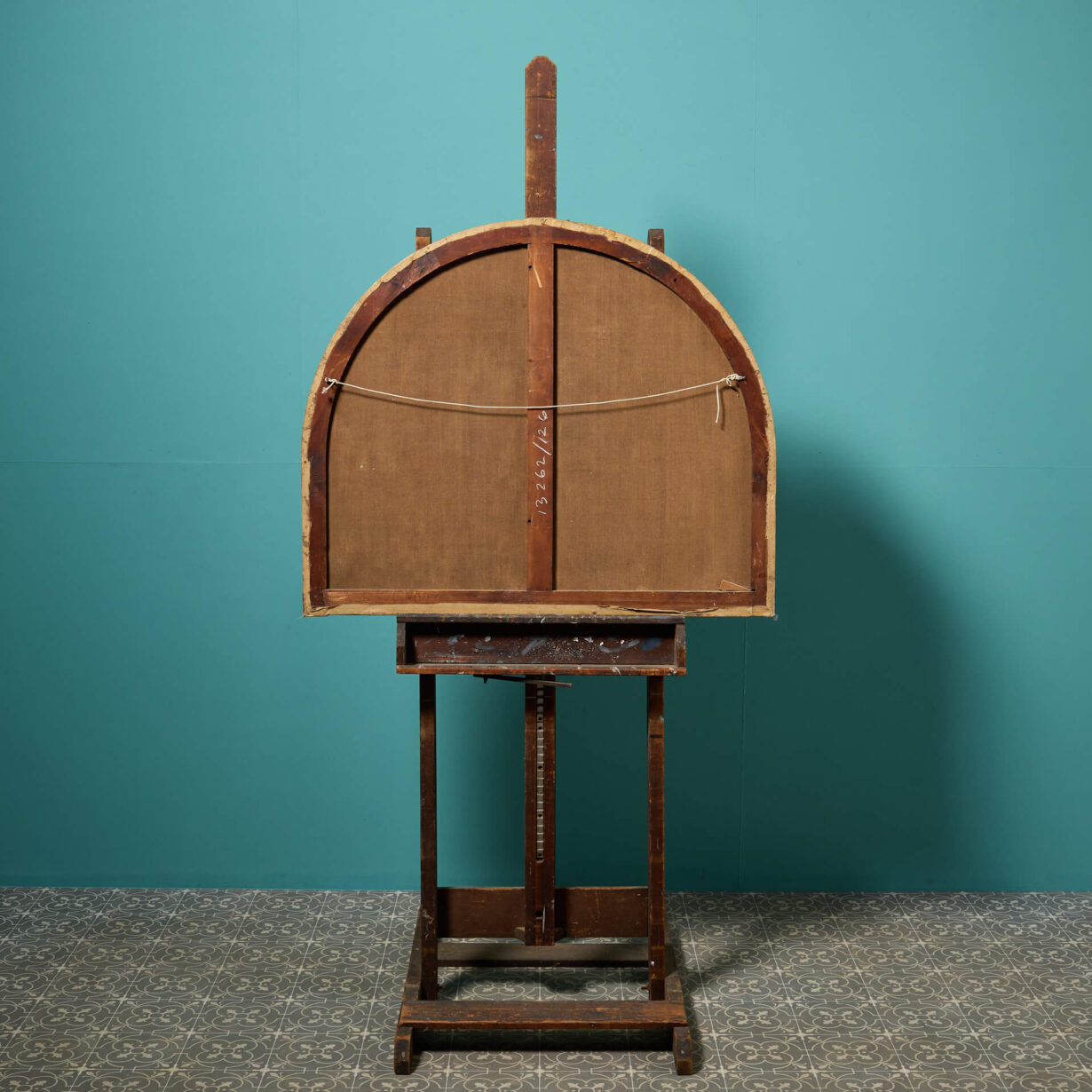
Our display easel is not included but it is the perfect way to display a frameless canvas, as if left in place by the artist.