About this piece
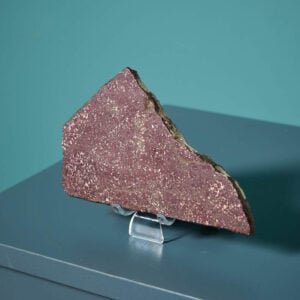
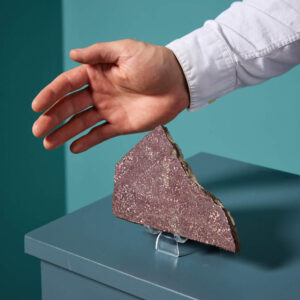
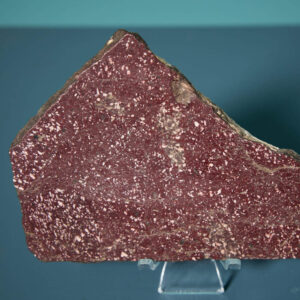
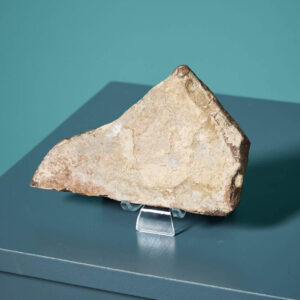
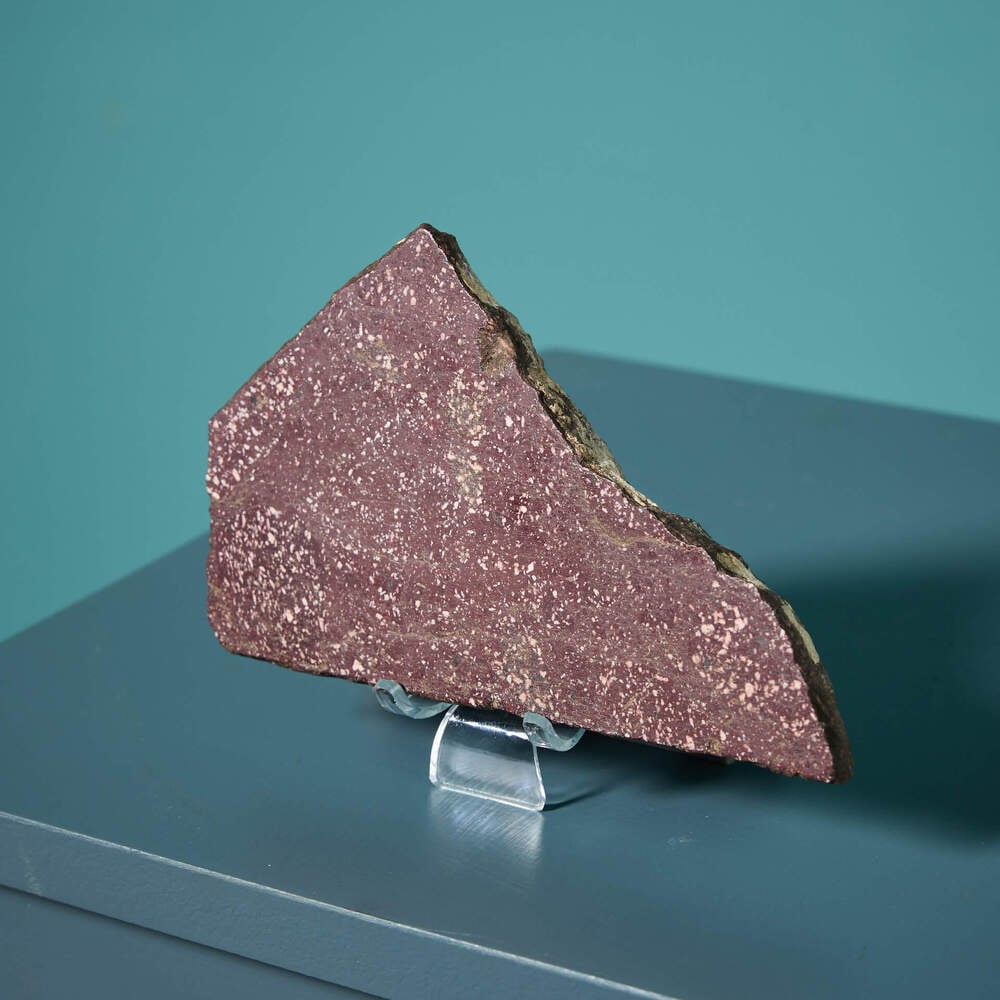
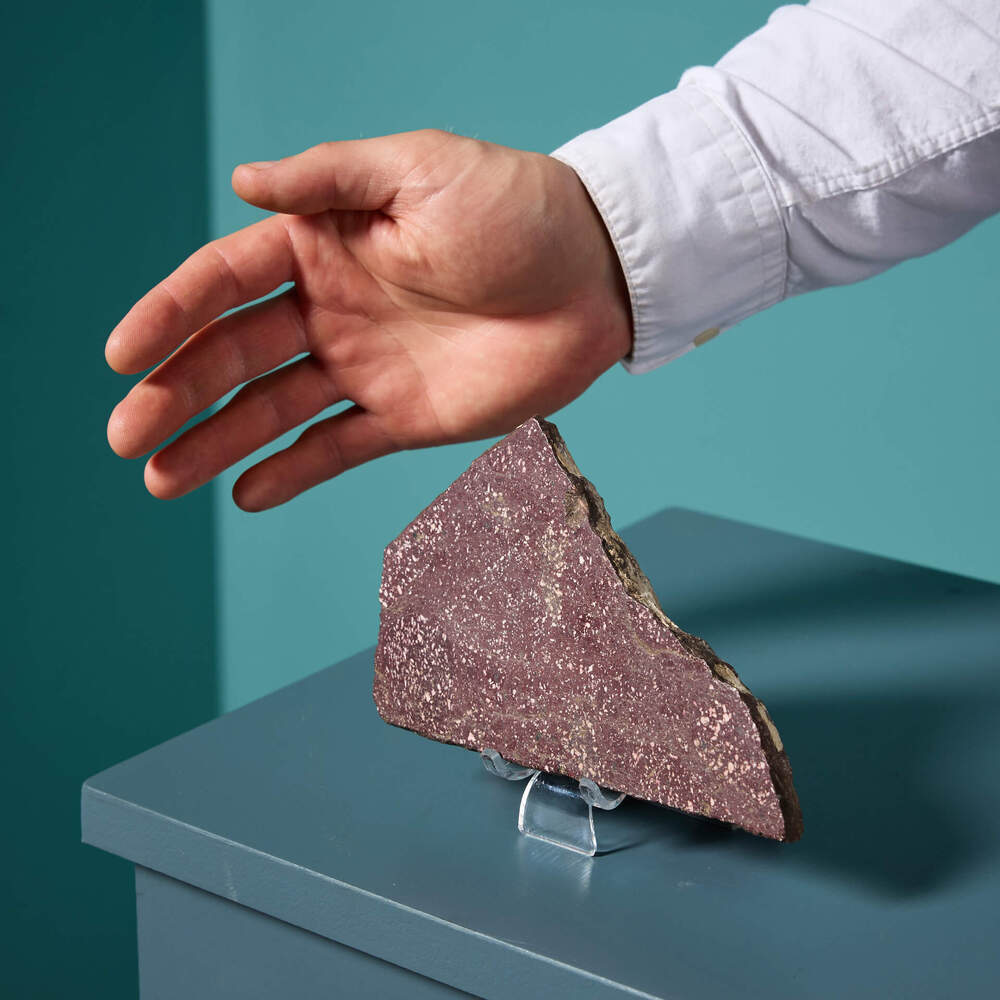
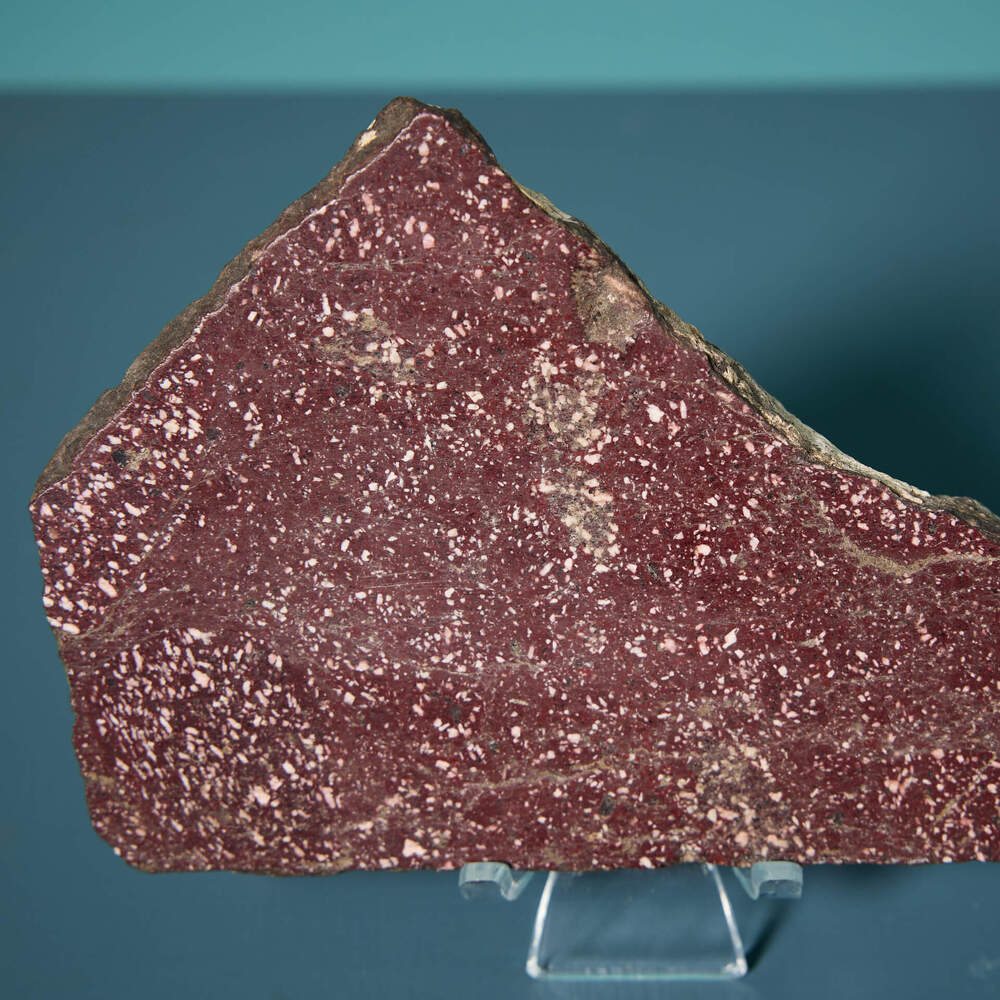
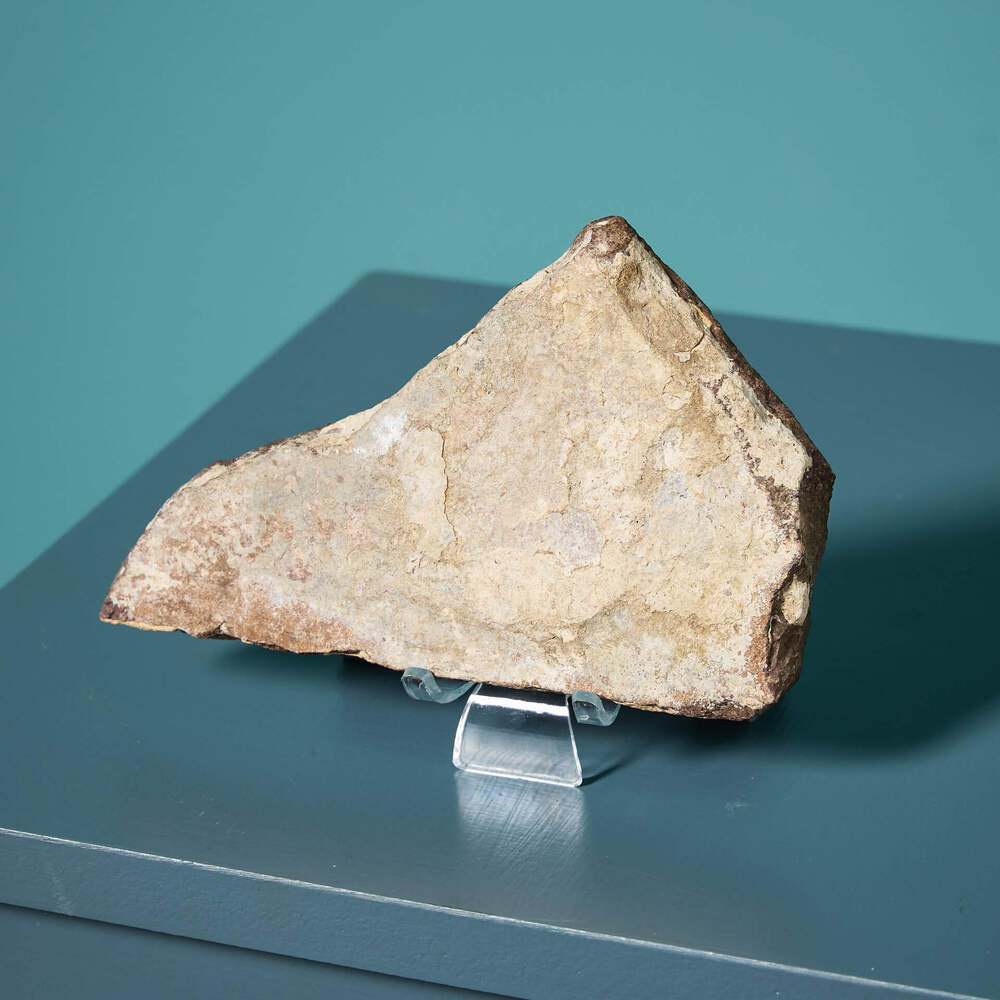
back to topAn ancient example of a red Imperial Porphyry fragment dating back as far as 1st century Ancient Rome. This is a rare and unusual worked example of this semi-precious stone which is widely regarded as one of the most historically important stones in the world.
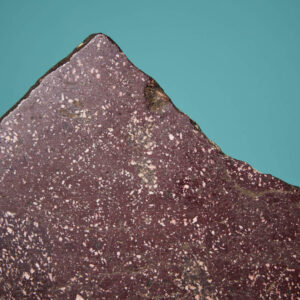
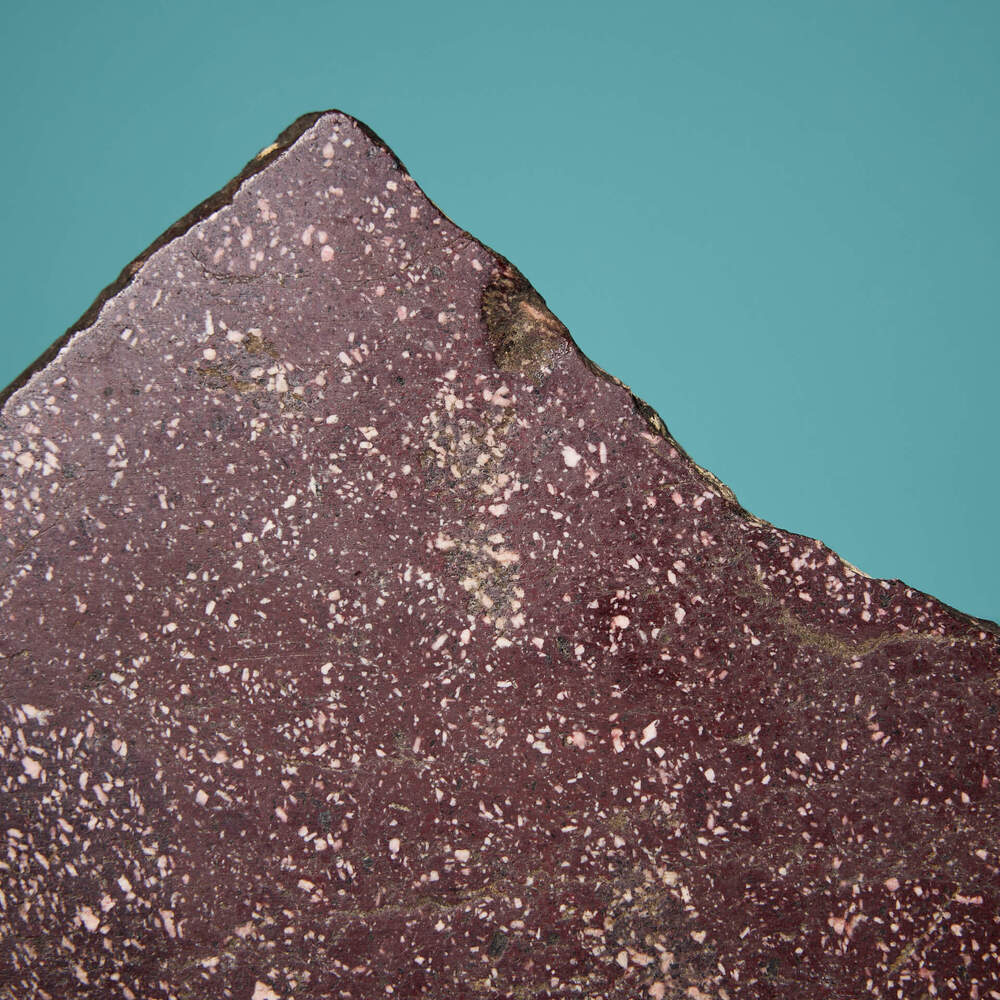
Resembling a deep red marble, Imperial Porphyry has a very dense and finely grained texture with small white inclusions as showcased in this superb example.
It is found at just one single mountain in Egypt that the Romans called ‘Mons Porphyry’ following its discovery by a Roman geologist in 18AD.
Symbolising Imperial power, it has been favoured by prominent figures throughout history; firstly by Roman Emperors, who frequently commissioned the stone for decoration in Imperial palaces as a symbol of power and status. One of the most notable examples of red Imperial Porphyry architecture can be found in Rome’s impressive Pantheon, where a large circle of Imperial Porphyry on the floor has seen various Emperor’s crowned over a 300-year period.
Centuries later with the Egyptian quarry that served as the singular source for Imperial Porphyry now lost, French Emperor Napoleon Bonaparte expressed to be buried in tomb made from this rare, semi-precious stone. Though searches for the long-lost quarry served futile and the Emperor was buried in a more common red porphyry sarcophagus, the ancient quarry was rediscovered in 1823 and is today a World Heritage site.