About this piece
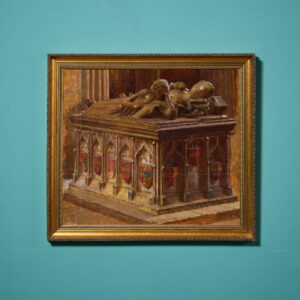
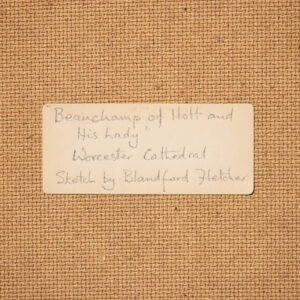
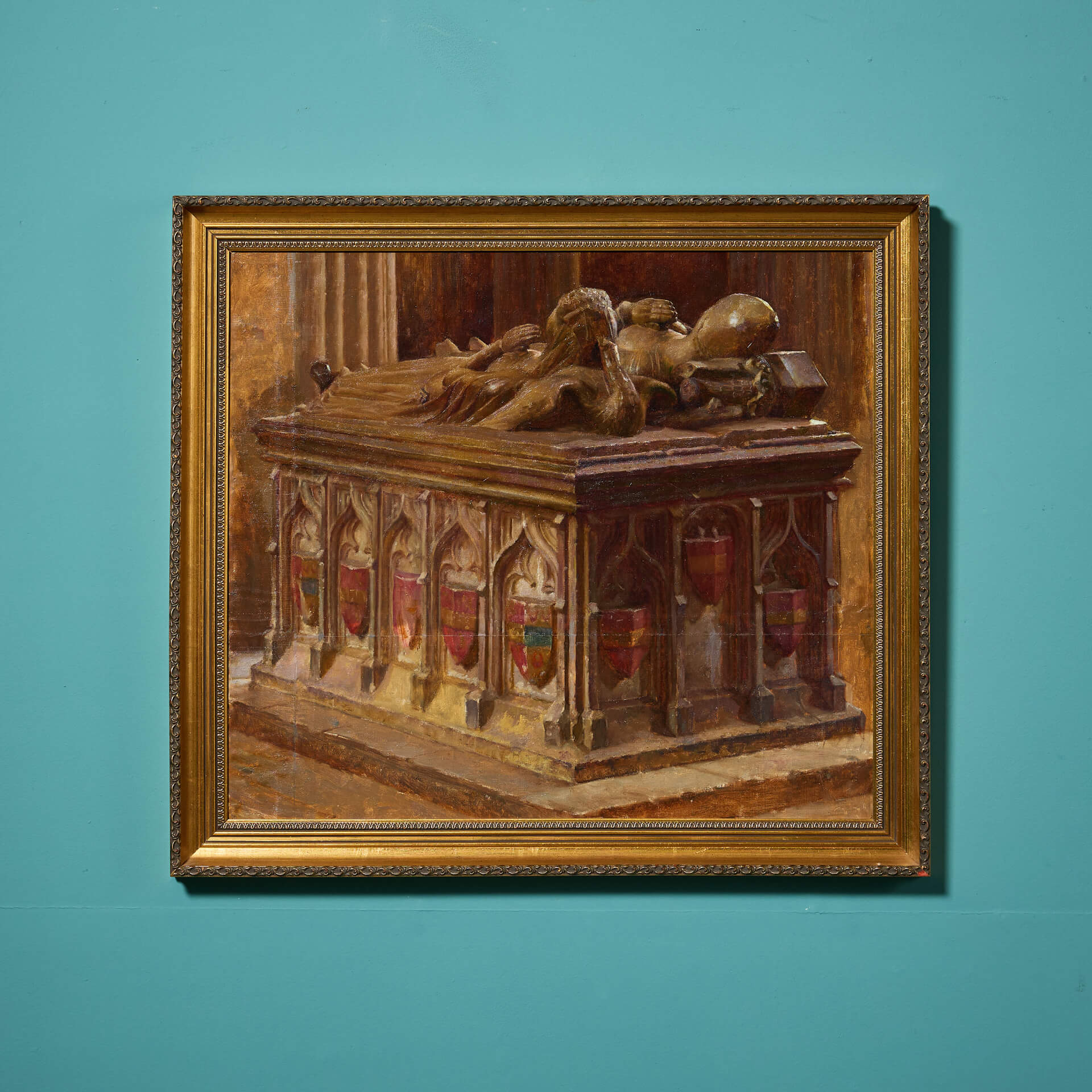
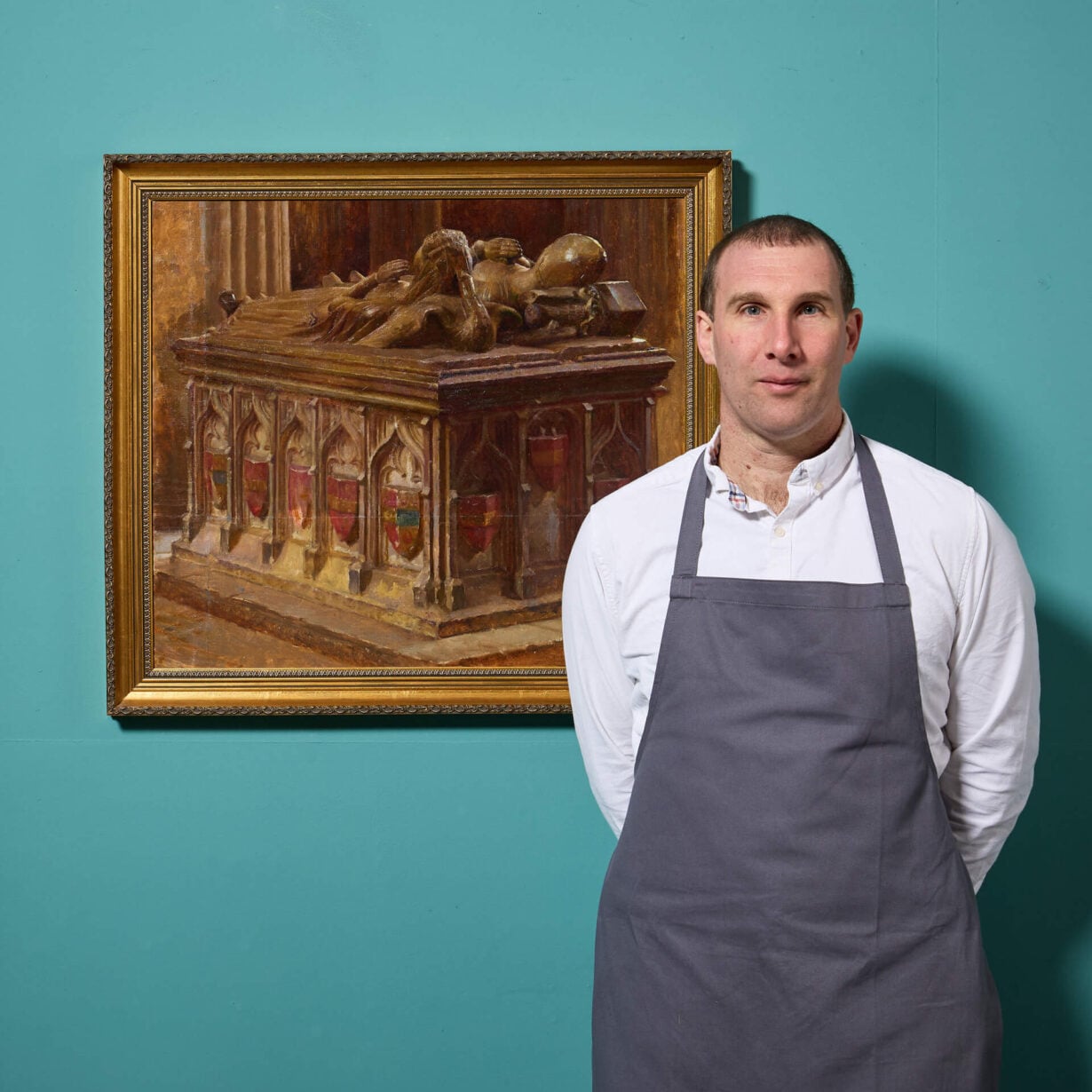
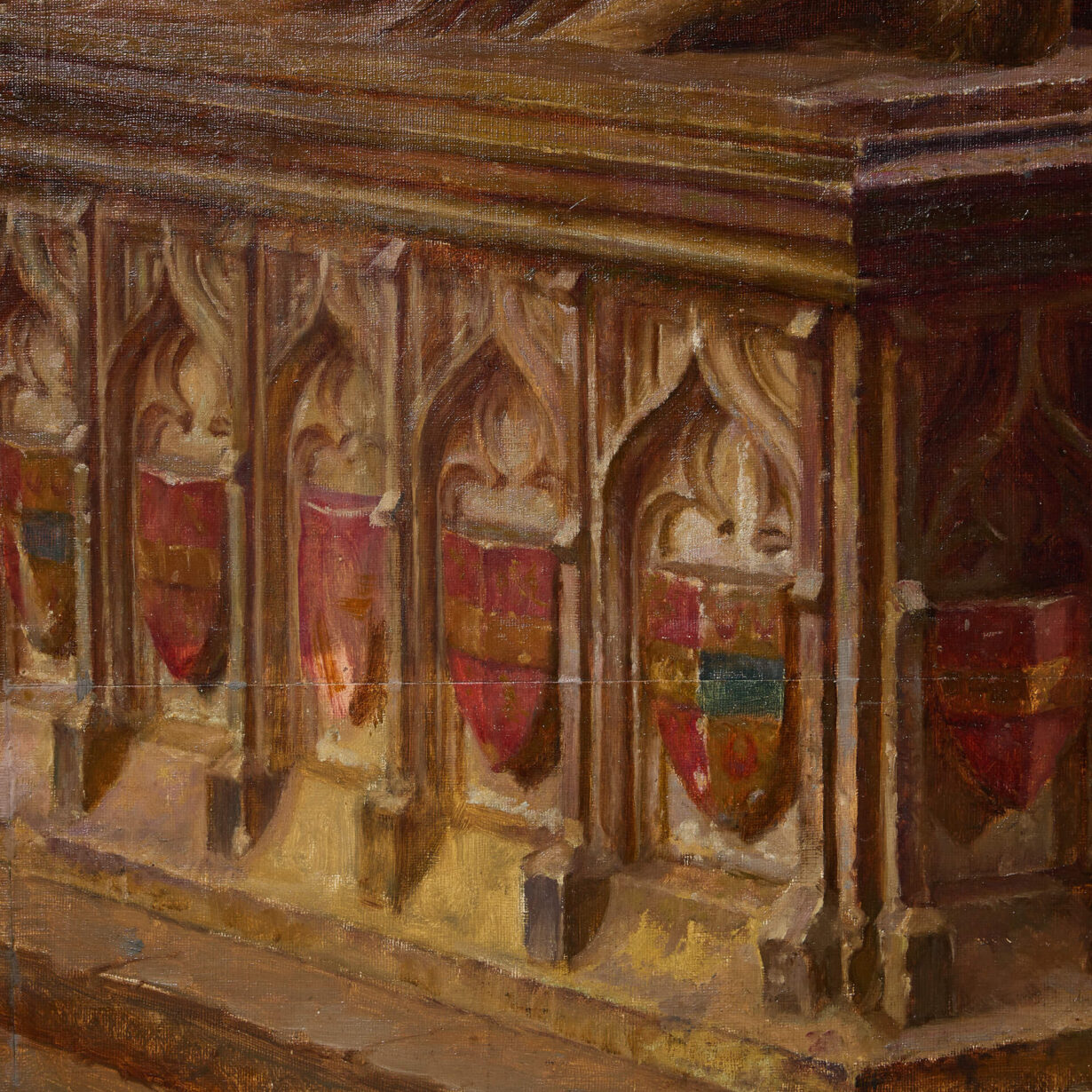
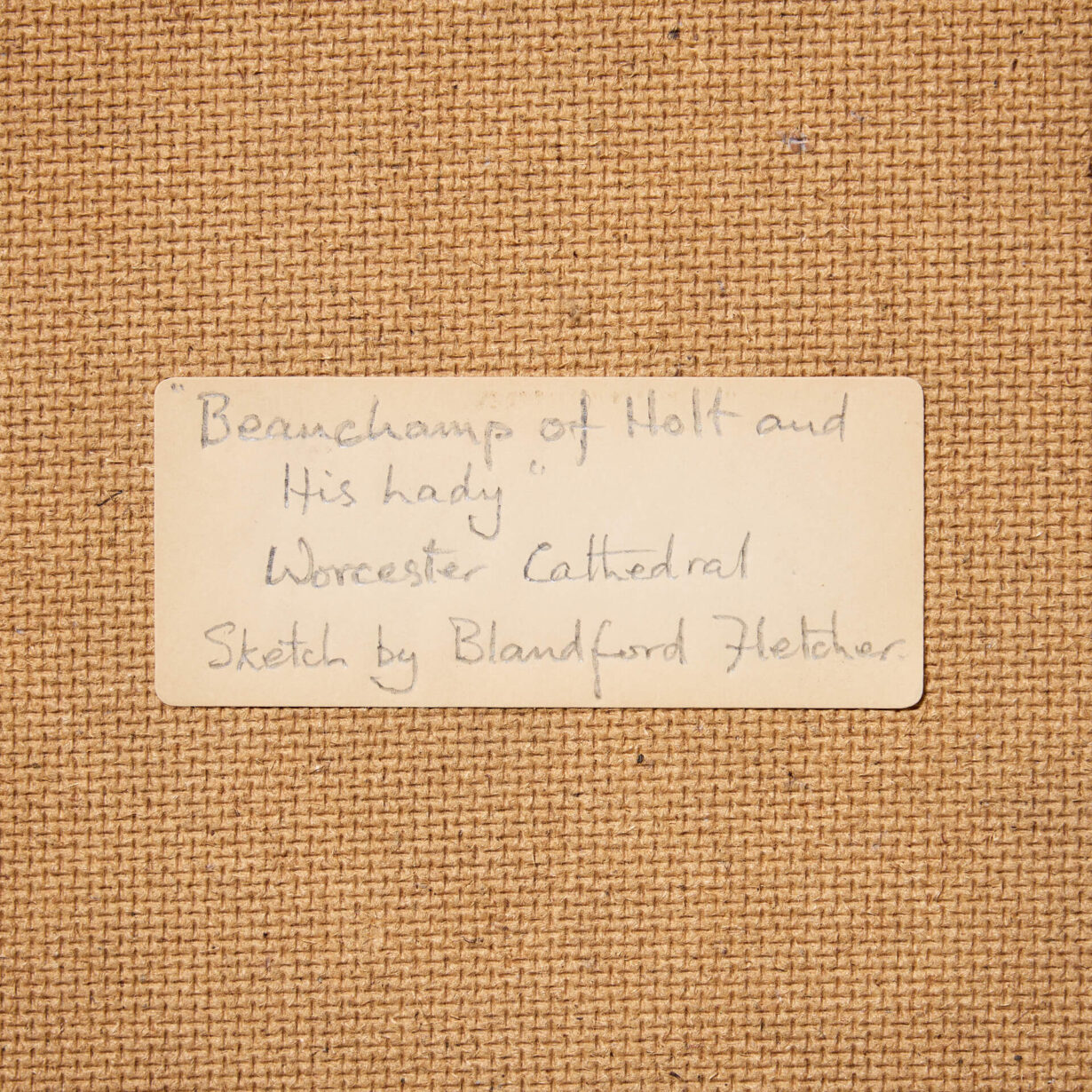
back to topBlandford Fletcher (1858 – 1936) “Beauchamp of Holt & His Lady” Oil on Canvas.
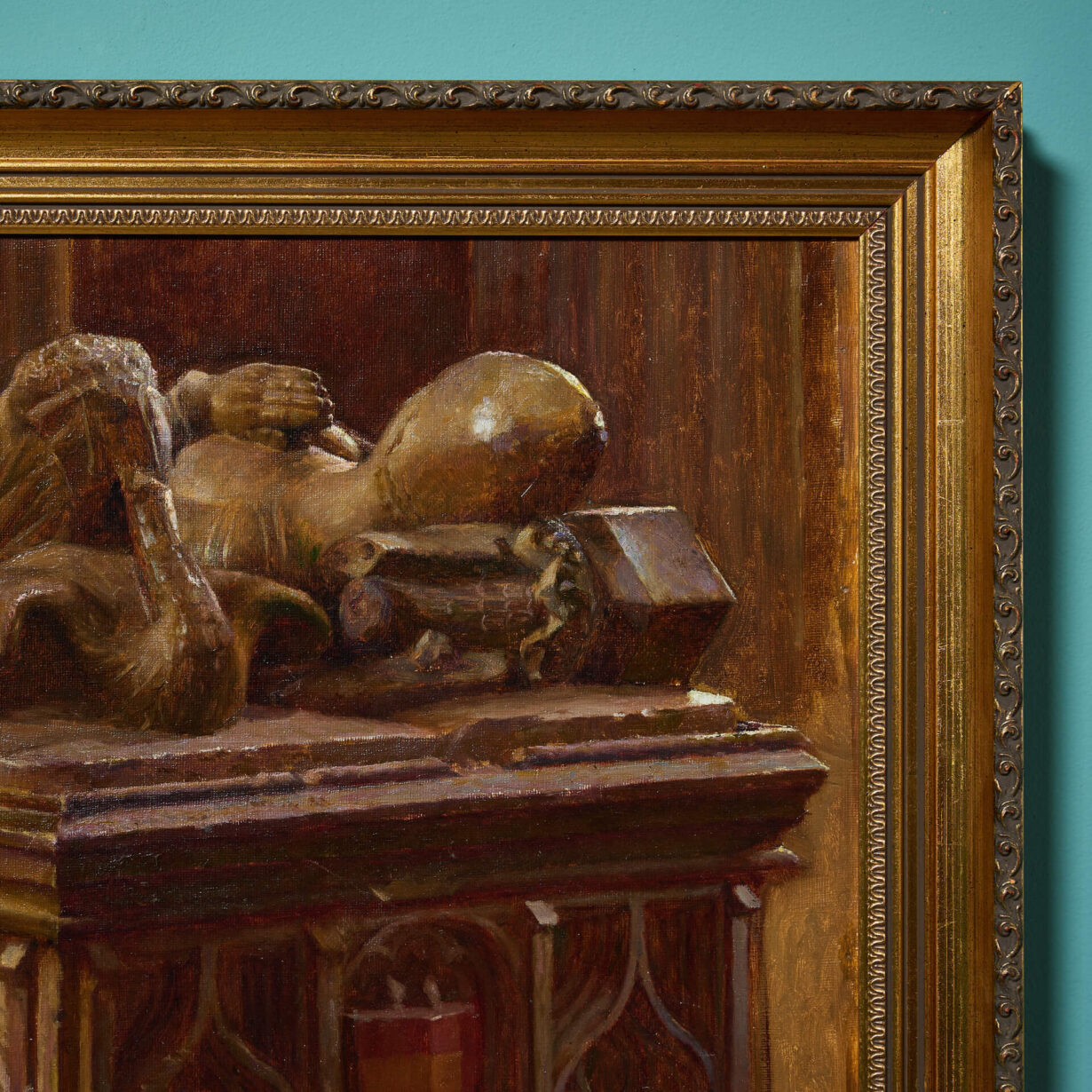
Presented in a guilt frame, this gothic scene is captured in the North Aisle of Worcestershire Cathedral, England.
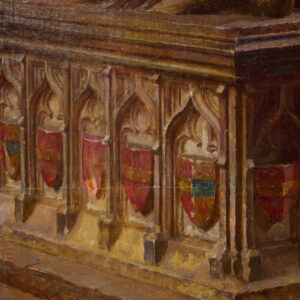
Believed to have been painted during his wandering years between 1884-1904, the tomb is viewed from the head, showing the family heraldry of the Beauchamps, Earls of Warwick, and Beauchamps, Barons of Powick.
The family legend is captured in the tomb and this painting; One of the Atwood family went to support the Crusades but had been gone so long that his wife was about to remarry. Just before she did, her milk-maid was guided by a dog to a man who was dishevelled and chained in a nearby meadow. The dog was excited and clearly knew the withered man. The maid fetched her mistress, and the man claimed that she was his wife. He told a story of how he was kept prisoner in a dungeon until one night he prayed for deliverance and an angel came to him. When he awoke, he found himself in the meadow. He explained a vague memory of floating but did not want to imagine an angel had carried him so he declared a swan had brought him to explain being surrounded by feathers.
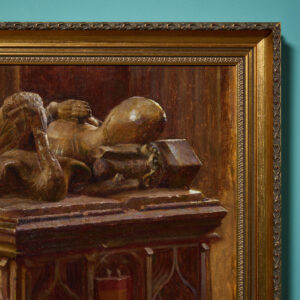
The figures in the effigy lay on swans with dogs at their feet, although they cannot be seen from this direction.
Blandford Fletcher
William Teulon Blandford Fletcher better known as Blandford Fletcher (8 November 1858 – 27 June 1936) was an early member of the Newlyn School of painters which was reminiscent of the French Barbizon school, mostly due to the natural light, inexpensive models and cheap living. Other noteworthy artists of the movement were Frank Bramley (6 May 1857 – 9 August 1915) Elizabeth Forbes (29 December 1859 – 16 March 1912) and Norman Garstin (28 August 1847 – 22 June 1926). Studying in Academie Royale in Antwerp, He went on to spend time painting at Pont-Aven and Dinan in France. The works created during this time were In the 1884 Royal Academy shows. After this he became a wandering artist, often travelling with his contemporaries before settling in Dorking, England in 1904. He was survived by his wife and two daughters, one of which – Rosamund Fletcher (5 August 1908–18 February 1993) became a Fellow of the Royal Society of British Sculptors.