About this piece
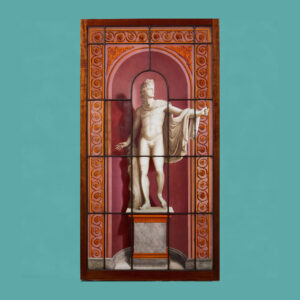
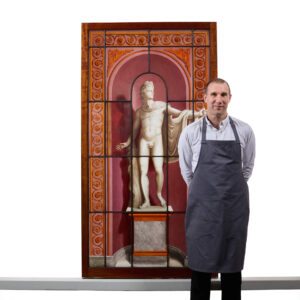
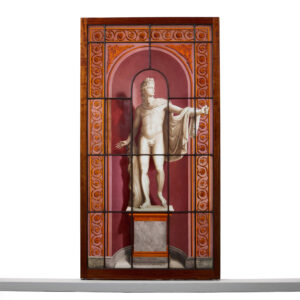
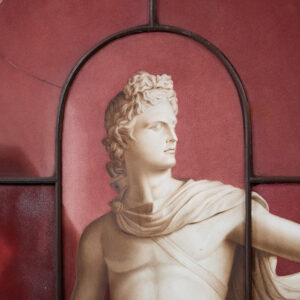
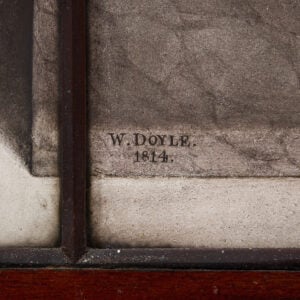
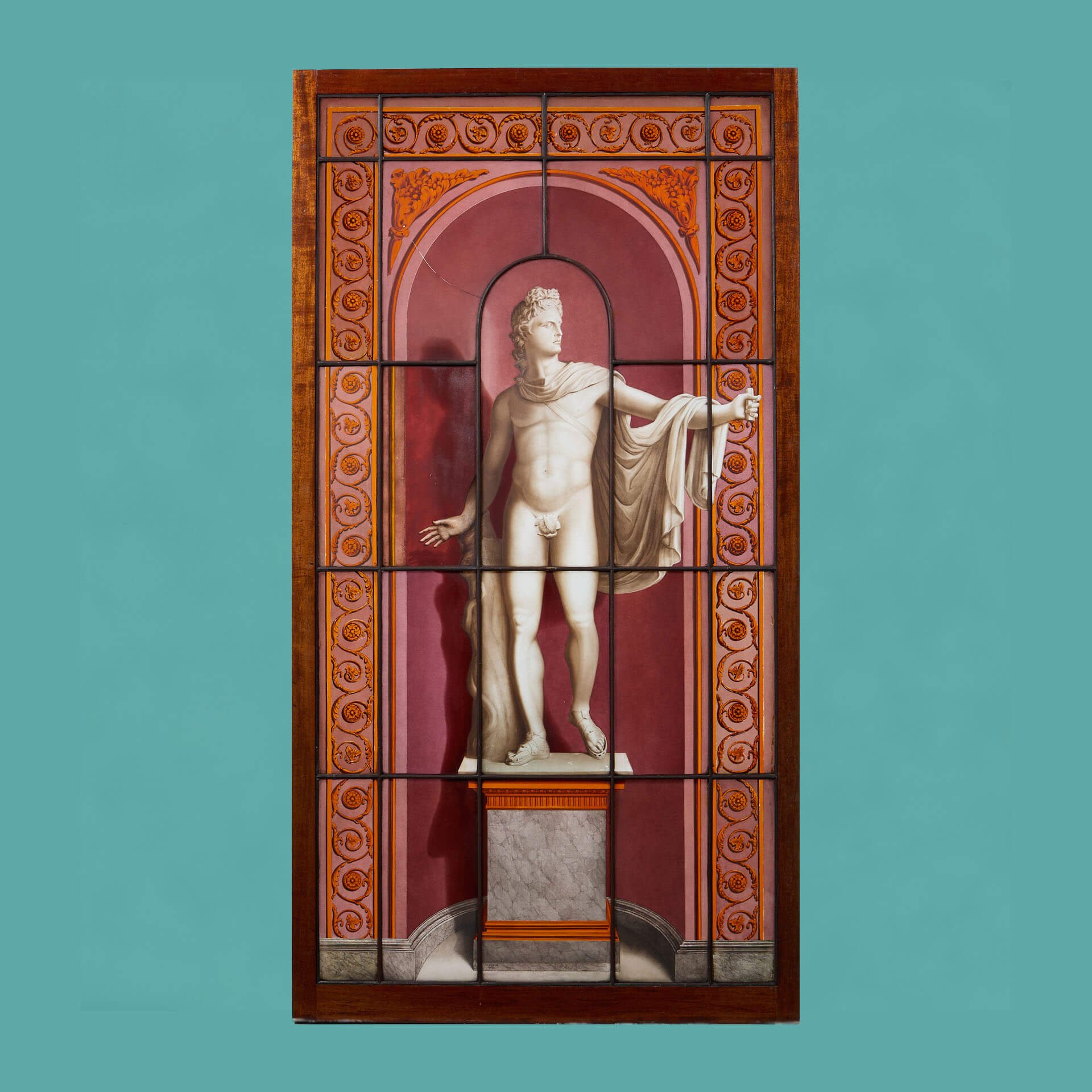
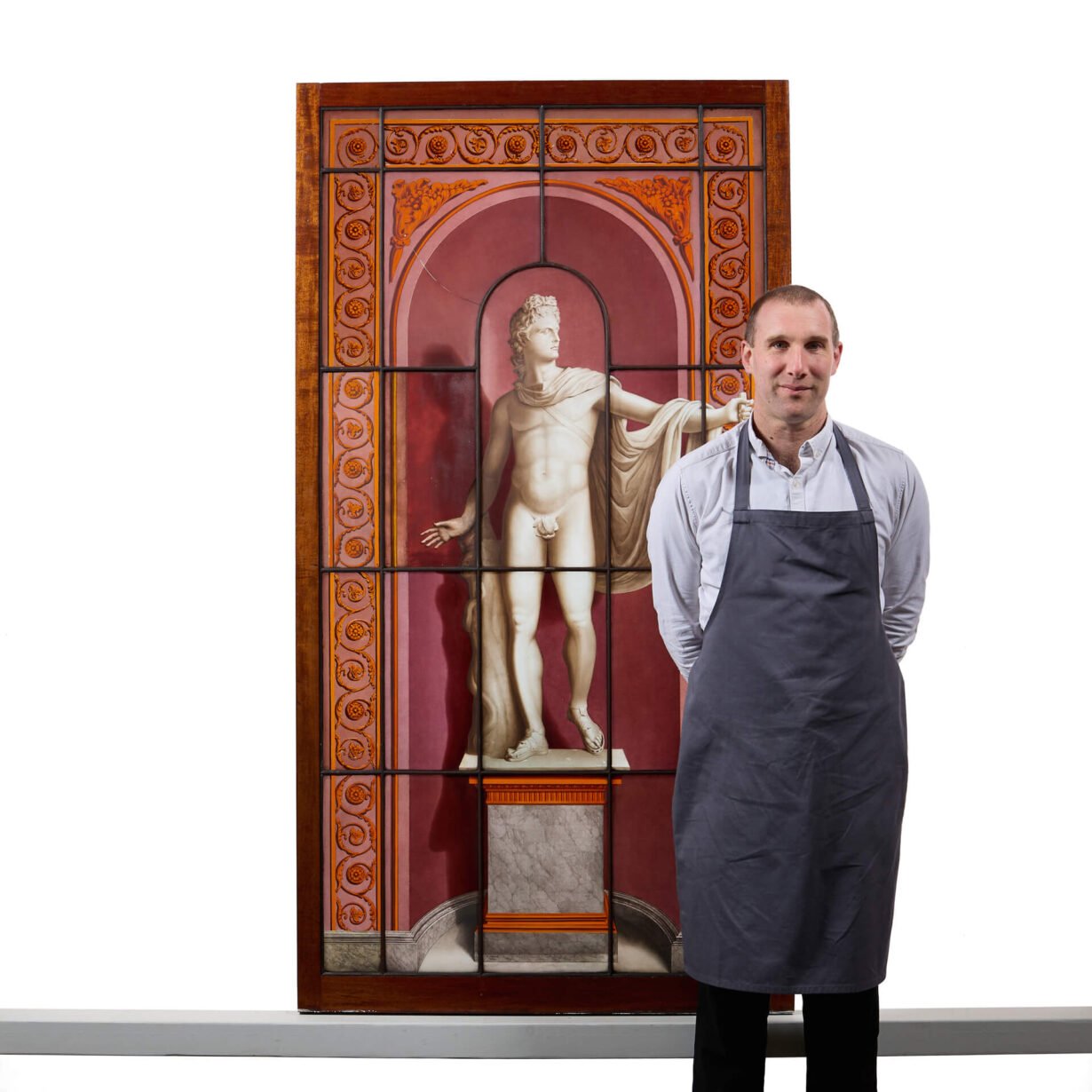
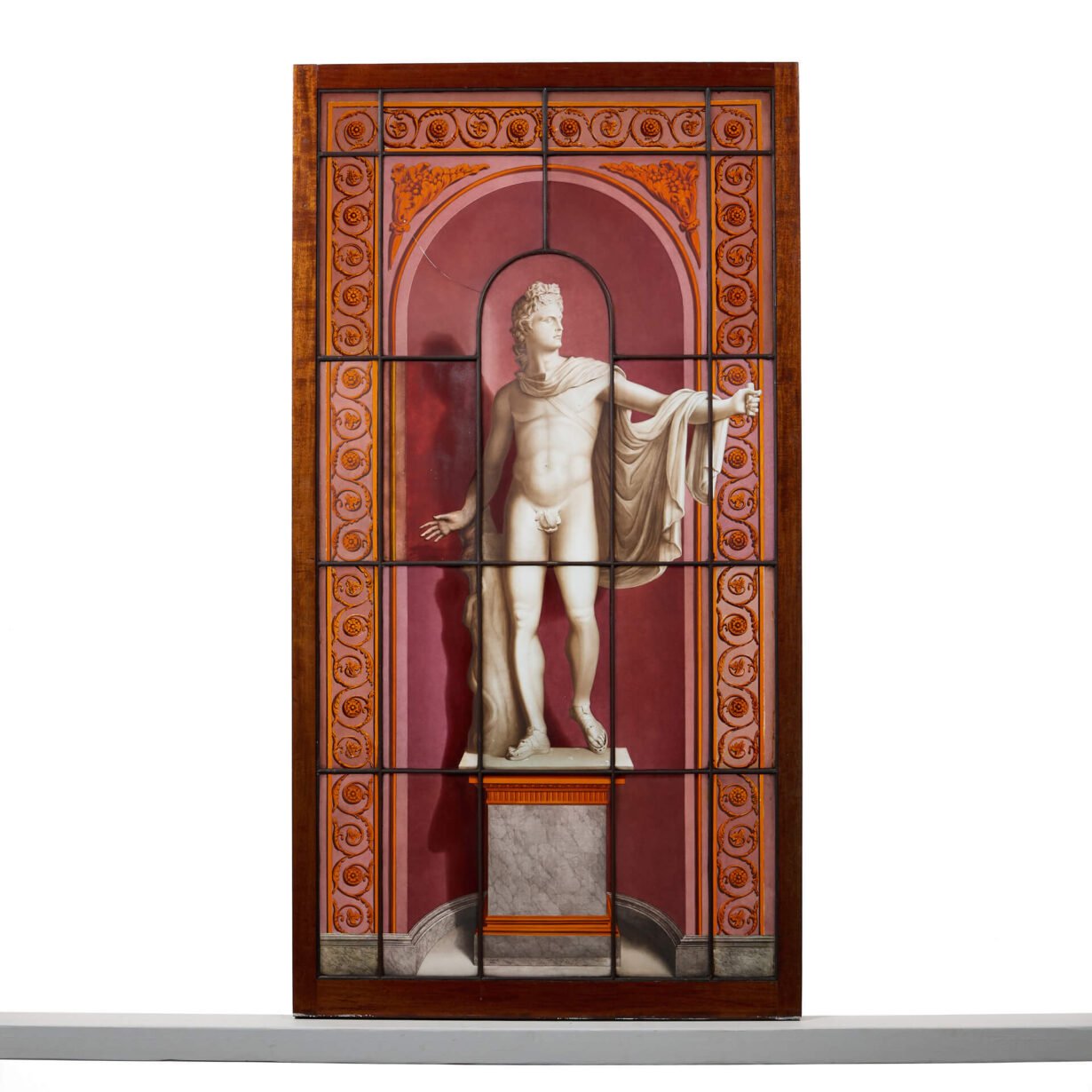
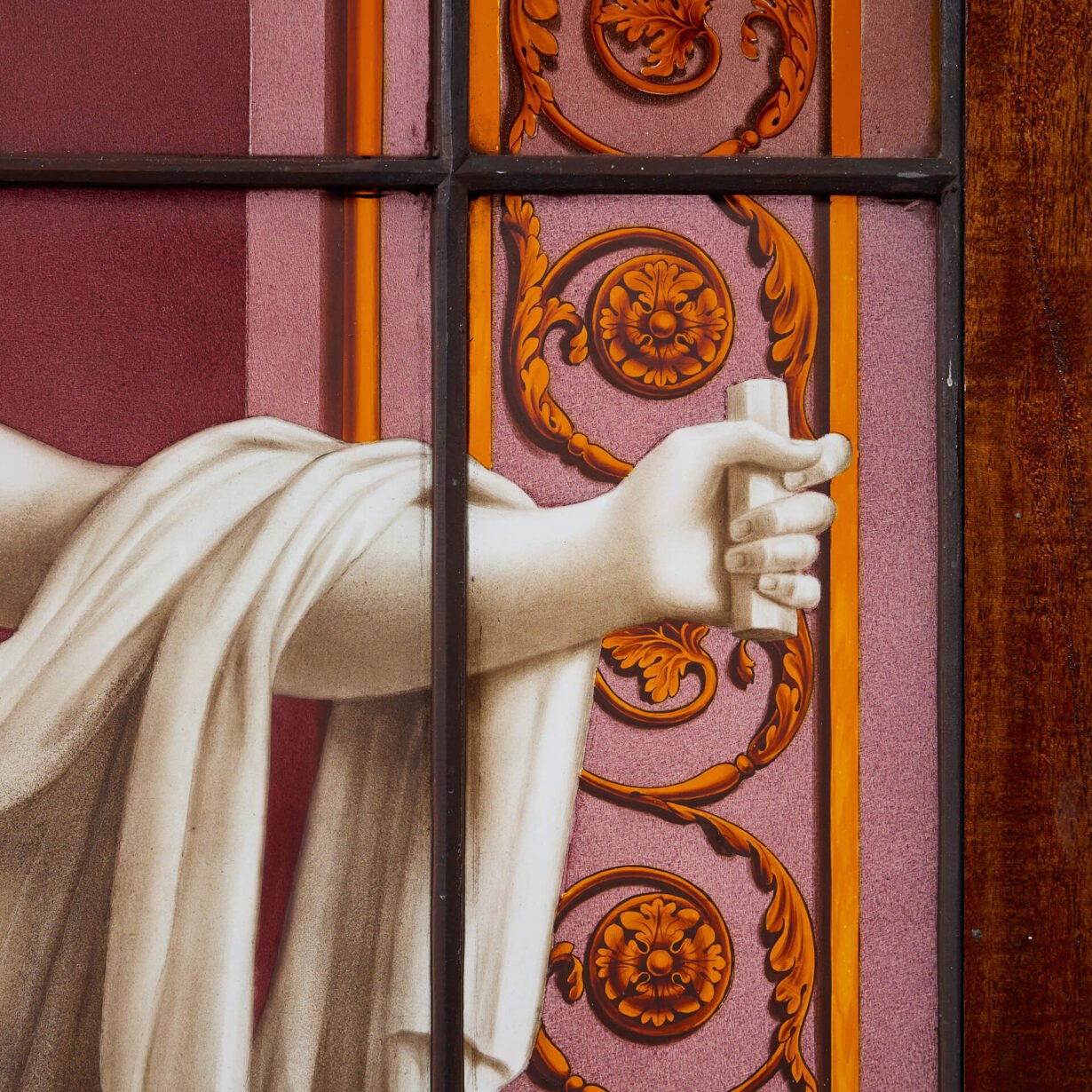
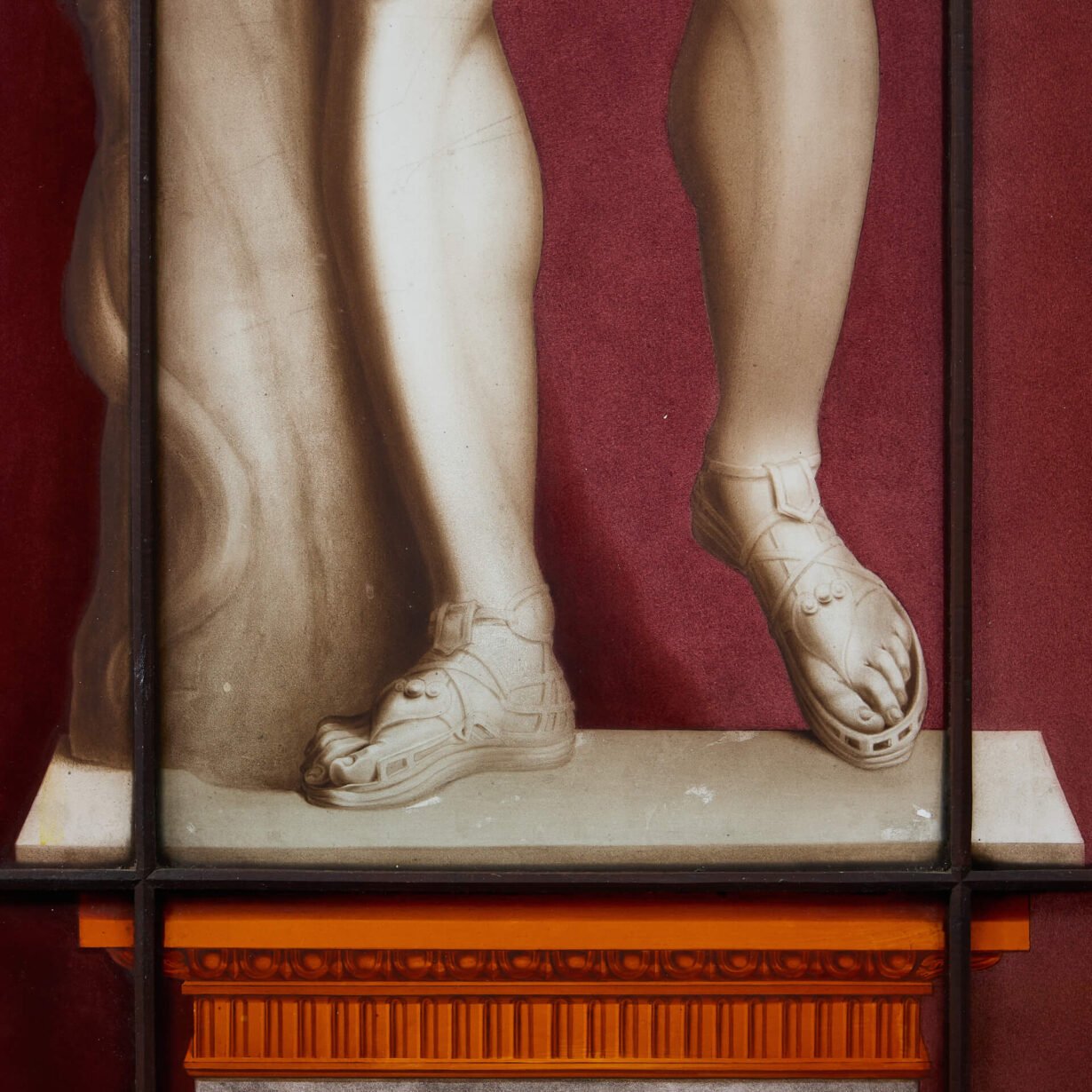
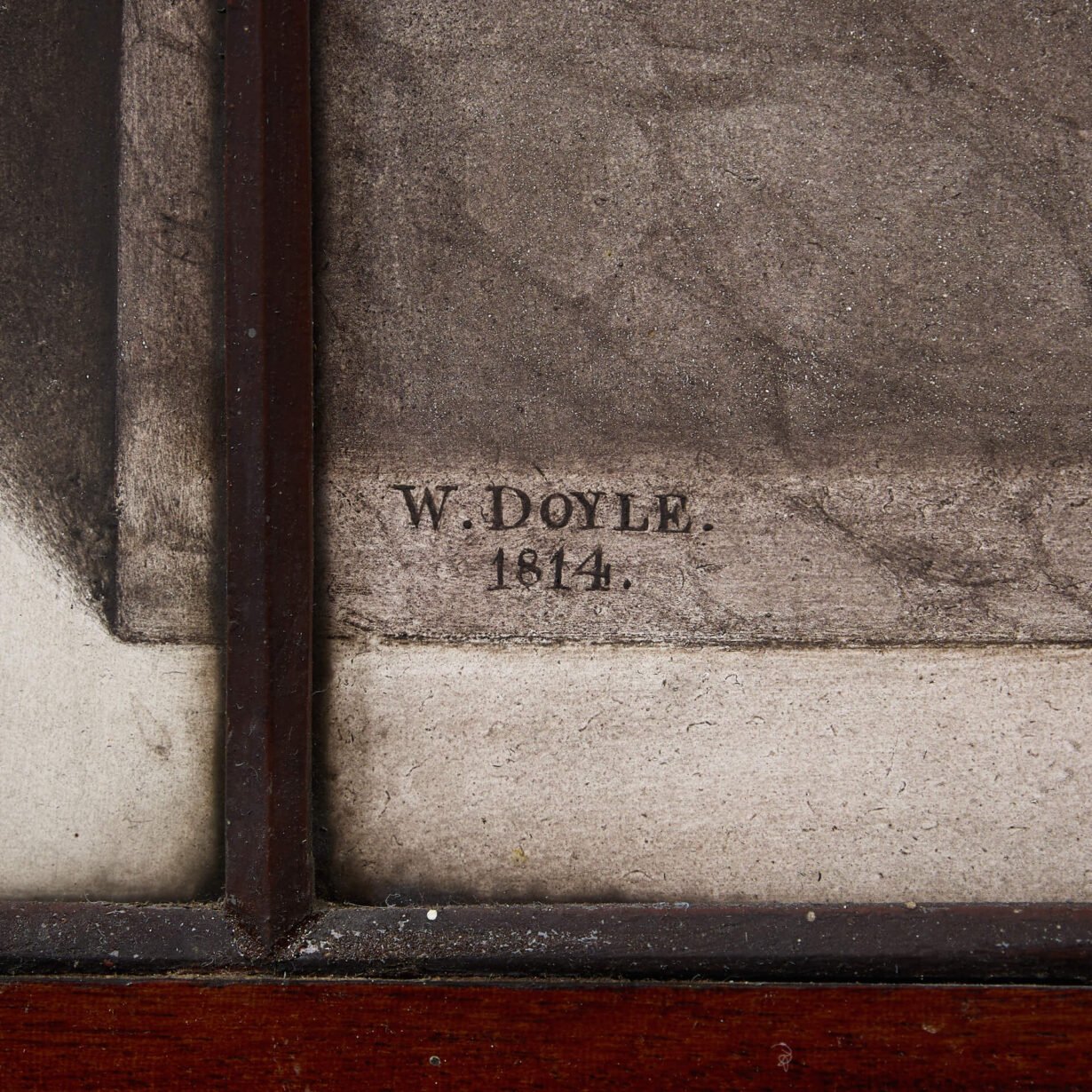
back to topThis 19th century stained glass of Apollo Belvedere by W. Doyle is signed and dated to 1814.
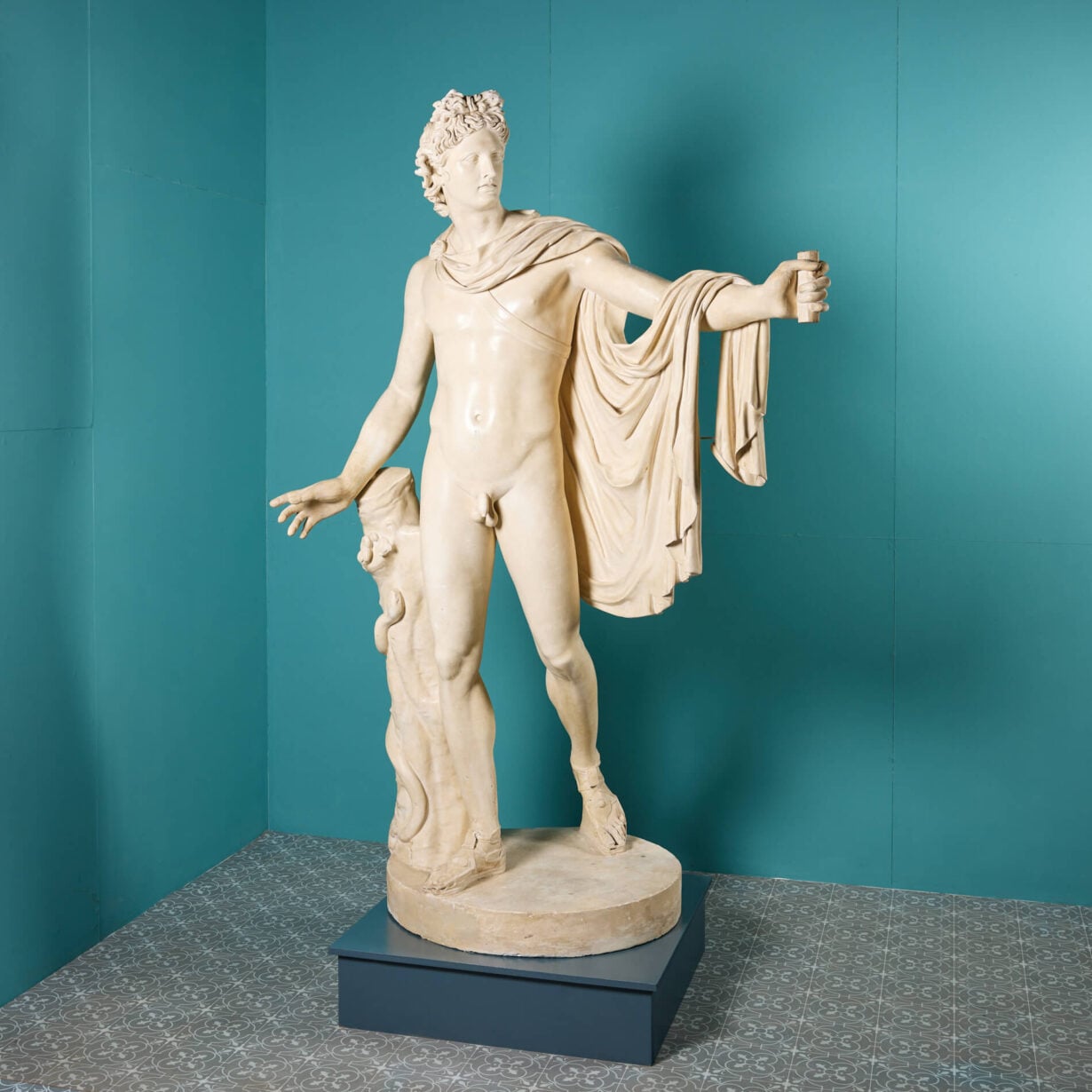
This piece is after the iconic marble currently located within the Vatican Museums, Rome, with the addition of a leaf. The original statue – which has been lost for many centuries – is thought to have been depicted in bronze and created by 4th century BC Greek sculptor Leochares between 330 and 320 BC. The size and grandeur of this magnificent glass makes it quite the statement piece.
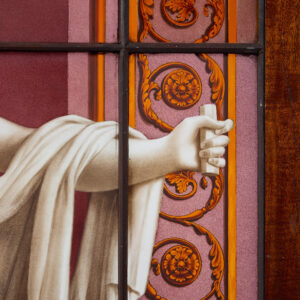
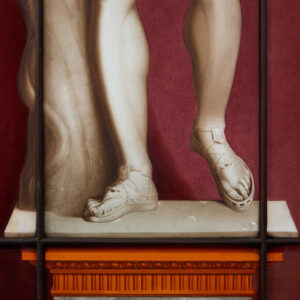
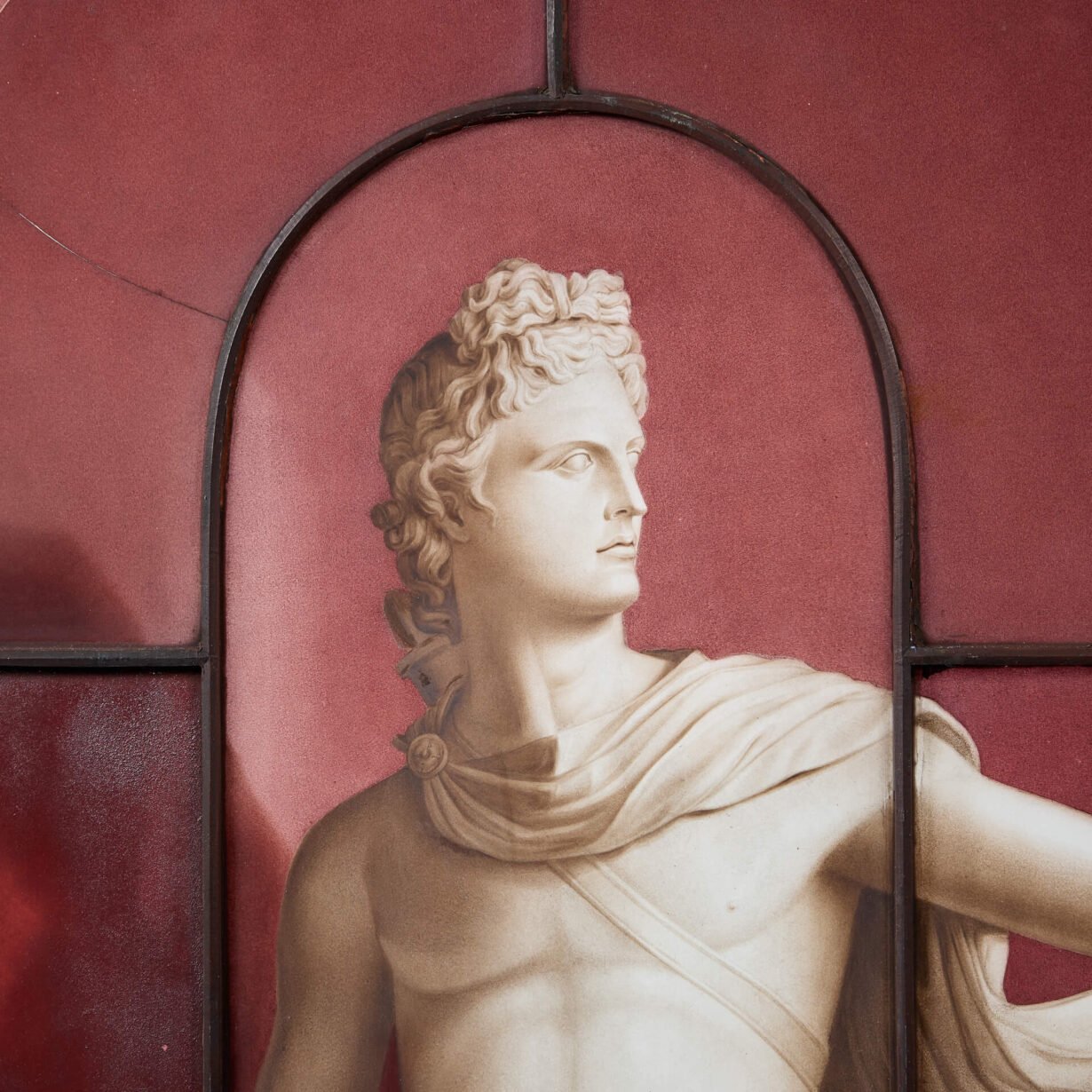
Made up of twenty-three highly detailed panels, the painted niche has great depth and shading, which makes the statue stand out from the glass. The scrolling foliate border is vivid orange when lit from behind. The marble on the base is painted with exceptional detail, making for a photorealistic effect.
The Apollo Belvedere
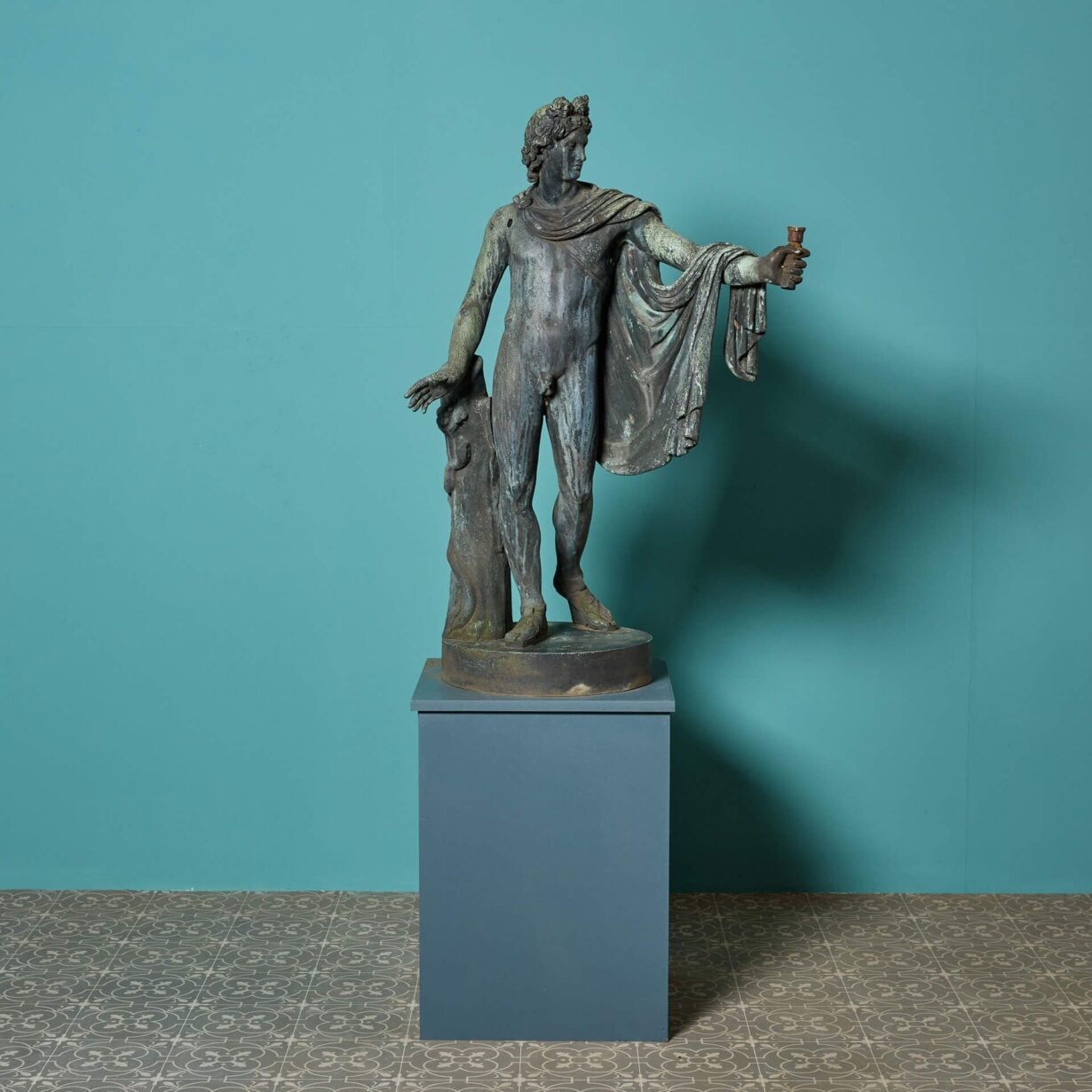
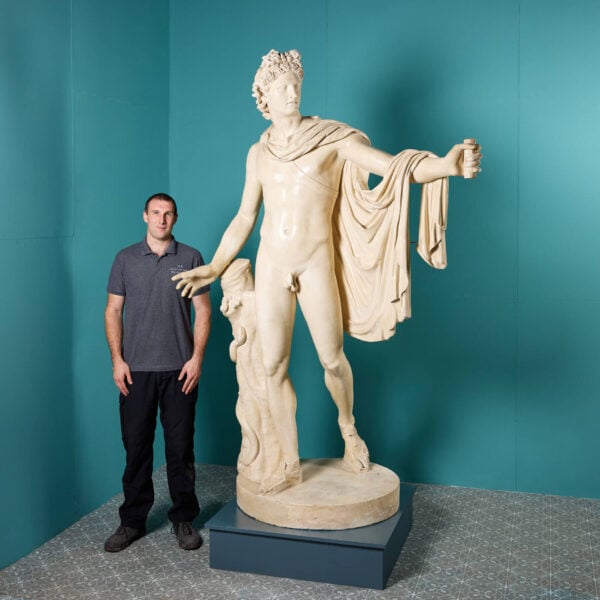
This iconic statue is showcased in stunning detail, depicting God of Roman and Greek mythology Apollo in a classical pose having just released an arrow from a bow which he originally carried in his left hand. According to Greek and Roman mythology, Apollo is considered the most loved of all gods, associated with a variety of themes including music, poetry, the bow, healing and prophecy – just to name a few.
While the lost bronze depiction of the Apollo Belvedere statue is considered the original, its marble depiction in the Vatican Museums is highly admired. Believed to have been made during the 2nd century, it was rediscovered during the 14th century and once formed part of Pope Julius II’s private collection. These statues were transferred to the Vatican on his election where the marble depiction of the Apollo Belvedere has remained since the early 16th century.
Provenance: Grimston Park
Situated in the picturesque North Yorkshire countryside, Grimston Park is a grade II listed Georgian property and estate. The settlement has existed since Viking times and has been occupied by various owners over the centuries including the Vavasours, Fairfaxes and in the 17th century, the Stanhope family who in 1603 entertained James I of England at Grimston.
In 1839, John Hobart Caradoc, the second Lord Howden, acquired the property following his father’s death and commissioned English architect, Decimus Burton, to rebuild the house. His brief included redesigning the old house in an Italianate style.